



07.30pm ET
The Hub Live closes here for another year, and it closes on a clear choice. The energy transition is underway. The question now is who moves fastest, and who benefits.
Dr. Fatih Birol, International Energy Agency, said we are entering the age of electricity, but that the pace has to double. For climate vulnerable countries the timeline isn't abstract, as Dr. Maina Vakafua Talia, Climate Minister of Tuvalu, told the room.
"For us, it's a matter of life and death."
The announcements showed what delivery looks like. Lagos State unveiled a $25 to 50 billion pipeline of more than 300 investment-ready projects. California Attorney General Rob Bonta announced legal action over a major offshore wind lease. Five governments backed the new Blend Better Cement campaign. L'Oréal opened the second cohort of its €100 million L'AcceleratOR program to 13 companies. AstraZeneca launched CARESA, a free tool for measuring the environmental footprint of patient care.
And as demand for AI grows, speakers kept coming back to what data centers owe the grids, water and neighborhoods around them. Kate Gallego, Mayor of Phoenix, said it most plainly.
"Cities are open for business, but not for sale."
The Hub Live is done, but Climate Week NYC is only halfway, with hundreds more events and announcements still to come. We'll be back tomorrow with what's happening across the city.
Missed a session? Watch The Hub Live on demand and catch up on everything from both days.
Follow along. Keep up on LinkedIn and Instagram, and join the conversation with #ClimateWeekNYC.
Get it in your inbox. Subscribe to our newsletter for the headlines from New York City and what comes next.
04.40pm ET
In a breakout on what makes climate content actually click, Adam Lake, Head of Communications, North America, Climate Group, and Katie Lanegran, Senior Manager of Communications, asked three creators what works now.
Tracy Wholf, Founder, WhereWHOLF Media, started with the shape of the audience's day. News is being digested around the clock, and what people are looking for is something they can genuinely believe in. Authenticity matters more than polish. Evan Lazarus, Creator of the Girls Rewatch Podcast, agreed it can't be manufactured, and made the case for coming at climate sideways. Everyone is interested in something, so the work is finding the fork into climate from wherever that interest already is. Audiences need different prompts, and what carries a message is the individual strength of the creator rather than any particular discipline.
Jerome Foster II, Sustainability Advisor and TIME Next Generation Leader, framed it as a transition rather than a technique. Communications has to keep innovating so that people feel part of the change, individually and at system level, and credibility comes from showing the workings, because audiences are far smarter than they get credit for.
The panel was honest about the ground shifting underneath them. There is less traditional media than there was, Lanegran noted, and Wholf pointed to newsrooms losing money, with climate desks going first. What that leaves is brevity, and the option of investing in a smaller community instead of chasing scale. Where engagement runs deeper, Foster added, moderation becomes part of the communication itself.
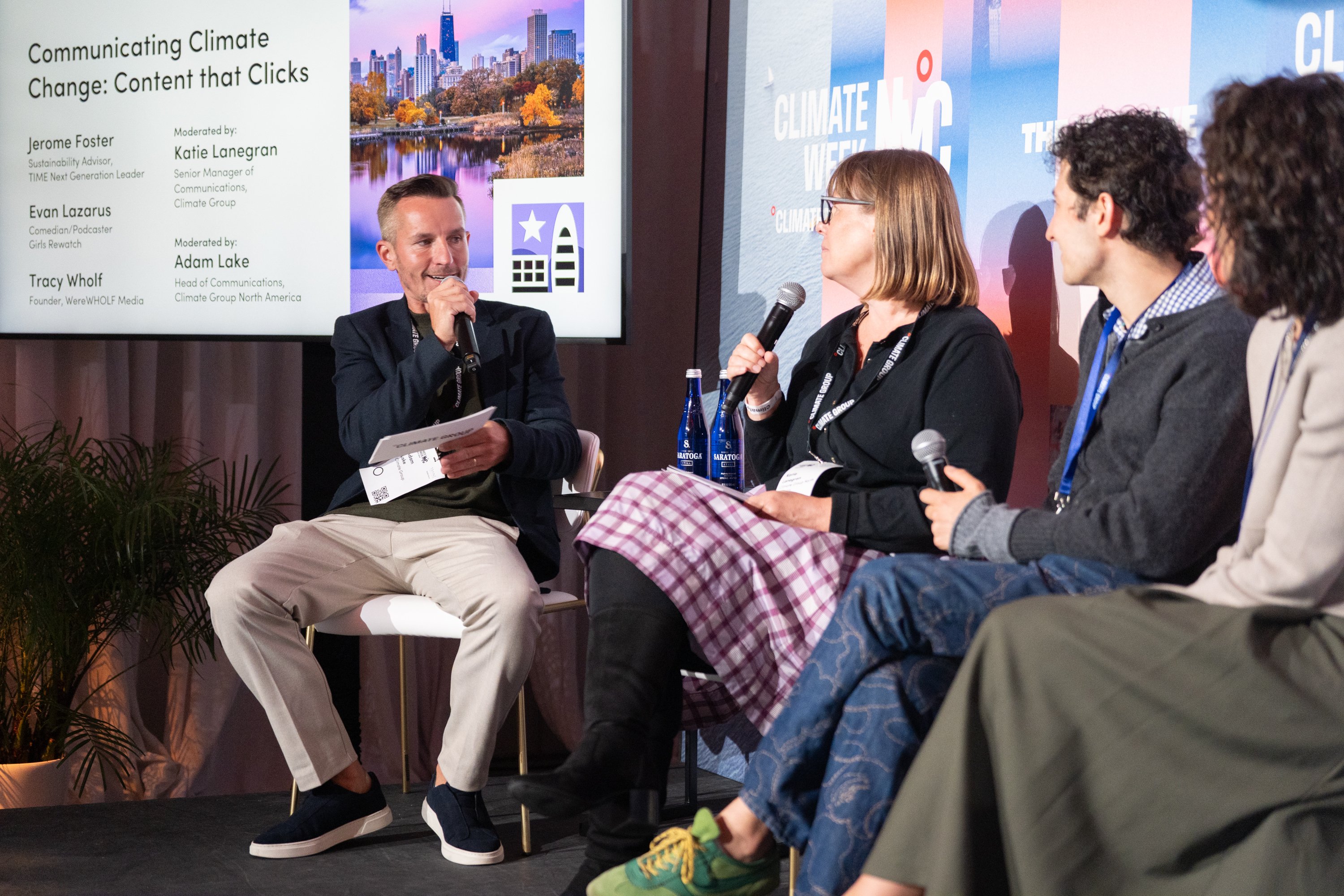
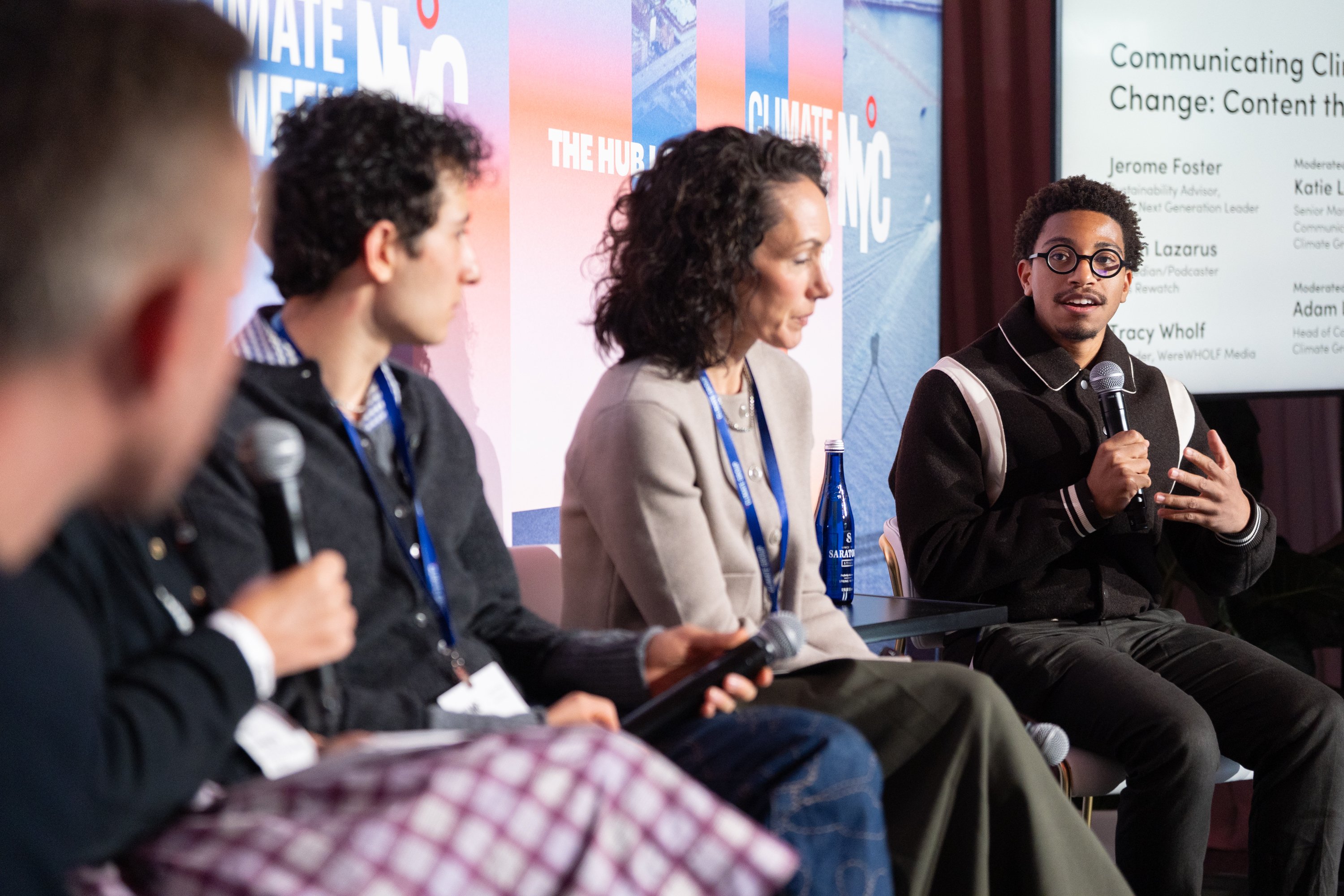 The panel on stage for Communicating Climate Change: Content that Clicks, an American Innovation and Abundance session at Climate Week NYC 2026
04.40pm ET
In a breakout on the conventional materials hiding in plain sight that will scale the clean economy, Betty Cremmins, Senior Green Public Procurement Specialist, Industrial Deep Decarbonization Initiative, set the problem out in a line.
"We need more materials but we don't need more emissions."
Steel came first. Shivakumar Kuppuswamy, Director of Development and Innovation, ResponsibleSteel, was clear that the answer isn't using less of it.
"The idea is not to reduce the consumption of steel. The idea is to provide the right type of steel."
What a standard does, he said, is give suppliers clarity on what they can credibly claim, rather than color coding something green and hoping, and that clarity is what moves capital through policy, trade and finance. He also pushed back on carbon as the whole measure.
"The story is half completed if you only look into carbon. The rest is about social aspects."
Sofie Runius Cederberg, Director Group Sustainability, AB SKF, brought the buyer's side of it, starting with where the weight of her company's supply chain pollution actually sits.
"70% of supply chain emissions sits in steel. We need to do something."
SKF now asks suppliers to be transparent about their plans, she said: renewable sourcing, electrification, scrap content, collected and updated quarterly and specific to each supplier rather than an industry average. In Europe that has meant buying from electric arc furnaces, and the open question is how to do the same in India and China.
"The technology is there. We know it can be done. How do we create that demand?"
Mariane Jang, Senior Policy Advisor, Division of Resiliency and Sustainability, New York State Office of General Services, described what a public buyer can move.
"The signals are being sent by specifications. These are our biggest tools."
Most products now carry an environmental product declaration, she said, and the state leans heavily on those for quality. Nonprofit partners have pushed progress along, and states are learning from each other, because nobody gets there alone.
Then cement. Wouter Vink, Director, Systemiq, made the case for blended cement, which has been in use for more than a century and cuts the clinker content. It's proven, it's scalable, and for countries that used to import cement it opens up local value chains and local jobs. The reason he's excited about it, he said, is that it can be scaled today.
Ruth Onkangi, Research Officer, National Construction Authority, Government of Kenya, showed what that looks like in practice. Kenya's NDC, submitted last year, names buildings as a key sector, and construction underpins much of the economy. Blended cement would let the country move from centralized factories to local processing hubs, creating green jobs and taking the fast mover advantage, and the government is pushing for it.
"Industry pushes, government pulls."
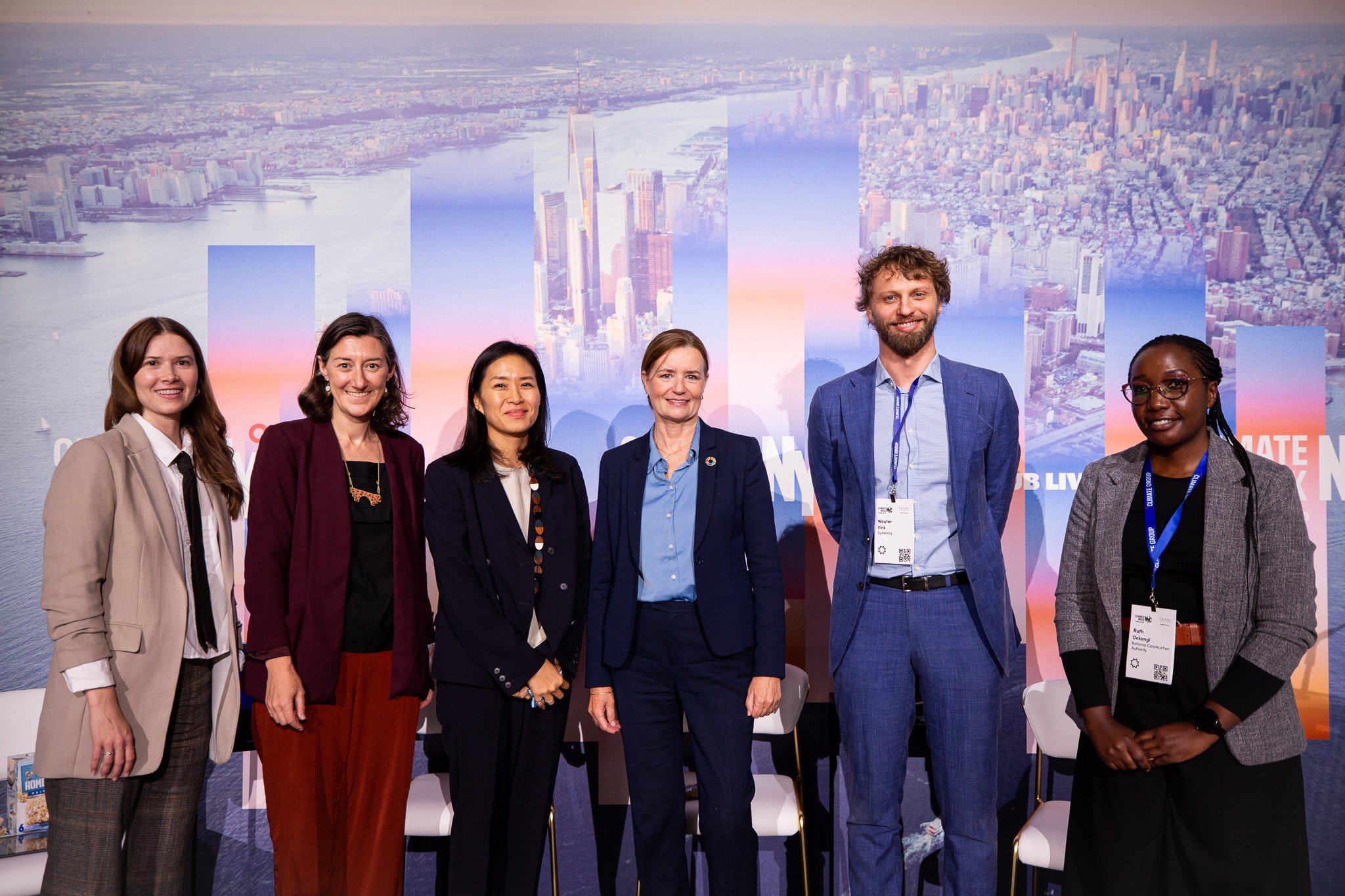 The panel on stage for a breakout on the conventional materials that will scale the clean economy at Climate Week NYC 2026
04.40pm ET
In a breakout on climate as growth, Rik Goverde, Director of Programme and Corporate Communications, Climate Group, asked how to communicate opportunity rather than cost, with Marek Pruszewicz, CEO, Dialogue Earth, Shannon Joly, Chief Marketing and Communications Officer, CDP, Dan Thomas, Chief Communications Officer, UN Global Compact, and Prefect André Granda of Pastaza, Ecuador.
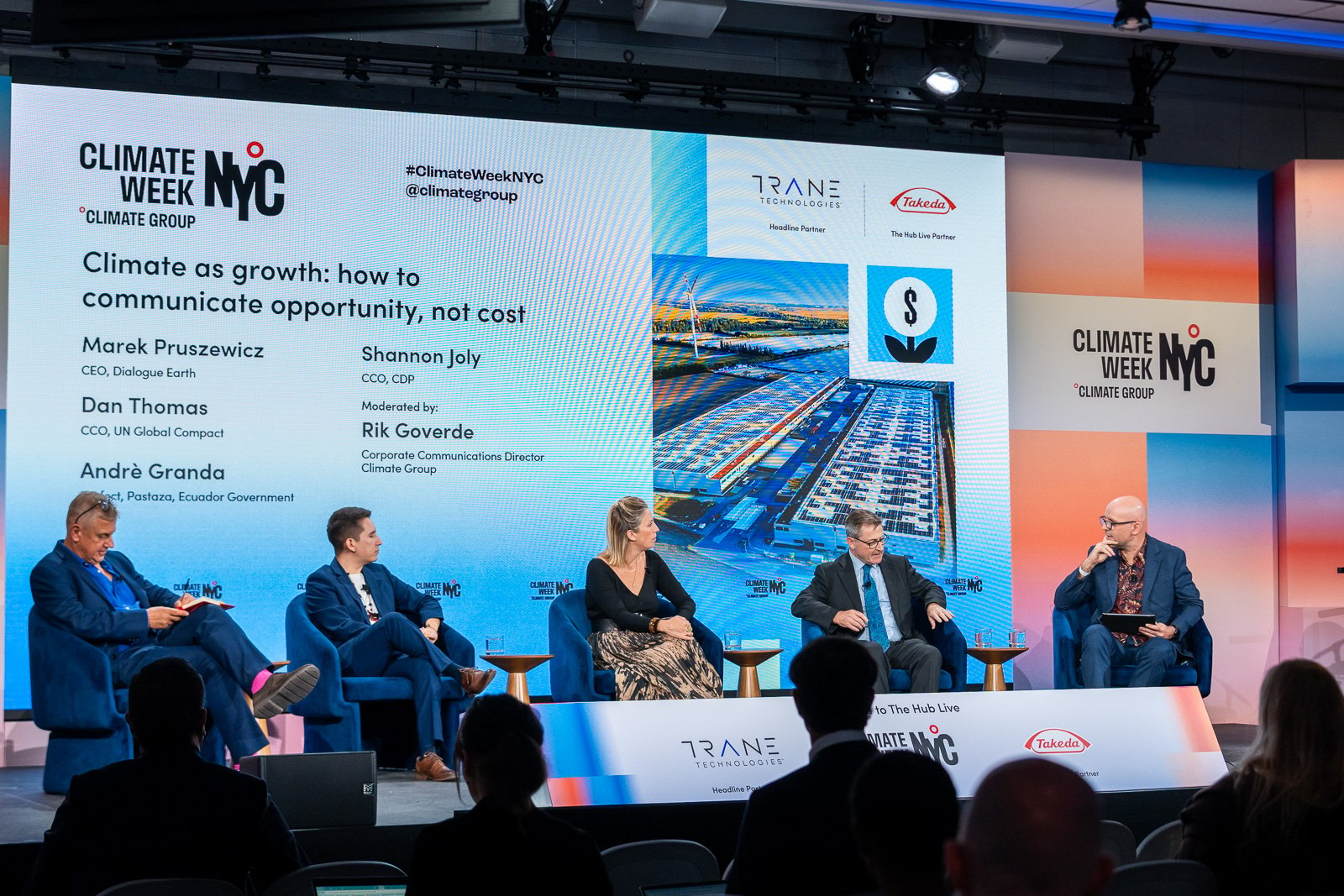 The panel on stage for a breakout on how to communicate opportunity, not cost at Climate Week NYC 2026
03.40pm ET
Helen Clarkson OBE, CEO, Climate Group, opened the Food Forum with a fireside on what certification actually does for farmers. Paul Lightfoot, General Manager, Patagonia Provisions, and Suzanne Sengelmann, CEO, Lundberg Family Farms, both made the case for keeping to a few simple certifications that consumers can recognize. The harder problem is the transition itself: moving from pesticides to regenerative practices takes three years, and farmers get none of the premium pricing during it. They borrow at the start of the year, which means they need capital, secured demand and some accountability that doing it the right way will be rewarded.
The first panel, moderated by Dr Prabhu Pingali, Professor, Cornell University, put the scale of it plainly. Food systems produce around a third of greenhouse gas pollution, most of it from inefficient use of water and energy across the supply chain. What's needed, he argued, is behavior change from governments that still treat food security as a bigger pile of grain.
Purnima Menon, Director for Strategy and Partnerships, International Food Policy Research Institute, wanted the conversation to move from farming to eating.
"Eating is an agricultural act."
People's choices are shaped by policy, she said, and we are in a data desert on what people actually eat and where it came from. Patty Fong, Director of the Food and Agriculture Program, ClimateWorks Foundation, took apart the misconceptions underneath that. Hunger is not a production problem, it's access, affordability and waste. Diet is not a matter of personal responsibility alone, it's shaped by price and availability, and we should be honest about how little choice many people have.
Chris Ninnes, CEO, Aquaculture Stewardship Council, pointed to the part of the food system that rarely gets discussed. Farmed fish is the fastest growing food production system in the world, and seafood is a cultural staple across Asia, which is not something you redesign quickly. Targets on regenerative agriculture and fossil fuels are valid, he said, but the timeline and the route from A to B is where the work is.
"We need to be conscious. How do we get to the recognition that seafood demands, how do we use it as part of our strategies to make the changes we want to see?"
Yan Wyss, Global Head of Public Affairs, Nestlé, spoke for the largest food company in the world, selling a billion products a day, and was direct about where transparency starts.
"It starts with traceability."
A second panel, moderated by Fiona Bennie, Partner, Impact and Innovation, Consumer Goods and Retail, Newton, picked up the same thread. Bernhard Kowatsch, Director of the Global Accelerator and Ventures, United Nations World Food Programme, noted that traceability looks completely different depending on where the farmer is, and that digital tools can close some of that gap. Felipe Arango, CEO, Fair Trade USA, argued for regenerating social capital alongside natural capital, and for producers owning their own story and their own data. Regenerative agriculture isn't new, he said, indigenous communities have been practising it all along. Paloma Lopez, Chief Sustainability and Communications Officer, North America, Bel Group, described digitalizing production across a 160 year old business, and came back to what actually moves people: food gets bought because it tastes good, it's convenient and it's nutritious.
Erin Augustine, Vice President, Global Sustainability, Oatly, closed the second fireside with Helen Clarkson on the food environments that retailers and restaurants create, and how much they shape what ends up on the plate. Subsidies and policy still favor the incumbent, she said. Unsustainable is the default, and we keep asking people to opt in to the sustainable choice.
Roy Steiner, Senior Vice President, Food, The Rockefeller Foundation, closed on imagination, and on how badly we tell the story of the future we actually want. He pointed to the foundation's food is medicine work.
"We have the largest controlled randomized trials, and every single trial shows that using food in the right way is much more cost effective than traditional pharmaceutical approaches for several diseases."
"I think this will fundamentally change the way our health care system will operate in the future."
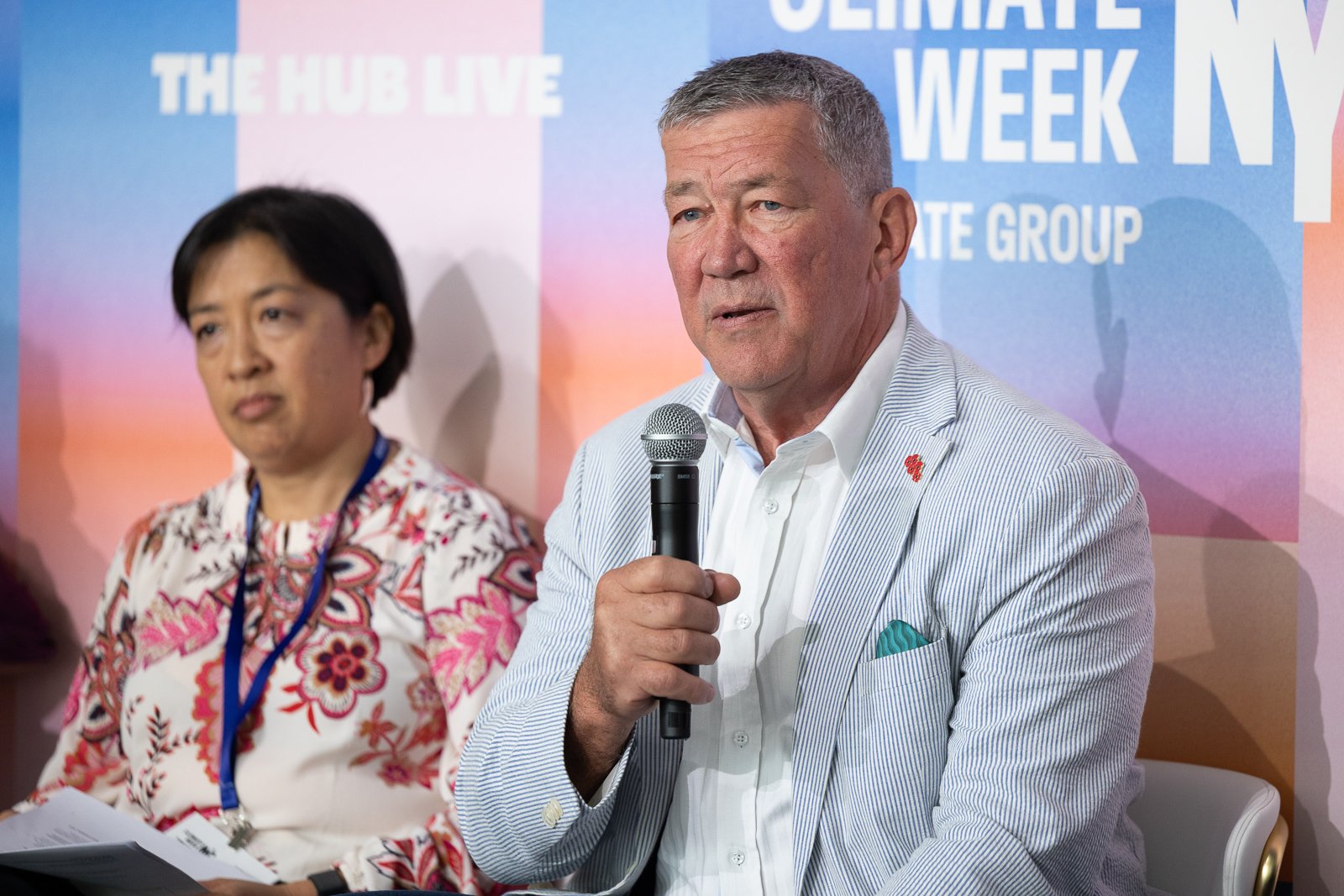 Chris Ninnes, CEO, Aquaculture Stewardship Council
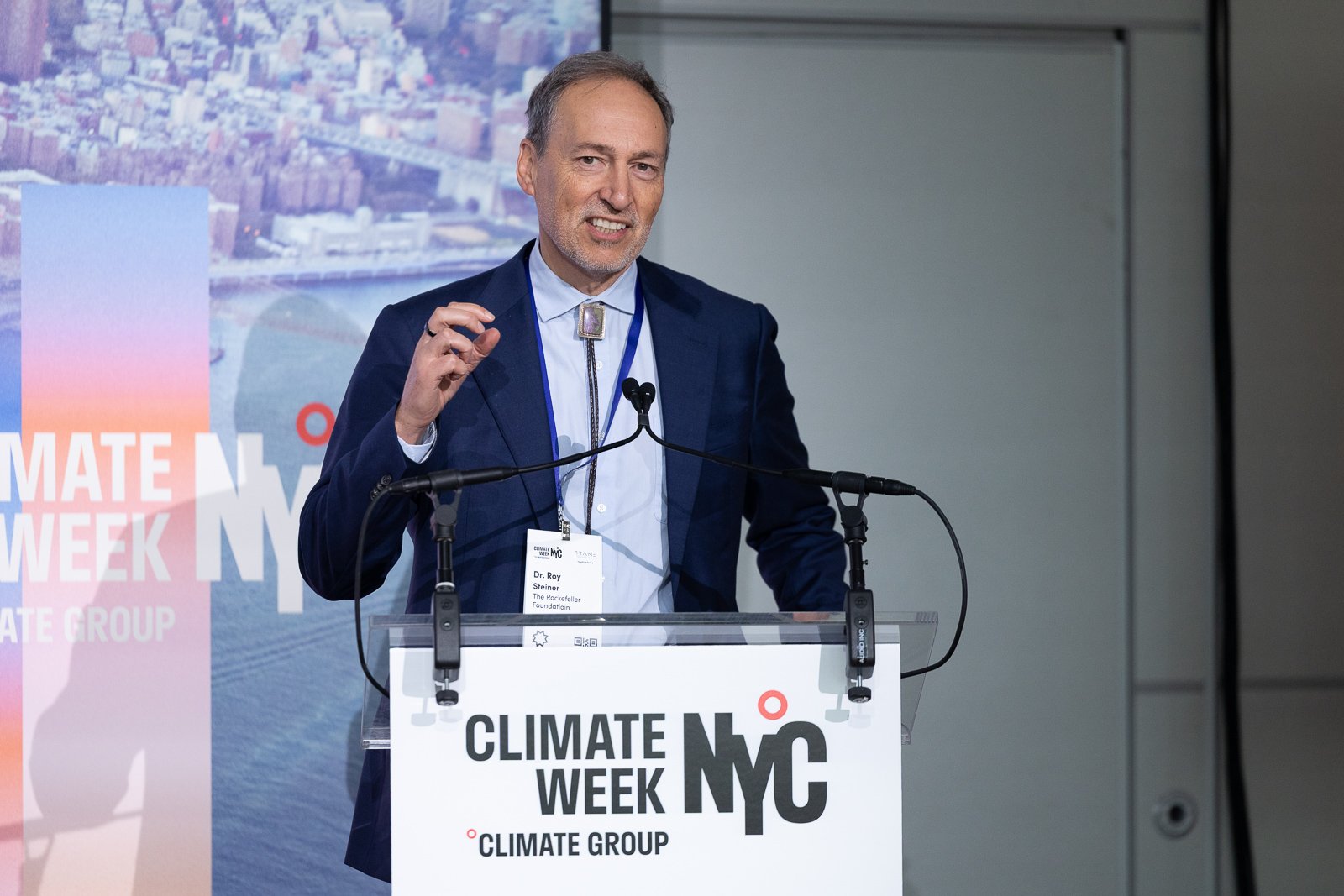 Roy Steiner, Senior Vice President, Food, The Rockefeller Foundation
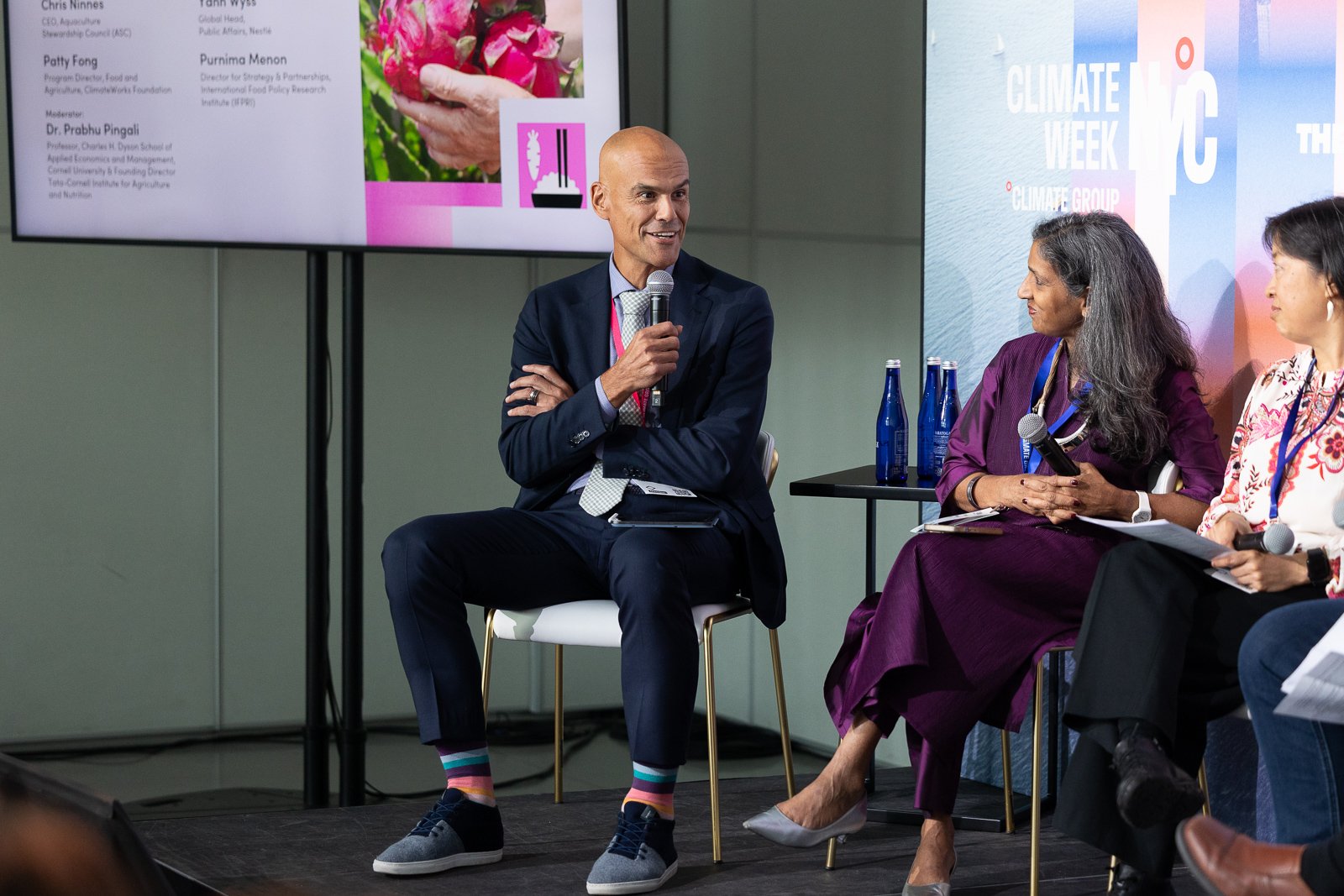 Yan Wyss, Global Head of Public Affairs, Nestlé
03.40pm ET
In a breakout on how better storytelling has changed the climate conversation, Adam Lake, Head of Communications, North America, Climate Group, put the shift from "listen to the science" to the science of listening to three communicators working on it from different angles.
Hannah Safford, Associate Director of Climate and Environment, Federation of American Scientists, started with the audience.
"You need to reflect on how people are experiencing these issues. That lived experience is just as genuine input as policymaking in science is."
The story has to be adapted to the person being told it, she said, which means talking to the public in a way that shapes the discourse rather than talking past it. On the assumption that climate is too divisive to raise at all, she was unconvinced.
"The partisanship is mostly in the headlines, it's not actually in the living rooms."
Bernadette Woods Placky, Executive Director, Talking Climate Communications, came at it through weather, the most direct way most people experience the climate. Climate change is getting more impactful, she said, so the push now is to keep people safe and prepared, and to meet them where they are. She pointed to the launch of the Talking Climate Collaborative, set up to grow and strengthen climate communications, and was clear about the problem it exists to close.
"There's a massive gap between our knowledge and the public's knowledge."
Emma Stewart, CSO, Climate Spring, argued that the sciences most needed in this conversation aren't the physical ones.
"The physical sciences are missing the fact that behavior and neuroscience is actually what helps us understand humanity."
Her work is with screenwriters, who she described as the people who carry an audience somewhere they wouldn't otherwise go. The material is already there, she said.
"We're all living in the greatest true crime in human history."
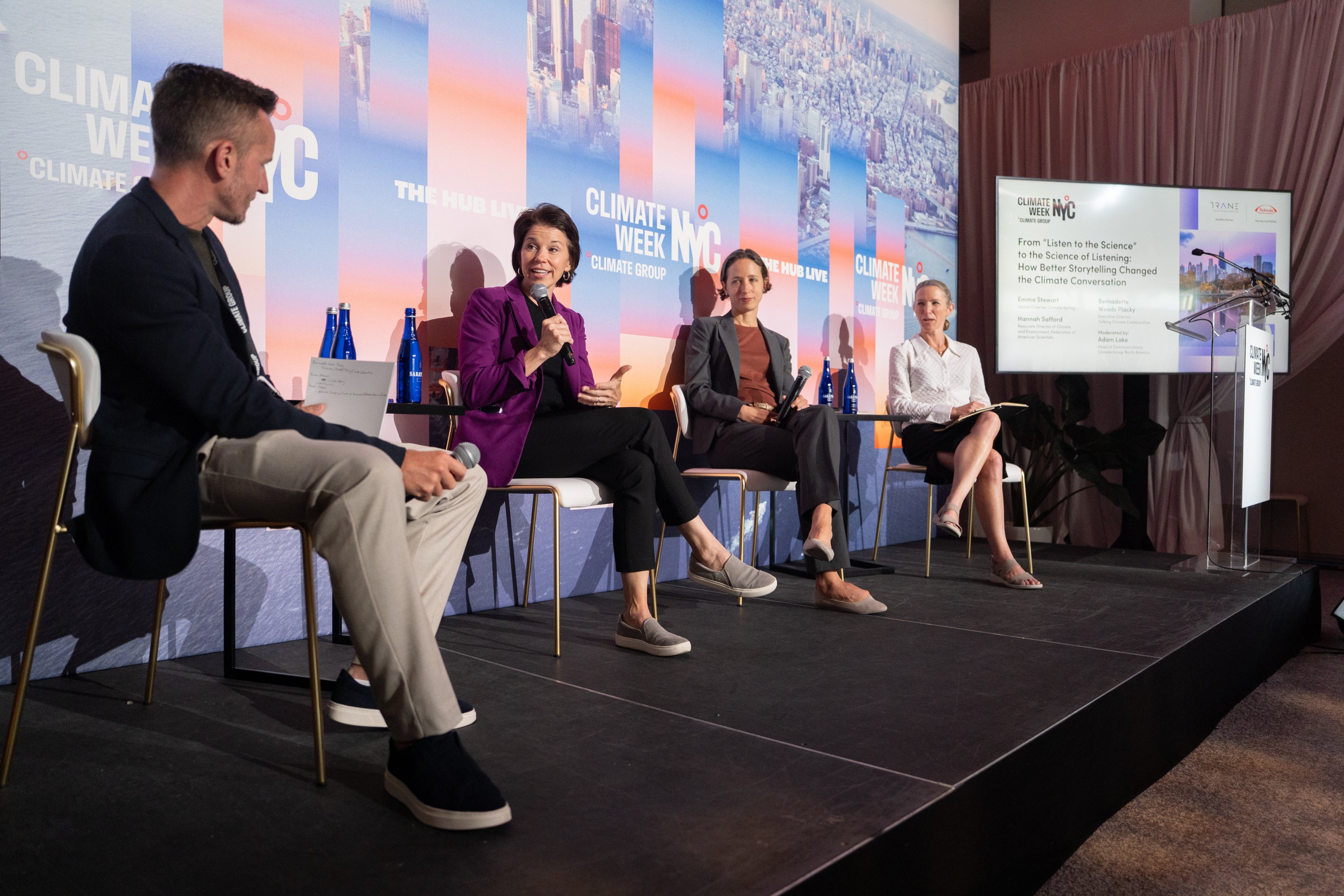 The panel on stage for a breakout on how better storytelling has changed the climate conversation at Climate Week NYC 2026
03.40pm ET
In a breakout on how efficiency, electrification and AI will remake modern manufacturing, Mike Peirce, Executive Director of Systems Change, Climate Group, put the question of where the real gains are to a panel from across industry.
Emily Vesling, Director of Sustainability, Trane Technologies, pointed to the factory floor as the place where AI is already proving itself. Manufacturing data has existed for a long time, she said, and applying AI to it unlocks insights that weren't accessible before. Trane owns BrainBox AI, which uses autonomous building controls, and putting those controls on top of equipment already installed cut energy use by 15% in a short space of time.
"AI digitalization... it's creating resilience for these factories."
Hannah Hislop, Head of Sustainability - Climate, Unilever, said the business case for climate action is now impossible to separate from risk. Climate impacts are already showing up in Unilever's operations, she said, and energy efficiency and decarbonization are unlocking real value, not just cutting costs. She pointed to the growing use of AI-powered digital twins across Unilever's sites, which are helping the company optimize production, improve product quality, and respond faster to shifts in consumer demand. On policy, she said what companies need most is long-term certainty: consistent, stable rules that make investment possible, rather than constant change.
"Energy efficiency and decarbonization are unlocking value."
Mike Umiker, Managing Director, Energy Efficiency Movement, made the case that electrification and energy efficiency have to go hand in hand, and that skills are one of the most critical areas. Energy efficiency is a job creator, he said, and the skilled workforce behind it needs to be appreciated as such.
Danielle Holly, Executive Lead, North America, Ellen MacArthur Foundation, turned to materials, where the foundation has been looking at the power of AI across all material streams, starting with product design. Only around 4% of plastics that make it into the bin are actually recycled. There are innovations and pilots that already work, she said, and the question now is cost and extraction.
Asked what's plausible in the next few years, Vesling came back to resilience and productivity, and Umiker to bringing energy efficiency up to a system level, with AI as the default approach within three years.
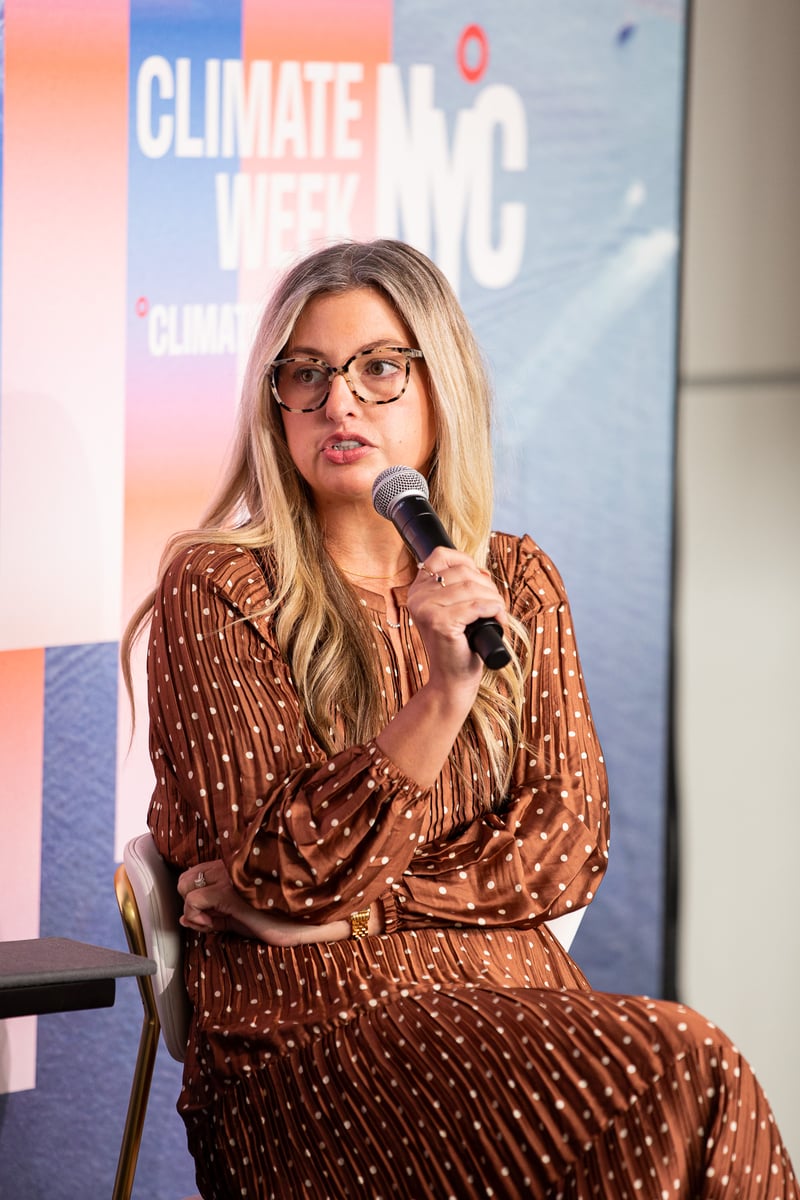 Emily Vesling, Director of Sustainability, Trane Technologies
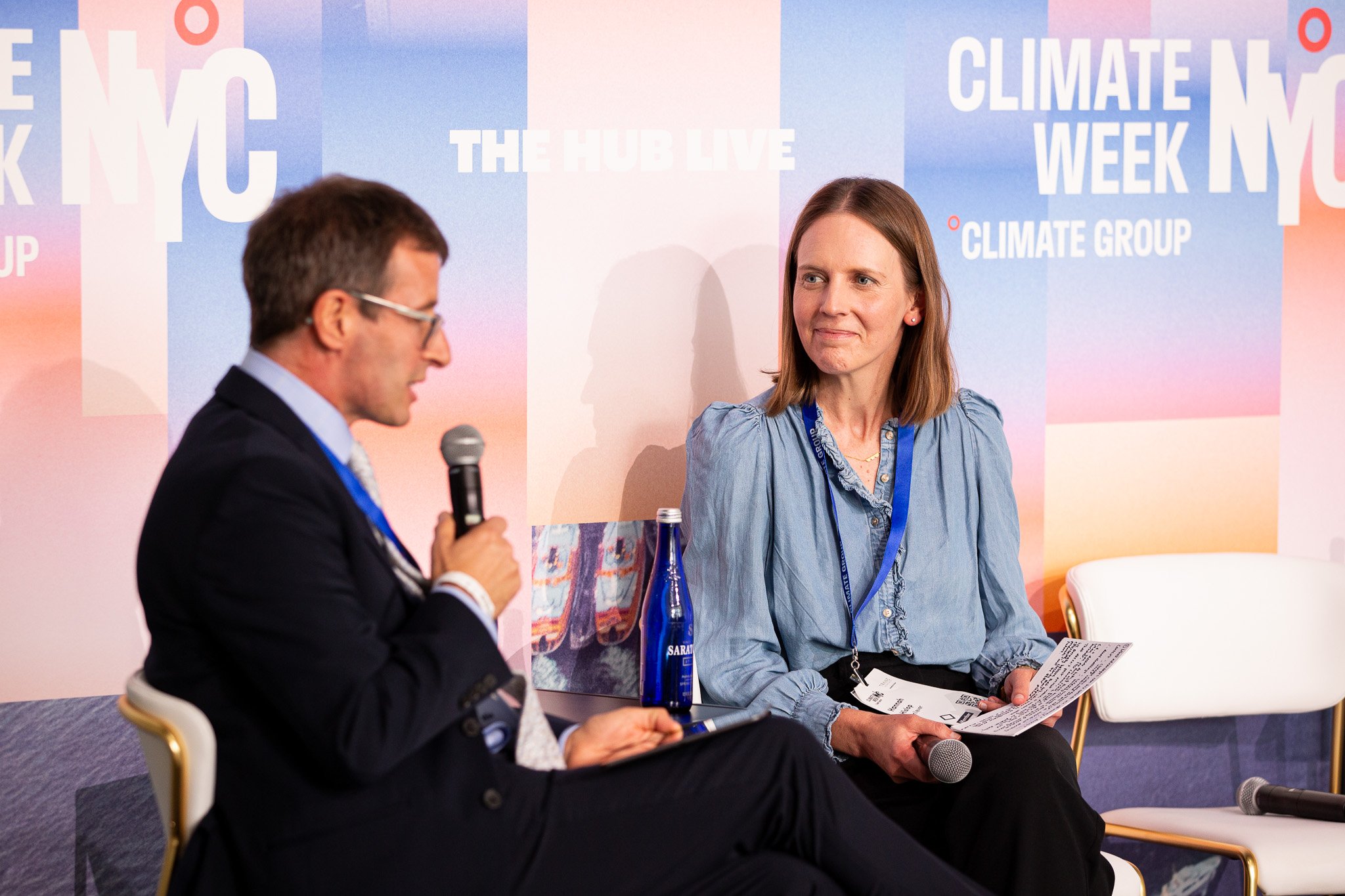 Mike Peirce, Executive Director of Systems Change, Climate Group in conversation with Hannah Hislop, Head of Sustainability - Climate, Unilever
03.25pm ET
The Hon Dr Kevin Rudd AC, President and CEO, Asia Society, closed The Hub Live with an assessment of where the climate debate actually stands.
In the thirty years since Rio, he said, every conference has been progress measured against the science. The UN framework evolved, the Paris Agreement gave the global target effect, and the report card now is grim, with the world tracking well beyond where it intended to be.
He had little patience for those still arguing the case is unproven, and compared them to the tobacco lobby.
"If it's all untrue, why are working families facing insurance problems?"
He pointed to Accountability Office findings that the single biggest driver of home insurance costs for working families is natural disasters, and that the single biggest driver of natural disasters is climate change.
He set out four places to press: doubling down on renewables, electrification, AI, and China.
His closing note to the room was about persistence. The work continues, he said, it recognizes no boundaries, and it delivers real results.
03.00pm ET
Governor Bill Ritter Jr., President and Chair of the Board, North America, Climate Group, asked whether AI can grow without costing the earth, with Sunya Norman, SVP of Impact, Salesforce, and Holly Paeper, President, Commercial HVAC Americas, Trane Technologies.
Paeper started with what's already being wasted. Around 30% of the energy going into US buildings does no useful work, and putting AI on top of the systems already installed can recover 20 to 30% of it. Across 600 million buildings, that's the opportunity. The megawatt, as Ritter put it, is the negawatt.
On data centers, she argued the heat is the question nobody is answering well.
"Can we do something productive about the heat?"
Sending waste heat from a data center to the daycare next door is possible, she said, but it means building the partnerships and the local ecosystem to make it work.
Norman described where Salesforce sits in the chain. As the application layer it has no operational control over the data centers underneath, but accountability has to run the full length of it regardless. What the company wants to be able to say is that the technology works, that it's low carbon, and that it's respectful of the communities it sits in. The way to earn that is transparency, in the same way the industry learned to be transparent about security and downtime.
On community opposition she was direct.
"A hard no is not an approach."
Communities need to engage, she said, and they also need to be informed enough to push in the right direction.
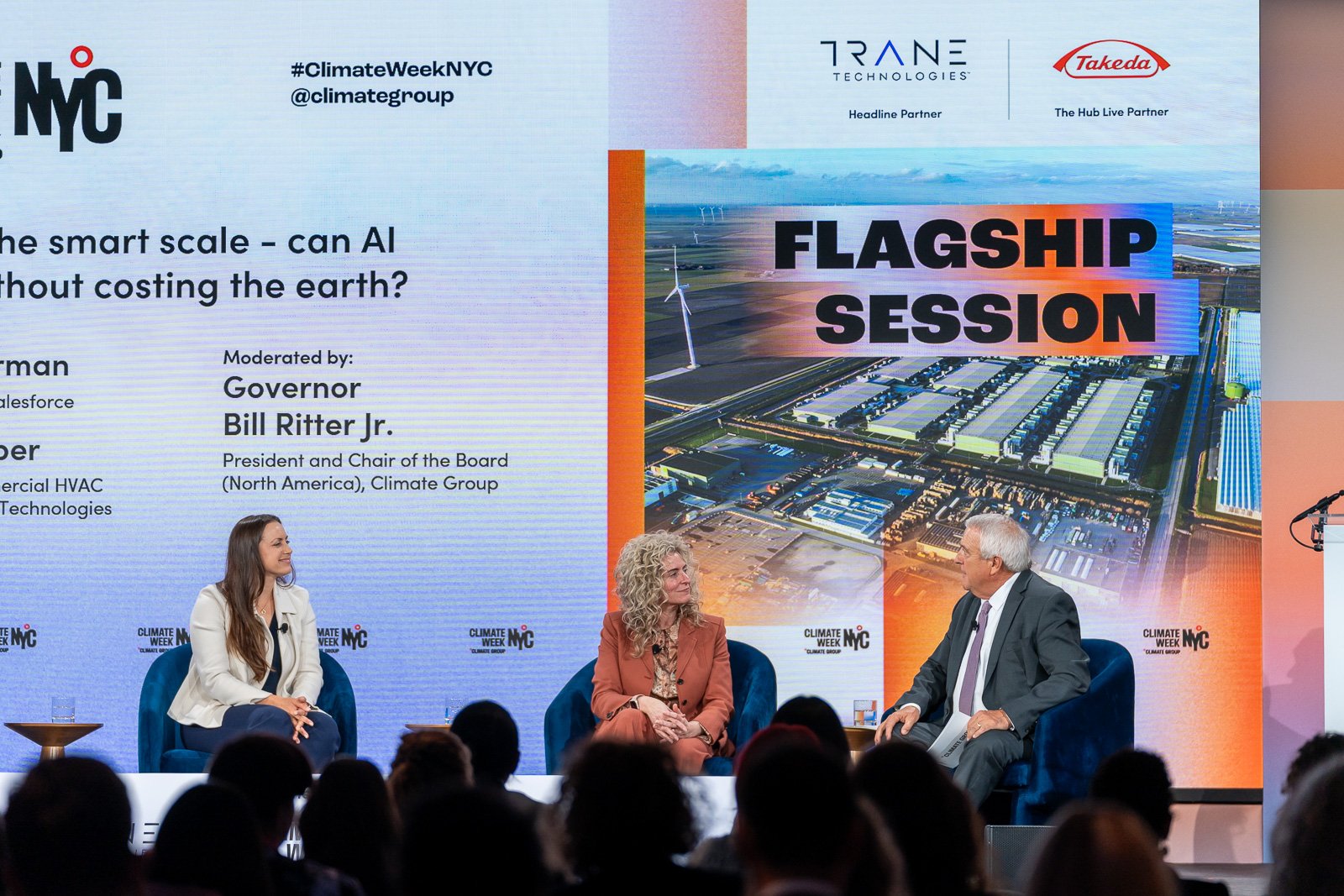 Sunya Norman, SVP of Impact, Salesforce, Holly Paeper, President, Commercial HVAC Americas, Trane Technologies and Governor Bill Ritter Jr., President and Chair of the Board, North America, Climate Group
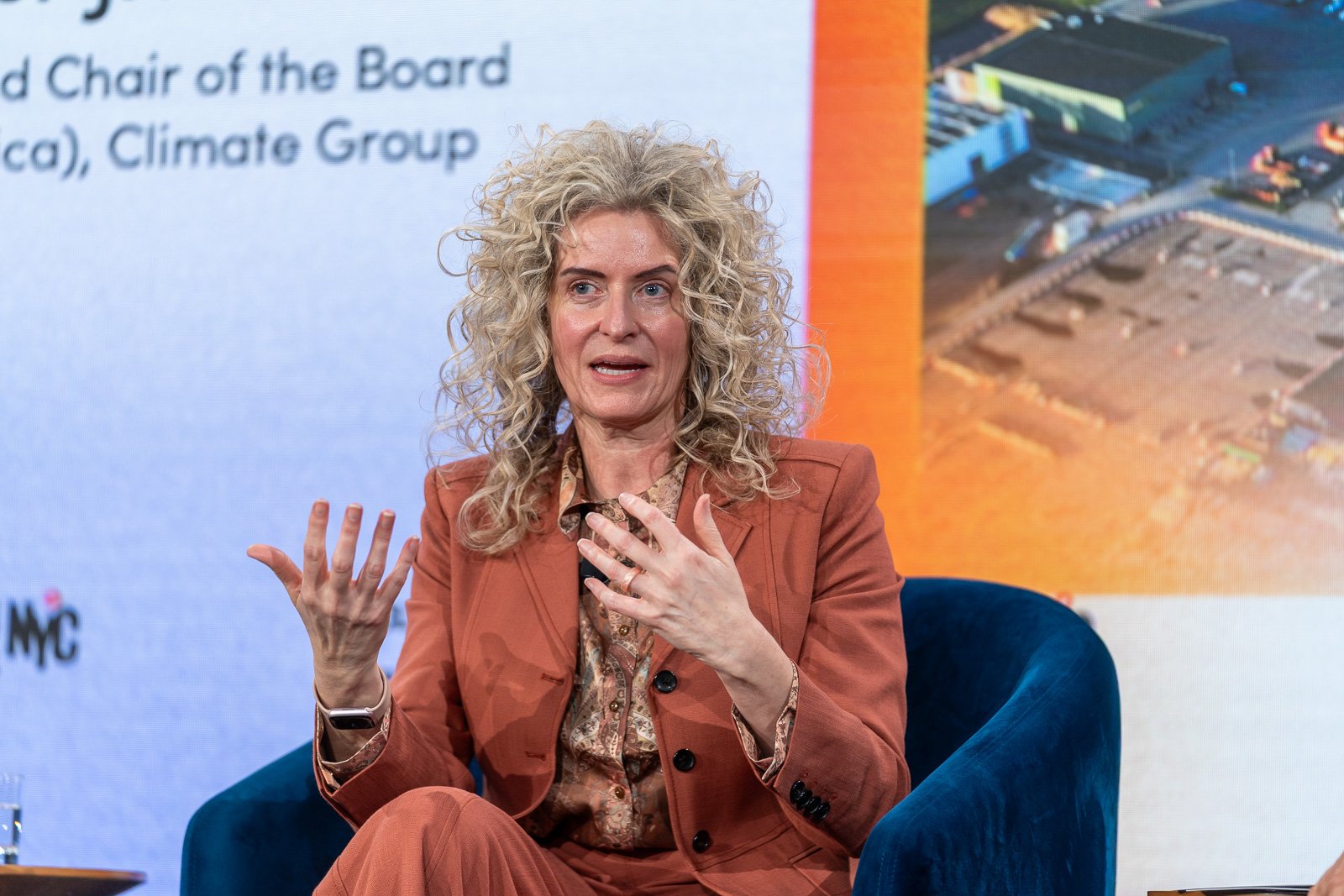 Holly Paeper, President, Commercial HVAC Americas, Trane Technologies
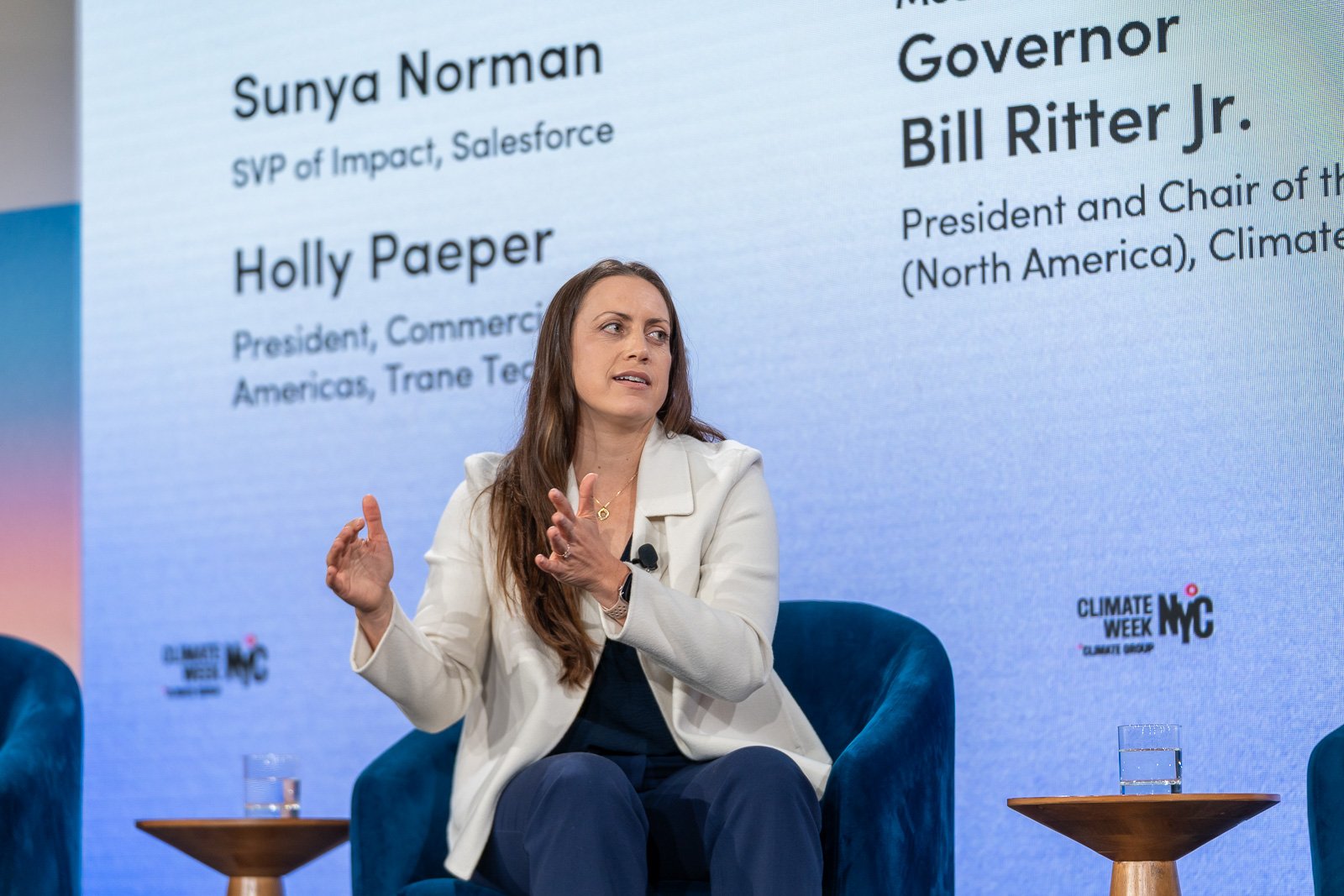 Sunya Norman, SVP of Impact, Salesforce
02.45pm ET
Mads Christensen, Executive Director, Greenpeace International, joined Stephanie Abrams, The Weather Channel, to ask whether a renewable world is a safer one.
There is nothing positive to say about the war in Ukraine, he began, but it has to be the moment things shift, because they are not going back to how they were. Ordinary people are paying the price while fossil fuel companies take the money.
He pointed to the gap between countries that moved and countries that didn't. China has built enormous capacity. Pakistan, heavily dependent on gas, made the decision to go for solar. Others didn't, and are left with energy systems that are weak and exposed. There's a lesson in that for everyone.
On nature he was blunt about how little airtime it gets. Fires, disasters, tipping points crossed one after another, and an Amazon that has lost 18% of its rainforest. The remaining fossil fuel pipeline covers an area the size of Argentina, much of it among the most precious nature left, and all the easy oil has already been found. Renewables need resources too, he said, but on nothing like the same scale.
"My generation and my parents' generation have watched this destruction happen over sixty years. It's our responsibility to stop it."
What frustrates him is that the facts are all in. National and state energy plans, properly updated, would speed the transition on their own. Polluters should start paying, with a mechanism to claw some of it back, and eight in ten people want a shift in who carries the cost.
His advice to the room was short.
"Stop waiting for permission and start acting."
Mads Christensen, Executive Director, Greenpeace International, and Stephanie Abrams, The Weather Channel
02.35pm ET
Eddie Melton, Mayor of Gary, Indiana, joined Angela Barranco, Executive Director, North America, Climate Group to talk about why communities are asking for action.
In Indiana, Melton said, the argument has to come back to return on investment. Gary is a heavy industry city working to become a walkable destination, with fewer cars and better buses, and a quarter of a million people came to its beachfront for the air show.
Asked what advice he would give the room, he pointed to history: the cities that built this country, and Gary's own place in that story.
"We are already making history."
Eddie Melton, Mayor of Gary, Indiana and Angela Barranco, Executive Director, North America, Climate Group
02.05pm ET
In a plenary on building the world's next electrostates, Stephanie Abrams, The Weather Channel, put the question to Dan Li, Secretary General, China Renewable Energy Industry Association, Alan Winde, Premier, Western Cape, and Sam Kimmins, Director of Energy, Climate Group.
Kimmins began by retiring an old argument. The volume of renewables used to be the constraint. It isn't any more, and nor is getting hold of the vehicles. What's left is a competitiveness question: solar is the cheapest power available while fossil fuel prices climb. The private sector is already moving at scale, with RE100 members investing, and what's needed now is governments enabling projects rather than waiting for them.
"This is an economic issue, not just an environmental one. The ones who get ahead of it will benefit commercially."
Winde brought the Western Cape's experience, where a town is now running entirely on its own renewable electricity for the first time, and where companies including Amazon have signed offtake agreements on the back of it.
"We don't get pushback here. Everybody has experienced what it's like not to have electricity."
Dan Li, speaking through a translator, focused on the grid itself. Dispatch and support capabilities have to improve before the system can carry a higher share of renewables.
Asked what he would do differently, Winde was direct: find your biggest risk and go at that. For the Western Cape, it was simply not having power. He also pointed back to Iceland's Prime Minister on this stage yesterday, and the case for dealing with a problem before it arrives.
Kimmins closed on communication. In the UK, he said, messages go out that aren't accurate, implying nobody will ever buy a gas boiler or a car again, and misinformation fills the space because nothing clearer is being said.
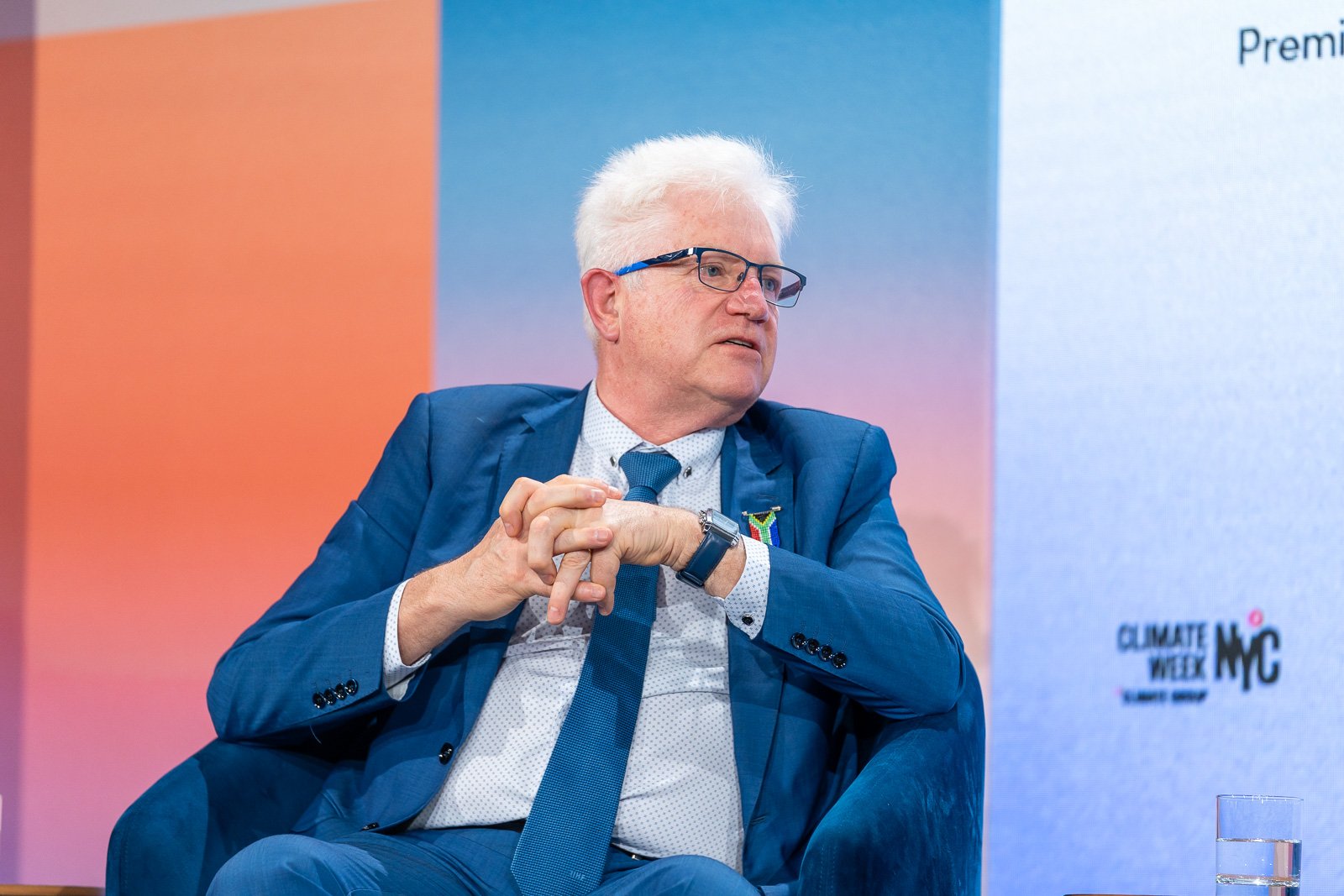 Alan Winde, Premier, Western Cape
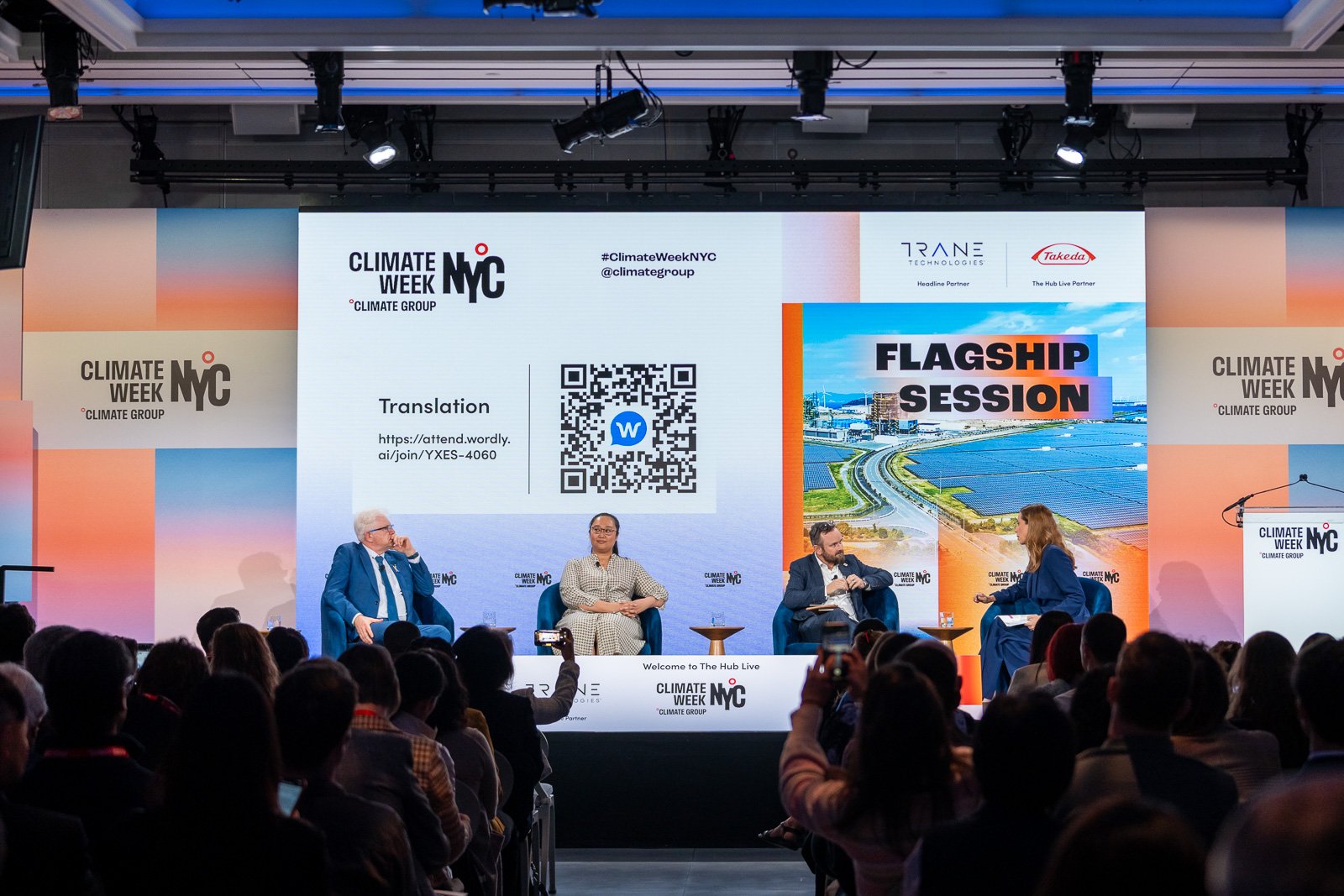 The panel on stage for a plenary on building the world's next electrostates
02.00pm ET
Stephanie Abrams, Meteorologist, The Weather Channel, opens Flagship Three, the final plenary of The Hub Live: The opportunity, who leads, who wins.
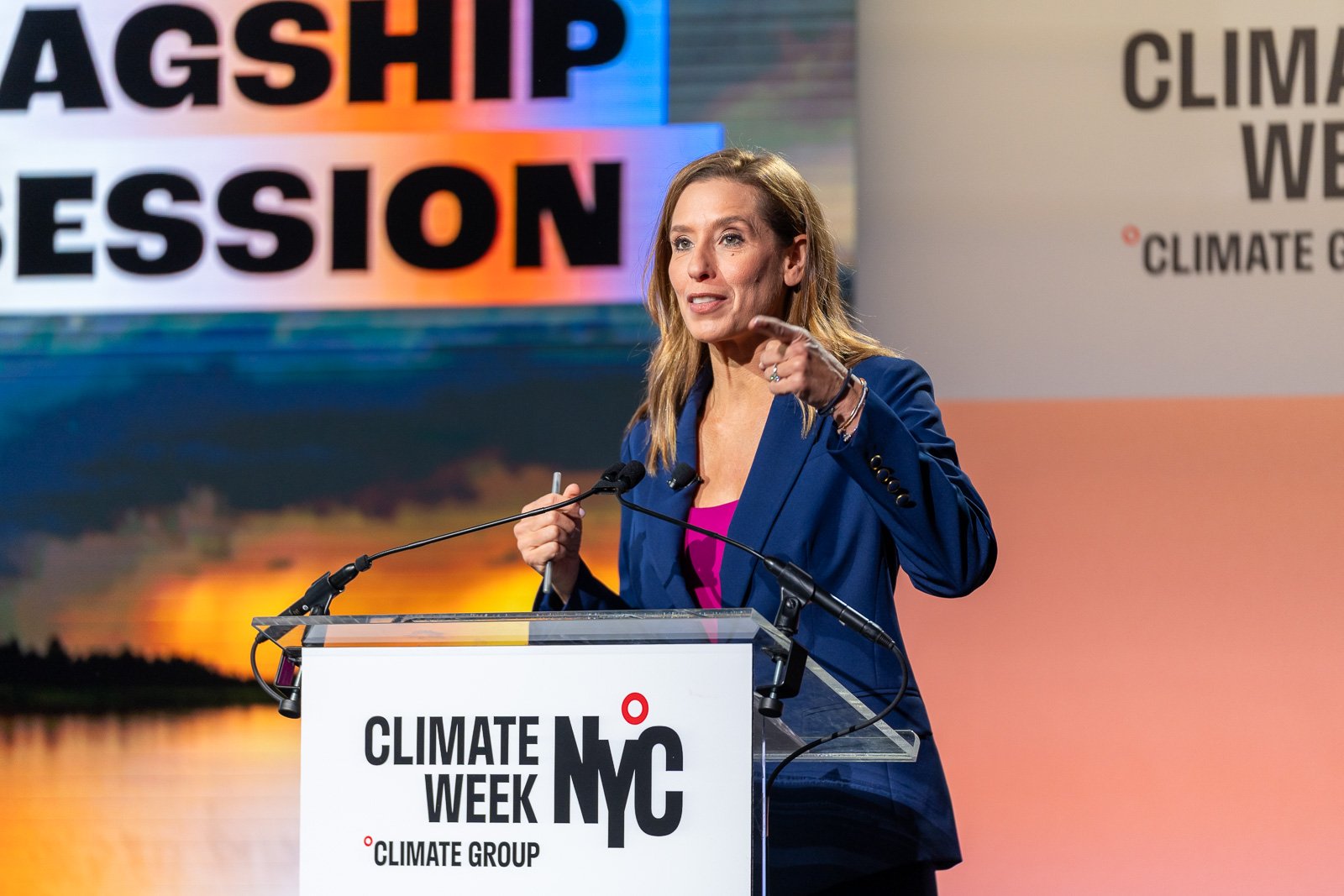 Stephanie Abrams, Meteorologist, The Weather Channel
12.00pm ET
In a Nature and Health session on scaling low-carbon growth in a volatile world, the panel opened on fossil fuel prices and who actually feels them. North America and Europe have been largely shielded from the volatility that markets across Asia, Africa and Latin America live with.
Vance Culbert, Secretariat Manager, COFFIS, IISD, was blunt about the standard government response. Fossil fuel subsidies are poor policy: inefficient, badly targeted at the people who most need help, and politically very hard to unwind once in place.
Caroline Skipsey, SVP Advisory and Client Partnership, Polecat Intelligence, said energy security now dominates the corporate conversation, with less talk of emissions and more partnerships forming. Funding is harder to find, but the opportunity is widening. On the changing role of the chief sustainability officer, she said climate has sat near the top of enterprise risk registers for years. What's new is the reporting and compliance work that puts CSOs alongside finance teams, drawing on a much wider range of data than before.
Asked what they were taking from the week, the panel gave three different answers.
Tanya Singhal, Vice President, India, Global Energy Alliance for People and Planet, said the conversation has moved from strategy to action. The case is accepted. The question now is how, and how to show clean energy delivering reliable power that changes people's lives.
Skipsey had been thinking about Iceland's Prime Minister on this stage yesterday, and what she made of a country using what it has. The UK is surrounded by water, Skipsey said. The question is what each country does with its own inheritance, and who is innovating with it.
"Every country has its own culture and its own infrastructure. What do we have? Where are we innovating? What do we do with what we've been given?"
Culbert pointed to the willingness to collaborate and to inspire each other that he had found this week. Andrew Forth, Head of Policy and Advocacy, Climate Group, closed on energy security as a form of currency: a world where countries use their own resources, and where the 650 million people still without electricity represent an opportunity rather than a problem to manage.
The session ended with Jean Lemire, Envoy for Climate Change and Northern and Arctic Affairs, Quebec, in conversation with Forth, picking up the same question of how low-carbon growth scales when the politics keeps shifting underneath it.
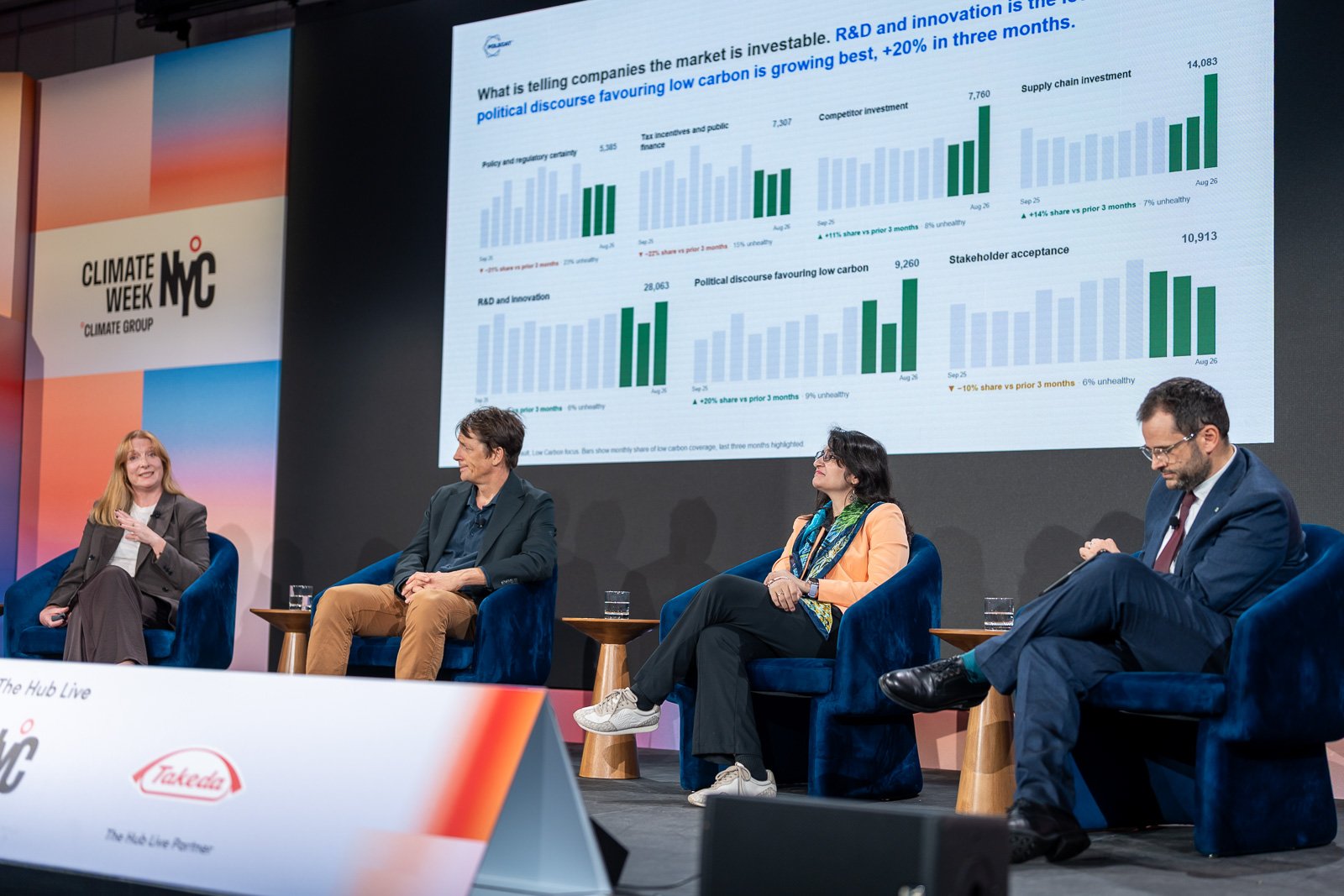 The panel on stage for a Nature and Health session on scaling low-carbon growth in a volatile world
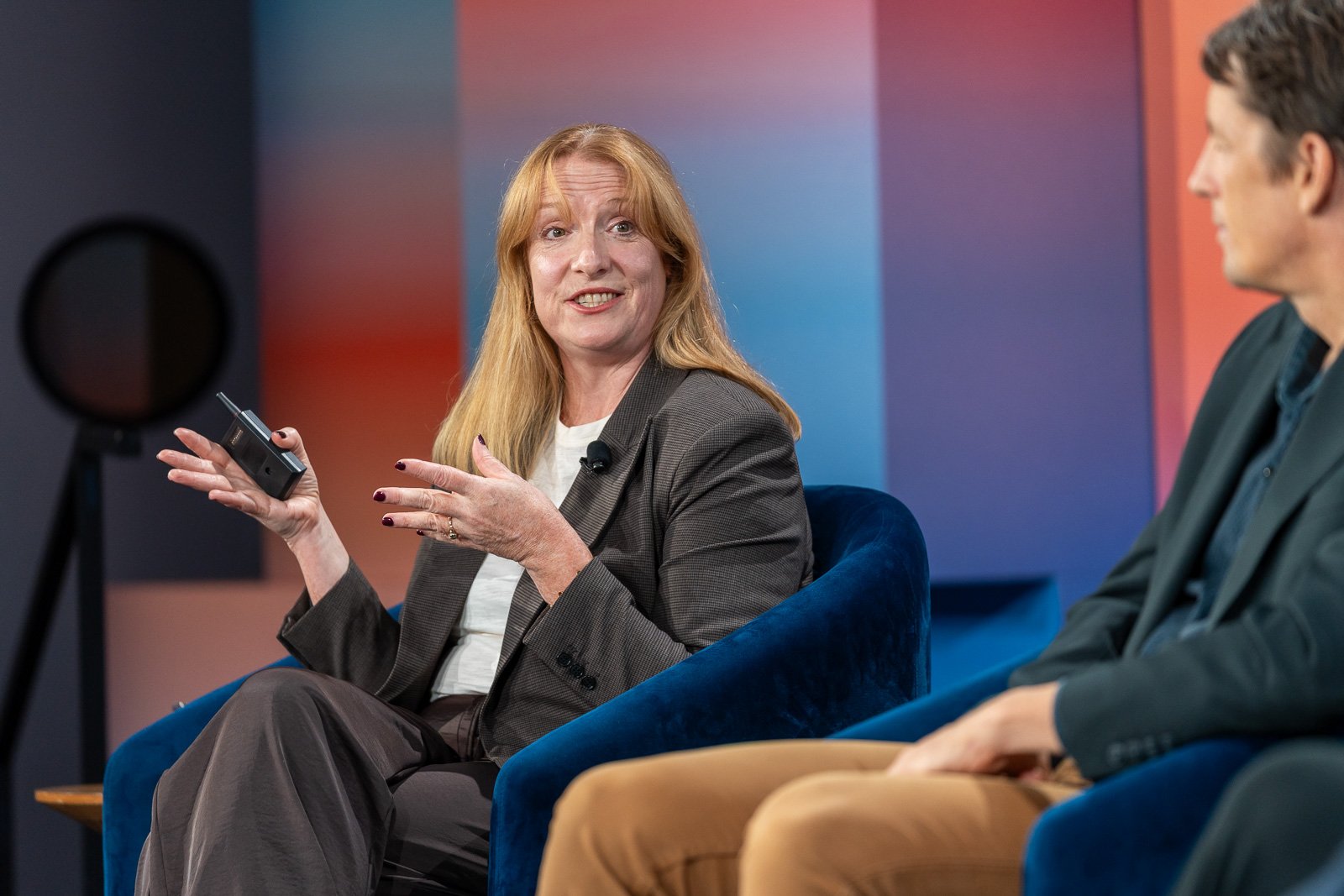
Caroline Skipsey, SVP Advisory and Client Partnership, Polecat Intelligence
12.00pm ET
In an American Innovation and Abundance session on climate, security and America's place in a shifting world, Heather Clarke, CEO, Housing Multiplier Project, moderated a wide panel on where the argument now sits.
Senator Sheldon Whitehouse, Ranking Member of the Senate Environment and Public Works Committee, said the ground has moved. Climate has shifted from the science department to the economics department, and insurance is where people are feeling it. In Texas, he said, two thirds of homeowners now connect their home insurance to climate. The danger is that this cascades into wider economic peril before anyone is ready. He would rather see political change driven before the worst of the trauma arrives.
"The fossil fuel market is a flat and dying market. The clean energy market is buoyant, and it's surging."
Jason Grumet, CEO, American Clean Power Association, named the bottleneck.
"The issue in domestic policy right now is permitting reform."
Data center demand is driving policy, he added, which is the challenge and the opportunity at once.
The panel then turned to preparedness. The National Guard has spent 445,000 days responding to natural disasters, more than double the figure of a decade ago. Climate risk is spreading out from insurance into household financial security. And with federal regulation receding, local communities are stepping in, which several speakers argued is where the solutions actually get built.
DJ Gerken, President and Executive Director, Southern Environmental Law Center, put the planning problem simply: we are preparing for a future that is already behind us.
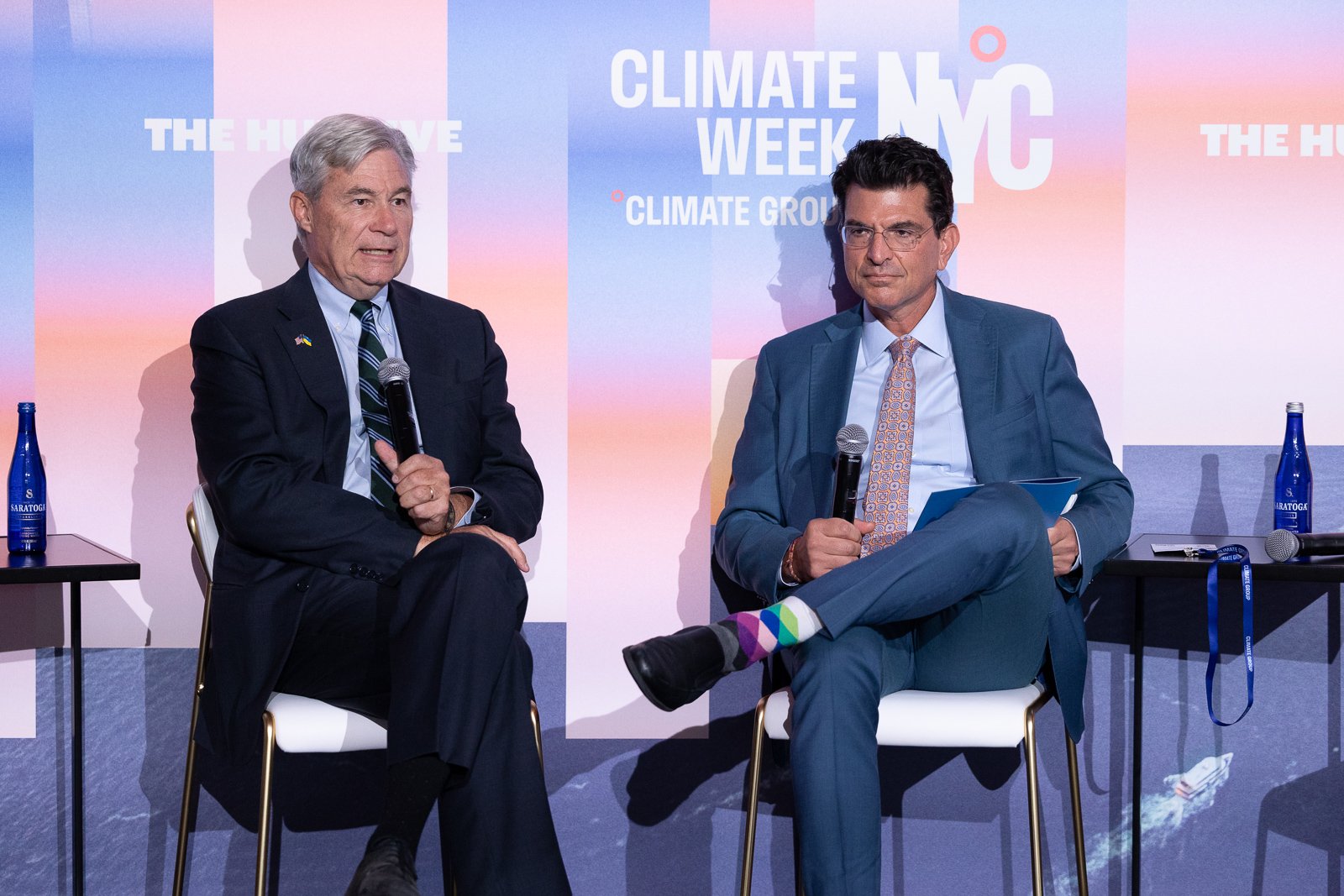 Senator Sheldon Whitehouse, Ranking Member of the Senate Environment and Public Works Committee and Jason Grumet, CEO, American Clean Power Association
12.00pm ET
In a Transport and Industry session on unlocking the best deal for the Global South, Killian Dorier, Senior Programme Manager, Transport, Climate Group, opened on the shift that makes everything else possible: in a growing number of developing markets, electric vehicles have reached price parity.
The examples came quickly. Sebastian Castellanos, Senior Associate Director of Emerging Economies, Drive Electric Campaign, ClimateWorks Foundation, pointed to Ethiopia, which banned combustion engine imports two years ago and now has 150,000 electric vehicles on its roads, and to Kenya, where a quarter of motorcycles sold are electric. Tali Trigg, Principal, Electric Mobility, European Bank for Reconstruction and Development, pointed to Uzbekistan, where electric buses are arriving in the hundreds and electric vehicles are approaching a fifth of the market.
Prabodha Acharya, CSO, JSW, framed it as national exposure. India imports more than 90% of its energy. JSW, the country's largest steel producer and a founding member of EV100, set out to electrify its entire internal fleet before the ecosystem to support it existed. They set the ambition, he said, and the solution followed. The company now has capacity for 15,000 vehicles, has invested in three electric mobility manufacturers, and offers batteries as a service, so customers pay per kilometer rather than carrying the risk.
Alejandro Rodriguez, Sustainability Portfolio Manager for the Americas Region, Siemens, found the same appetite in Latin America. Mexico now has 100km of electric public transport in service, nine in ten survey respondents say they would buy another electric vehicle, and a heavy duty electrification task force has brought 21 organizations and 3,700 vehicles together. Asked what unlocks the speed of the transition, he pointed past the technology.
"The next step is data transparency. Informed decisions are what give people certainty."
On money, Trigg said payback periods under five years mean the EBRD can lend on commercial terms, though local banks don't yet have the appetite. Castellanos argued the business case is still tilted toward legacy manufacturers, and that what unlocks capital is standards: clear rules everyone can plan against, co-created rather than imposed.
The balance of payments argument is landing as well. Ethiopia would go broke importing fuel, Castellanos said, and this year's oil price spike proved the point.
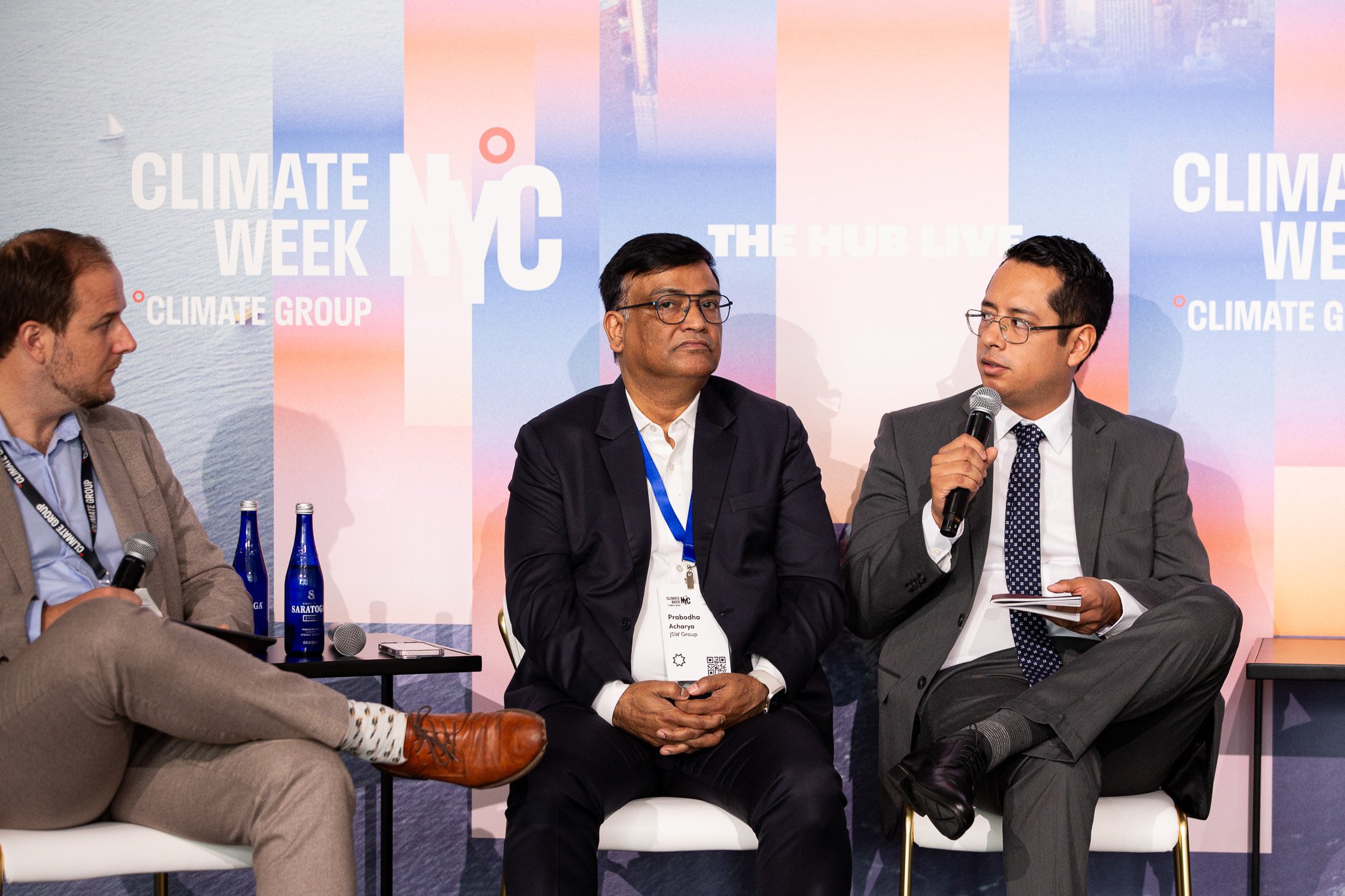 Alejandro Rodriguez, Sustainability Portfolio Manager for the Americas Region, Siemens speaking at the Transport and Industry session on unlocking the best deal for the Global South
11.00am ET
In an American Innovation and Abundance session on moving the US forward for climate, Hannah Safford, Associate Director of Climate and Environment, Federation of American Scientists, moderated a panel of state officials and operators on what gets built, and who gets a say in it.
Rob Bonta, Attorney General, State of California, made the case for the courts. His office has brought 93 lawsuits against the federal administration in 87 weeks, he said, and is winning 83% of them, which has protected significant funding for climate action in the state. States have always held real authority, he argued, and litigation is the tool uniquely available to them.
Serena McIlwain, Secretary, Maryland Department of Environment, was direct about why data center projects keep running into trouble. Companies aren't bringing communities into the conversation early enough, and misinformation fills the gap. Her advice was about language: communities don't speak in jargon, so neither should anyone trying to explain a project to them. Amanda Lefton, Commissioner, New York State Department of Environmental Conservation, wants a framework that gives communities something to negotiate with, and said that's a responsibility for business as much as for government.
Serge Abergel, COO, Hydro-Québec US, described growth without precedent, and the pressure that comes with it.
"The two things we need are long term planning and collaboration. The pressure now is on to deliver."
The first lesson, he added, was to speak to people with facts, and to connect the solution to the problem people actually have.
Dr. Noel Hacegaba, CEO, Port of Long Beach, set out a target of a fully zero emissions port, with 24 years to get there and 150 years of history behind them.
"Ports sit at the intersection of trade, geopolitics and climate."
Dr. Noel Hacegaba, CEO, Port of Long Beach, on the road to a fully zero emissions port at The Hub Live
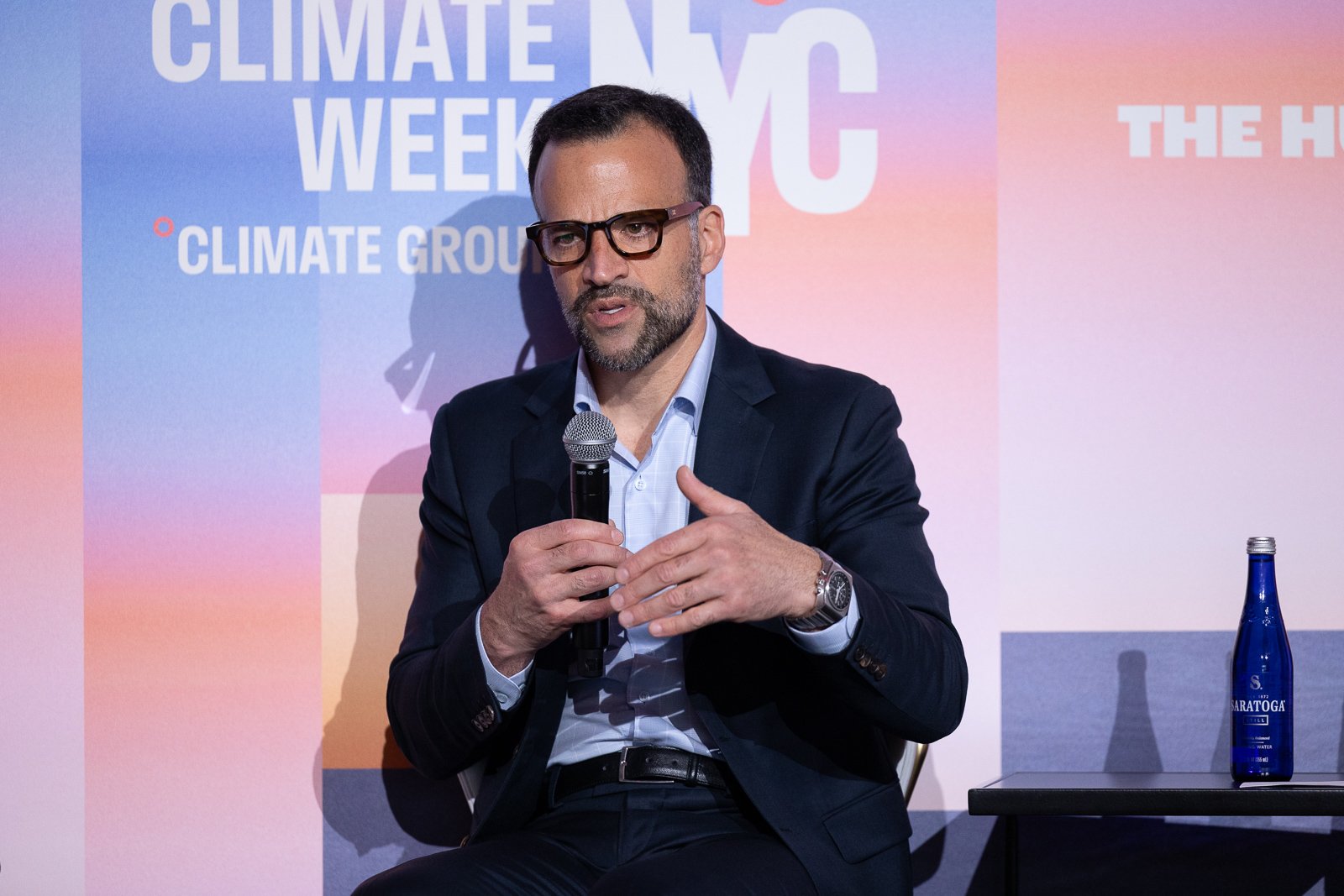 Serge Abergel, COO, Hydro-Québec US, on long term planning and collaboration at The Hub Live
11.00am ET
In a Nature and Health session on tackling health care's emissions, David Wallace-Wells of The New York Times moderated a conversation that kept coming back to one problem: most of a health system's footprint sits outside its own buildings.
Johanna Jobin, Global Head of Environmental Sustainability and Compliance, Takeda, said healthcare goes far beyond hospital walls. Takeda is targeting net zero across its value chain by 2040, and the hardest part is exactly there, where cost-effective solutions don't yet exist and a heavily regulated industry limits what can be substituted. Materials that can be reused or recycled are a hotspot, and design is where that gets decided. She also pointed to the company's dengue work, where climate has made the disease's spread considerably worse.
Her ask of the room was blunt.
"Less convening and more action."
Jenna Agins, Assistant Director, Energy and Sustainability, NYU Langone Health, brought the operational reality. The hospital evacuated its main campus during Hurricane Sandy and has been rebuilding for resilience ever since. Changing infrastructure in a building that runs 24 hours a day, every day of the year, is its own constraint. Her framing of the goal was simple: the kilowatt hour you don't use, and the disposable item you don't buy. NYU Langone serves millions of meals a year, all of which count toward its emissions, so the food supply chain has become part of the work too.
Dr. Mary Rice, Director of the Center for Climate, Health and the Global Environment, made the case for leading with the health benefits, which evidence shows rise whenever fossil fuel combustion falls. The harder problem, she said, is implementation. It's much easier to fund research into what's wrong than into how to fix it.
Jennifer Kim Field, CSO, Henry Schein, said the value chain is the central challenge for a distributor, and that the industry lags on standards it could be setting collaboratively.
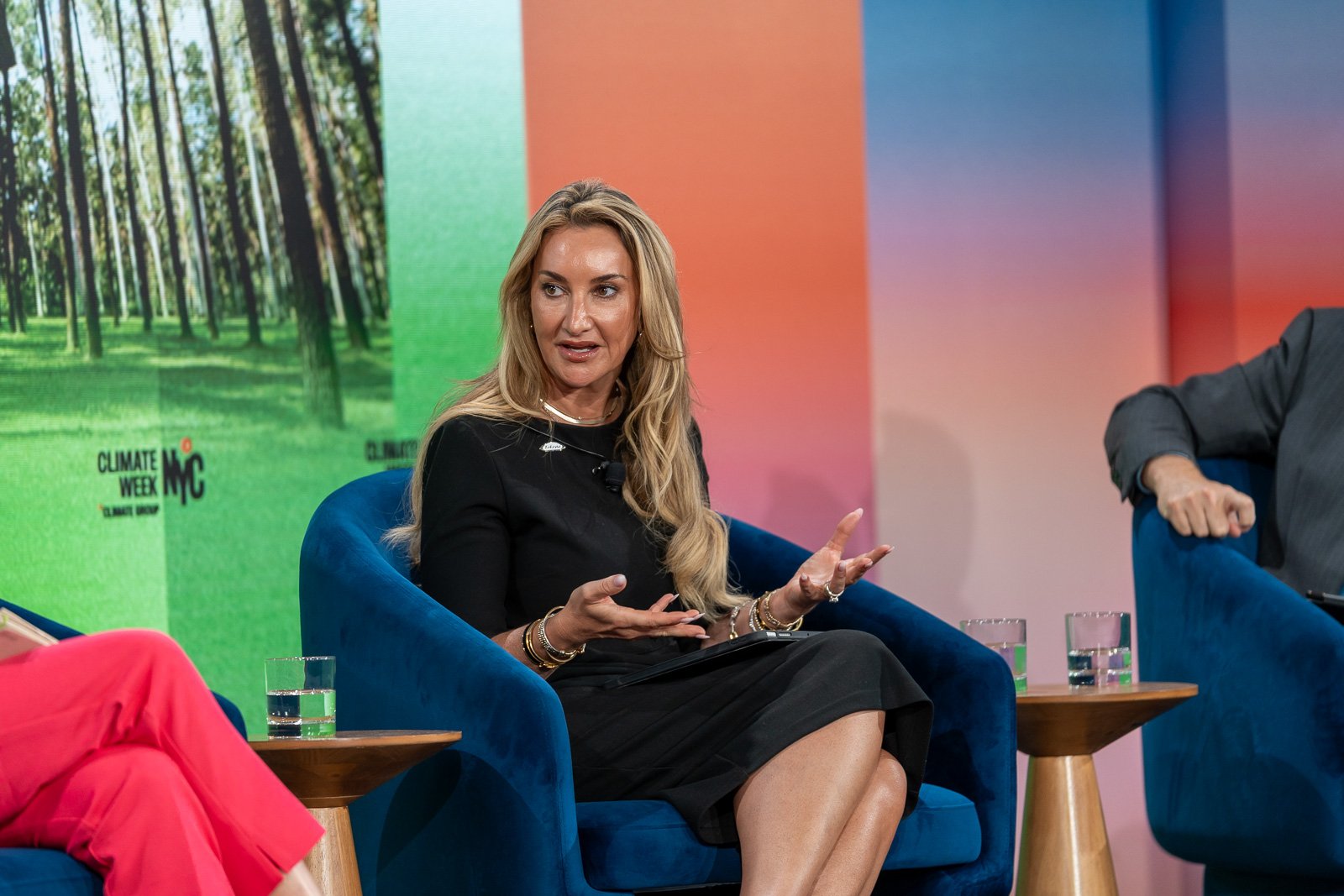 Johanna Jobin, Global Head of Environmental Sustainability and Compliance, Takeda, speaking on the panel
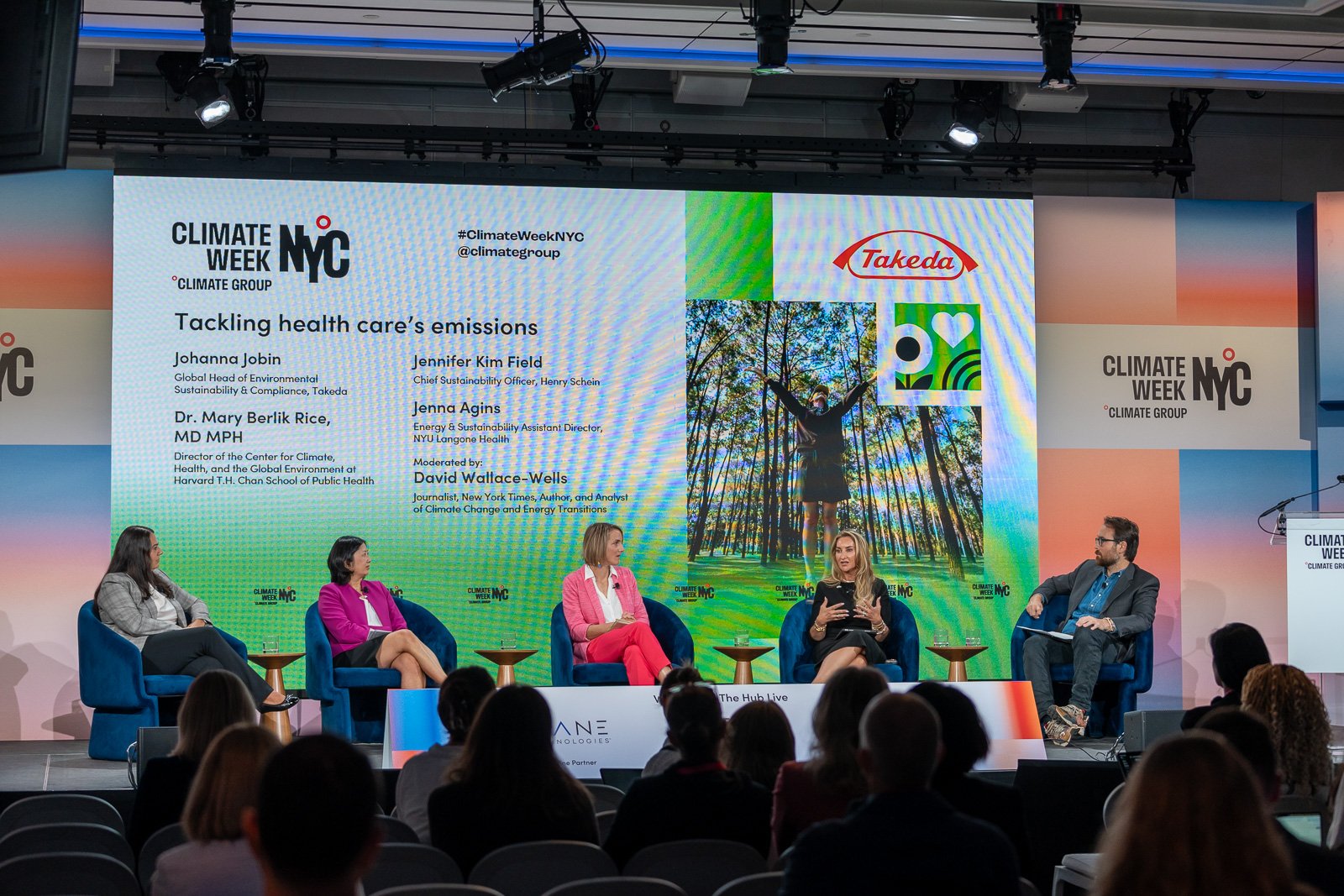 Johanna Jobin, Takeda, Dr. Mary Rice, Center for Climate, Health and the Global Environment, Jennifer Kim Field, Henry Schein, and Jenna Agins, NYU Langone Health, with David Wallace-Wells, The New York Times
Johanna Jobin, Global Head of Environmental Sustainability and Compliance, Takeda
11.00am ET
In an Energy session, The AI Forum took on scaling sustainable infrastructure, moderated by Mike Peirce, Executive Director of Systems Change, Climate Group, and Jaclyn Whittal, Founder and CEO, One Earth Communications. AI may be digital, Whittal said, but its impact is physical: land, water, power, cooling, communities.
Gerhard Salge, Chief Technology Officer, Hitachi Energy, drew the distinction that shaped the session. Conventional data centers arrive as a constant load on the grid. AI factories arrive with spikes, which are much harder to stabilize. The answer, he argued, is planning them as good grid citizens from the first phase, flexible enough that the grid can lean on them rather than simply absorb them. Steve Carlini, Chief Advocate, Data Centers and AI, Schneider Electric, named four constraints: processors, people, permitting and power. Power is the one that bites. Operators have been working in secrecy, he said, and requesting the same grid connection several times over.
Kate Gallego, Mayor of Phoenix, Arizona, answered from the front line. Phoenix has the largest concentration of data centers in the world, 320 days of sun a year, and the distinction of being the hottest big city in the US. It is also water stressed. Companies promise things they don't deliver, she said, which breeds distrust, and residents would now rather have a nuclear power plant nearby than a data center. Phoenix now requires data centers to have a local representative, and to build on industrial land rather than beside homes.
"Cities are open for business, but not for sale."
Alex Dewar, Managing Director and Partner, BCG, pointed to transparency as one of the biggest barriers. Operators are not sharing enough about their environmental impact, which leaves communities unable to judge whether a project is being built responsibly. He called for common standards covering emissions, water use, noise and the impact of construction, backed by real measurement, so that operators doing the right thing can prove it. He also pointed to the upside: demand at this scale is pulling low-carbon technologies and demand-response systems to market faster.
"Once we have transparency in place, those actors doing the right thing can really demonstrate this."
Robert Bartrop, AVP Social Impact and Community, AirTrunk, which operates across Japan, Malaysia, Singapore and Australia, argued for looking at the whole system rather than the building. Where is the energy coming from? Where is the water coming from? What is the data center actually being used for? Operators need to engage and invest in local communities far earlier, build workforce pathways into the jobs, and put something back into shared infrastructure like parks.
"Don't just use technology to make money. Use it to make people's lives better."
Samantha Grassle, Senior Director of Partnerships and Policy, Elemental Impact, described a data center innovation initiative backed by Amazon, Google, Meta and Microsoft, launched in May. Four hundred companies applied and five to ten projects were selected, working on clean concrete, cleaner metals and alloys, energy storage, and electrical systems that reduce reliance on diesel backup generators.
Mete Coban MBE, Deputy Mayor of London for Environment and Energy, put the political question plainly: the transition will happen, but for whom? London is writing data center policy into the London Plan and will not assess projects case by case or rely on goodwill. And Daan Walter, Principal, Ember, offered the observation of the session: there are no autonomous vehicles running on petrol or diesel, because the technology can't make decisions fast enough. AI and electrification are one joint pathway, he argued, and China is the only country pushing the frontier on both at once.
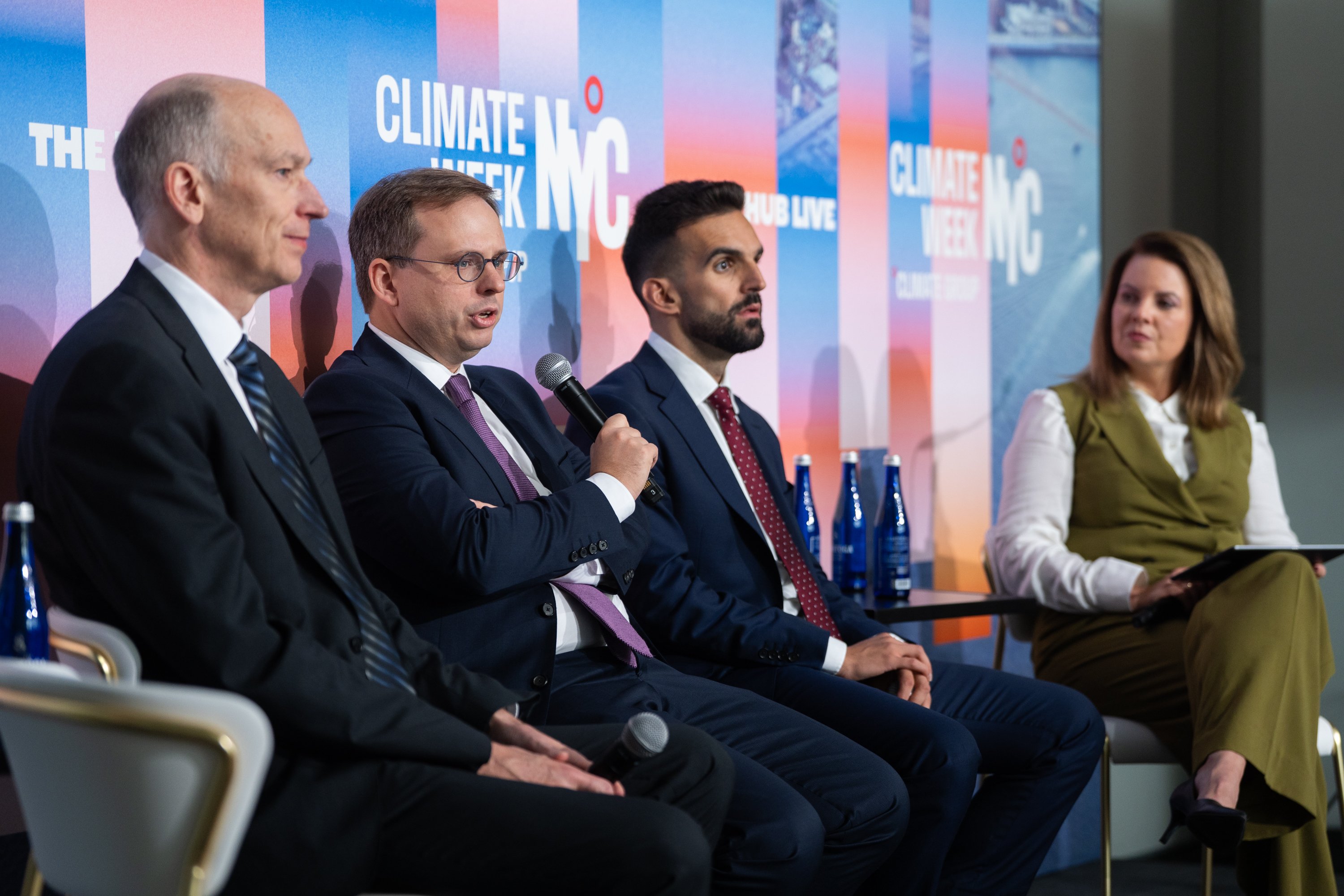 Alex Dewar, Managing Director and Partner, BCG and the rest of the panel at the AI Forum on scaling sustainable infrastructure at The Hub Live
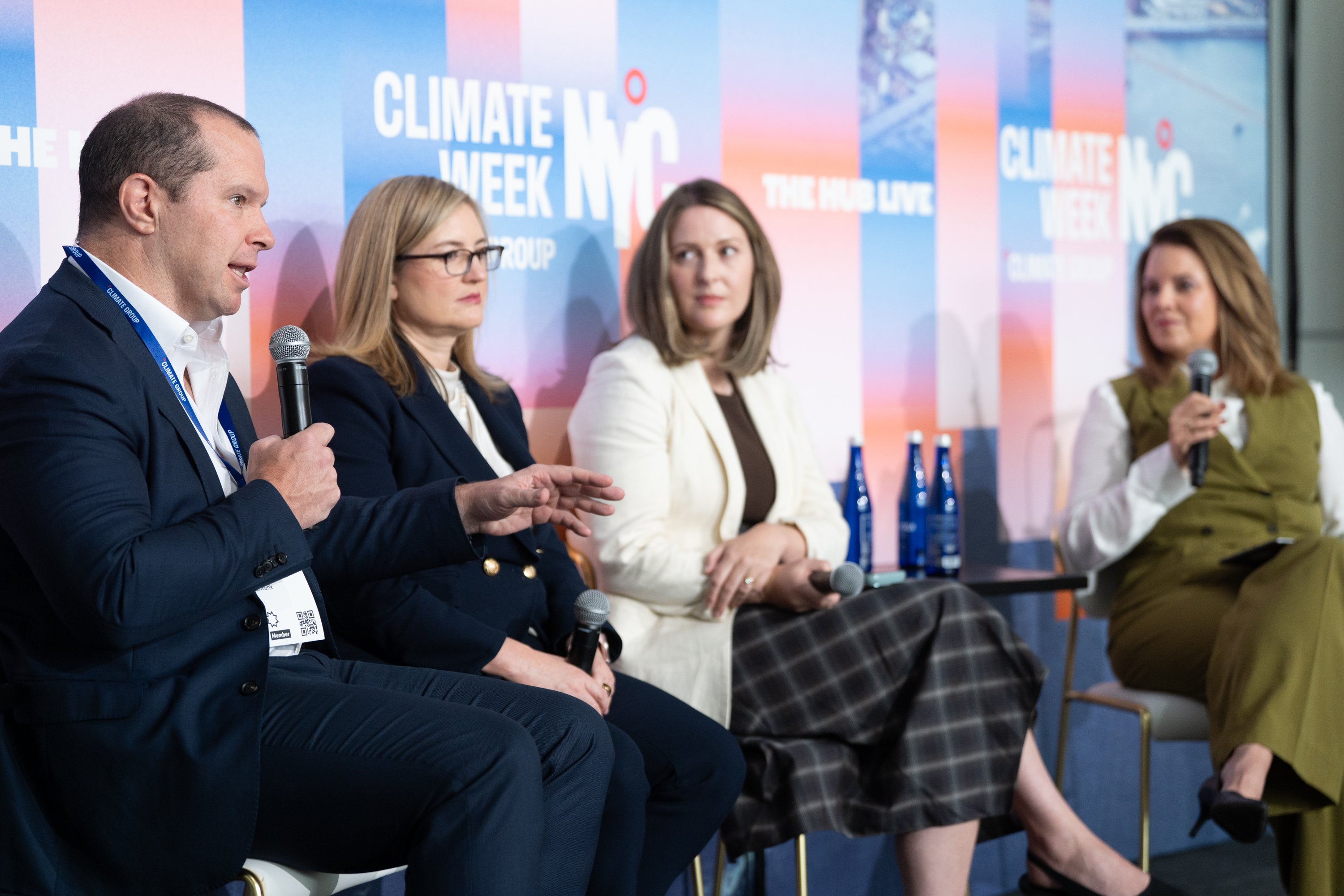 Robert Bartrop, AVP Social Impact and Community, AirTrunk, and the rest of the panel at The AI Forum
Alex Dewar, Managing Director and Partner, BCG
11.00am ET
In a Transport and Industry session on the economic and health case for fleet electrification, Dominic Phinn, Head of Transport Systems, Climate Group, opened on the moral responsibility to make sure people are breathing clean air.
Cecilia Vaca Jones, Executive Director of Breathe Cities, Clean Air Fund, made the case in numbers. Nearly all of us breathe unhealthy air. Air pollution is linked to 8 million premature deaths and around 1.2 billion working days lost, and it kills a child every minute. Transport is still one of the main causes. Low emission zones work, she said, and so does mapping pollution street by street, but the problem doesn't stop at a city boundary.
"Air does not have boundaries."
Kevin Eckerle, Head, Environmental Affairs, Bayer Consumer Health, reframed what clean air actually is: the least expensive form of healthcare there is. A business case built on fuel savings alone won't carry a fleet decision, he argued. It has to include what cleaner air is worth to employees, to customers and to the health system.
Simon Swan, Global Solutions Director, New Mobility, Transportation Solutions set out the practical obstacles: affordability, accessibility, and depots too old to take chargers without an expensive redesign. Getting people out of cars and onto public transit, he said, is still one of the most significant things a city can do.
Asked for one action each, the panel was specific. Eckerle: paint the full picture internally, not just the savings. Christoph Wolff, CEO, Smart Freight Centre: start measuring, find the hotspots, start electrifying. Kristina Haselmann, Global Sustainability Analyst, Transportation, AIT Worldwide Logistics: run a pilot and measure air quality and community benefits from the start. Swan: get someone in the C-suite to sponsor the plan.
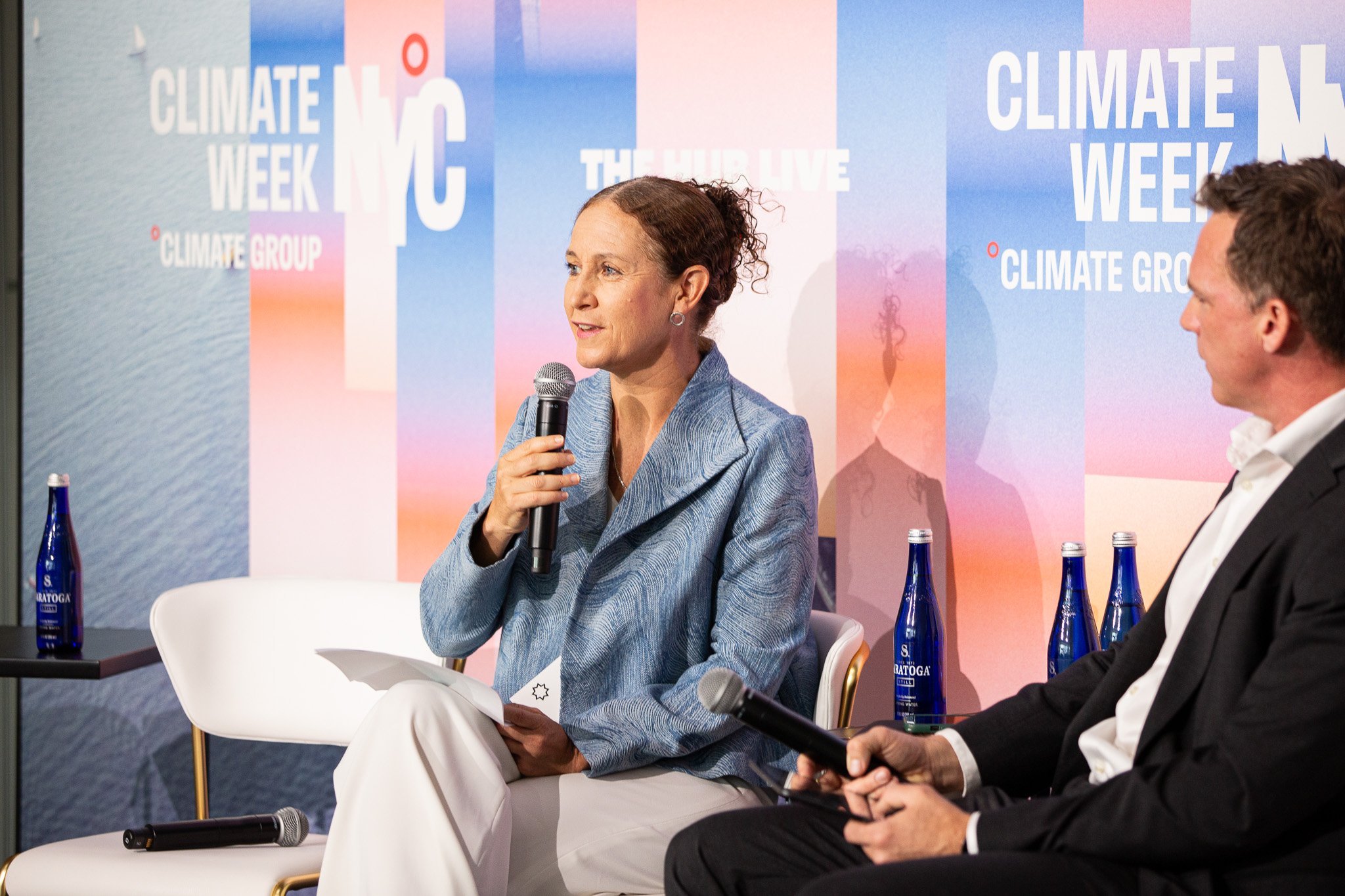
Cecilia Vaca Jones, Executive Director of Breathe Cities, Clean Air Fund taking part in the Transport and Industry thematic session
Cecilia Vaca Jones, Executive Director of Breathe Cities, Clean Air Fund
10.50am ET
The Hub Live is on short break and back in 10 minutes. Plenty going on in the meantime.
We're enjoying seeing people make the most of the official Climate Week NYC Events Program. From packed panel discussions and hackathons to film screenings, bike tours and community gatherings, there's something happening in every corner of the city this week. Browse the events calendar and events map to find what's on near you (if you're in New York).
One for tomorrow: Purposing, the business podcast, is recording live at Anthesis House at Detour Gallery on Wednesday, September 23, from 9.30am to 11.30am. Host Becky Willan will be joined by Marissa Saretsky, Opella, Kevin Eckerle, Bayer, Eric Johnston, Nestlé Waters and Premium Beverages, and April LaCroix, Anthesis, to talk through the week's themes, what sustainability is actually doing for business performance, and what leadership looks like right now. Breakfast, a live audience, and questions from the floor. Register for Purposing Live
Back at 11.00am ET with the thematic sessions.
10.05am ET
Hon Mike Rann, Former Premier of South Australia and Chair of the UK Board, Climate Group, closed Flagship Two with a panel on whether it's time to put health first.
Shaun Seow, CEO, Philanthropy Asia Alliance, brought it close to home: dengue fever is now a threat to New Yorkers. Heat, he said, has made the crisis real for governments in a way individual projects never did, and philanthropy's role is to enable rather than to accuse.
Dr. J. Nadine Gracia, President and CEO, Trust for America's Health, stacked up the examples. Canadian wildfire smoke drove a response across the US. World Cup preparations centered on heat and heat-related illness among fans. Schools are closing because they have no air conditioning. Her argument to lawmakers is that each of those is a health cost and an economic cost at the same time, and that the moment to invest is not the moment of disaster. The science can be argued over, she said, but more hurricanes and more heatwaves are harder to argue with.
Professor Charlotte Watts, Executive Director, Solutions, Wellcome Trust, said what had been missing from the climate conversation was what it means for people, and that documenting the health impacts makes it unarguable. She put the losses from this year's heatwaves at £1.5 billion, pointed to London's ultra low emission zone as evidence that systemic change is possible, and noted that it happened inside a single political lifespan.
"The climate crisis is also a health crisis."
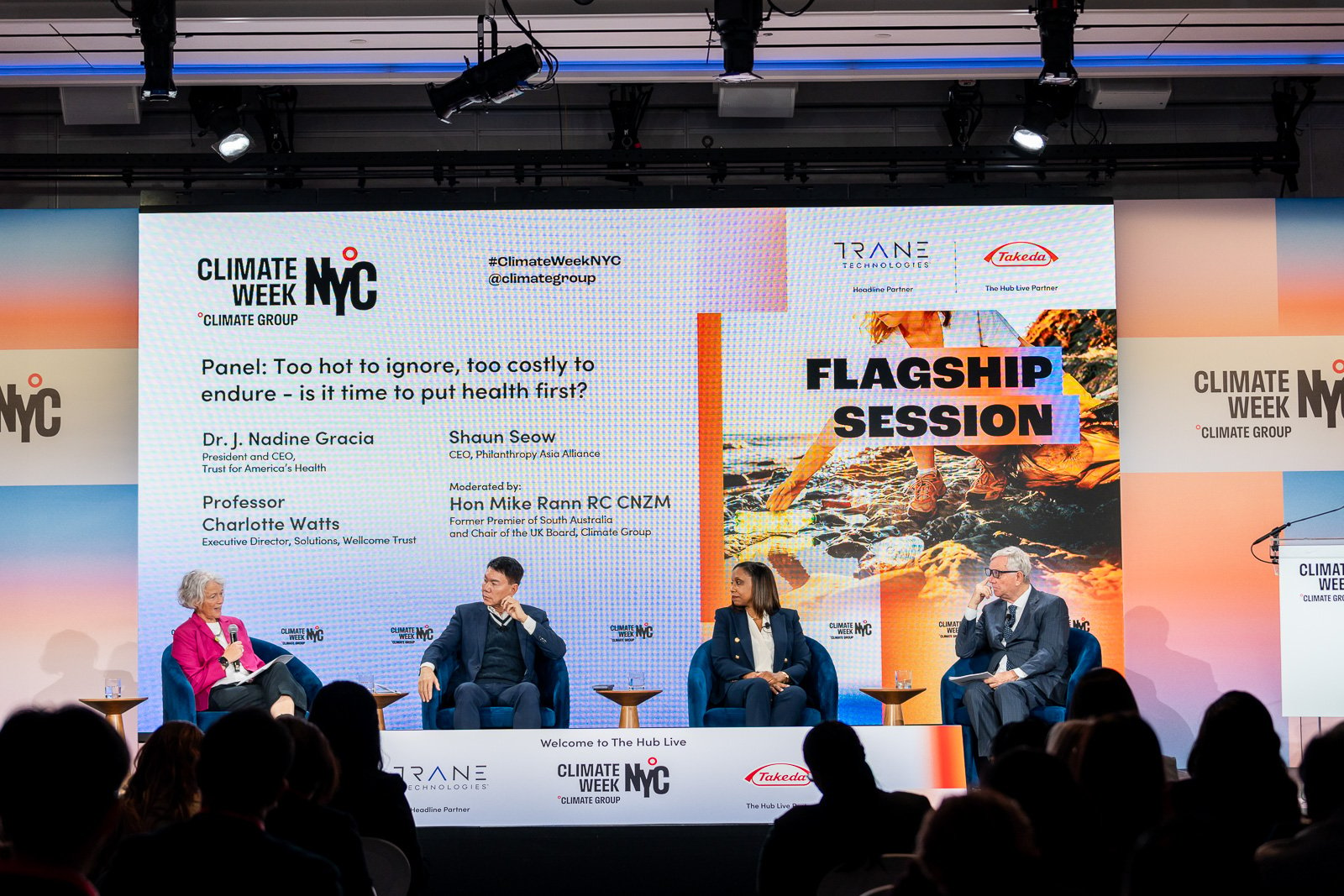
The panel on putting health first, moderated by Hon Mike Rann, Chair of the UK Board, Climate Group
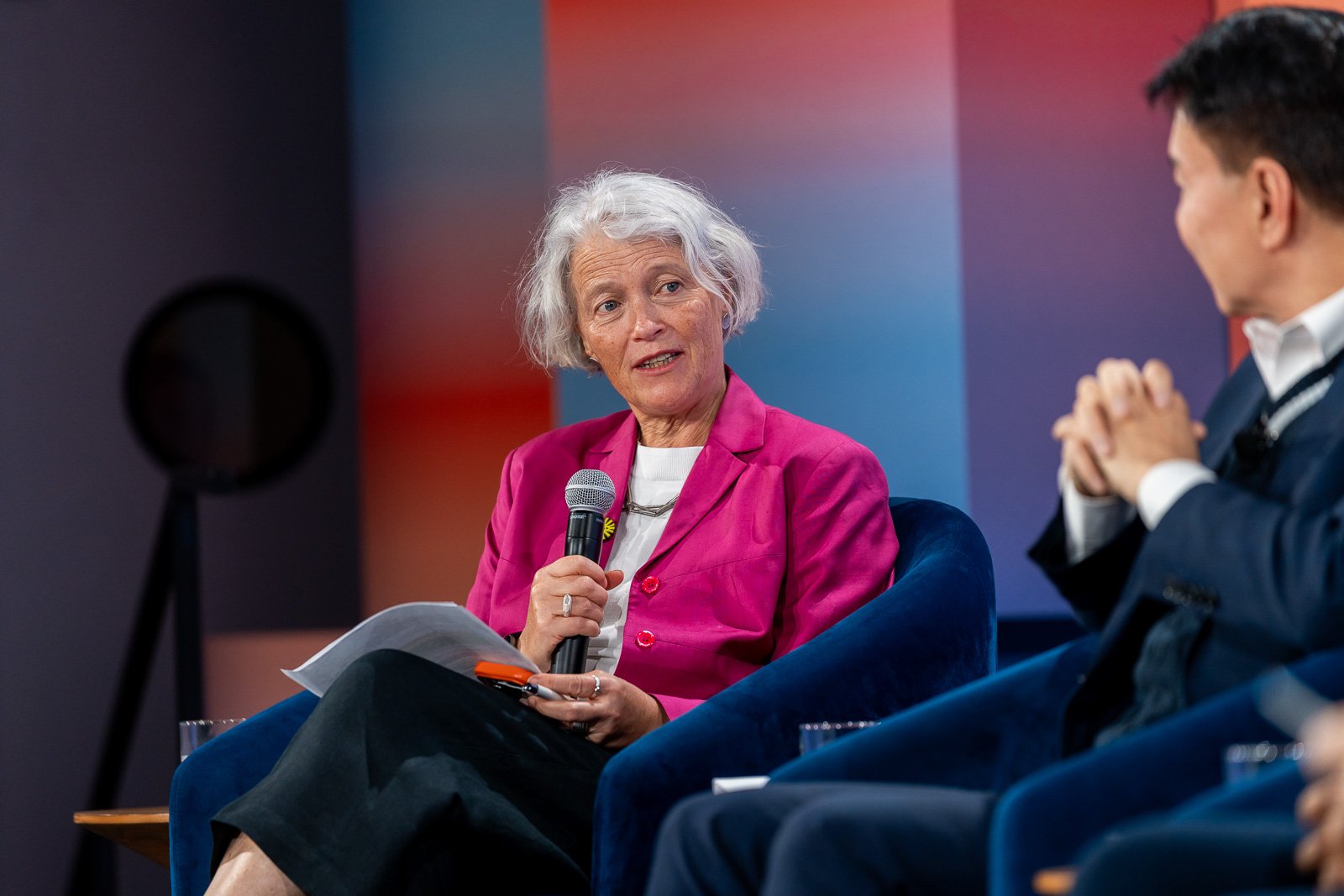
Professor Charlotte Watts, Executive Director, Solutions, Wellcome Trust, on stage at The Hub Live
09.50am ET
Tzeporah Berman, Chair, Fossil Fuel Non-Proliferation Treaty, opened by naming what recent months have held: Nepal still counting its dead after a glacier collapse, Europe burying its heat victims, and UNEP reporting that the world is now pushing past 1.5 degrees. Humans, she said, have a strange way of normalizing things.
She has never seen a moment when the science and the lived reality merged so completely. Oil, gas and coal still supply around 80% of the world's energy, and governments are planning to produce more than double what fits inside what they have already agreed. Every new project, she argued, means more loss and damage.
Dr. Maina Vakafua Talia, Minister for Home Affairs, Climate Change and Environment, Tuvalu, said he would speak from the heart, and did.
"Who shall we blame if we wake up the next morning and half the population is gone?"
Climate diplomacy has spent too long talking, he said, and needs to return to what is actually happening to people. Tuvalu does not have the luxury of time.
"It's about survival. For us it's a matter of life and death."
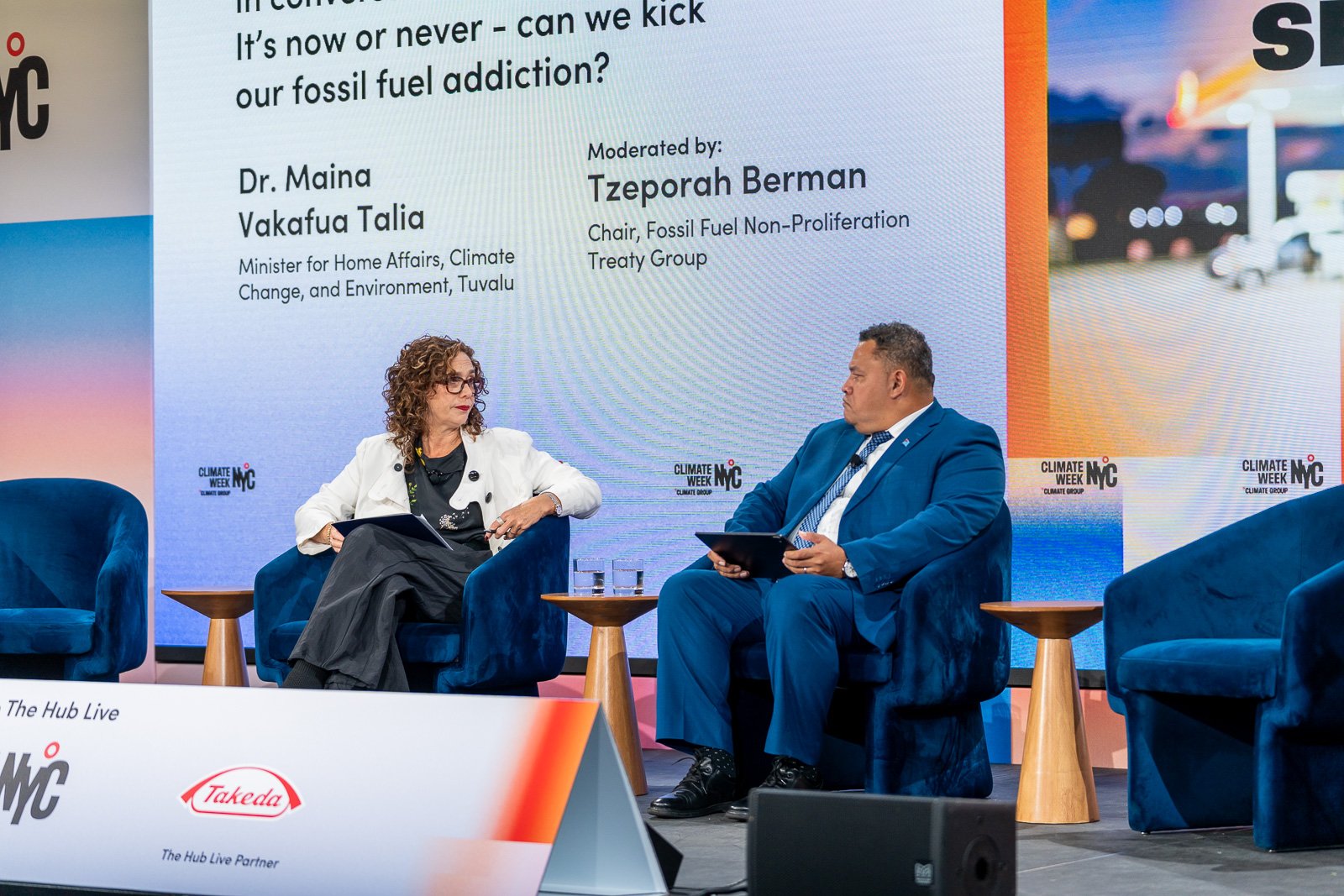
Tzeporah Berman, Chair, Fossil Fuel Non-Proliferation Treaty, in conversation with Dr. Maina Vakafua Talia, Minister for Home Affairs, Climate Change and Environment, Tuvalu
09.20am ET
Helen Clarkson OBE, CEO, Climate Group, put the question to the panel: with governments facing pressure from voters, how do you manage the balancing act between growth and the transition?
Mattias Frumerie, Climate Ambassador, Sweden, was direct that some member states have begun questioning the direction of travel, and that the job now is staying the course and setting clear market signals through COP. His ask of the businesses in the room was to make their voices heard, so governments know which solutions companies actually need. This is a good business case, he argued, and it strengthens countries as well as companies.
Ambroise Fayolle, Vice President, European Investment Bank, put the cost of inaction in the billions and framed the choice plainly: invest now, or pay more later. Around half the energy generated across Europe last year came from renewables.
Liz Chatwin, VP Global Sustainability, AstraZeneca, brought the corporate view. The company is investing more than $1 billion in its net zero strategy, 94% of its electricity is now renewable, and the focus has moved to suppliers, more than 80% of which now have science-based targets.
"We have delivered an 88% reduction in our Scope 1 and 2 emissions, and we're on track to deliver almost 98% this year. And we've done that while we've doubled our business."
On what corporate leaders should take from that, she pushed back on the framing of the panel itself.
"If you think about a healthy community and a healthy planet on one hand, and long-term business resilience on the other, they're not actually trade-offs. Rather than being trade-offs, they can actually start to be a flywheel together."
AstraZeneca also used the session to announce the availability of CARESA, its Care Environmental Sustainability Assessment Tool, which maps the environmental impact of patient care. Her summary of what it tells physicians was the line of the panel.
"A healthy patient is a greener patient."
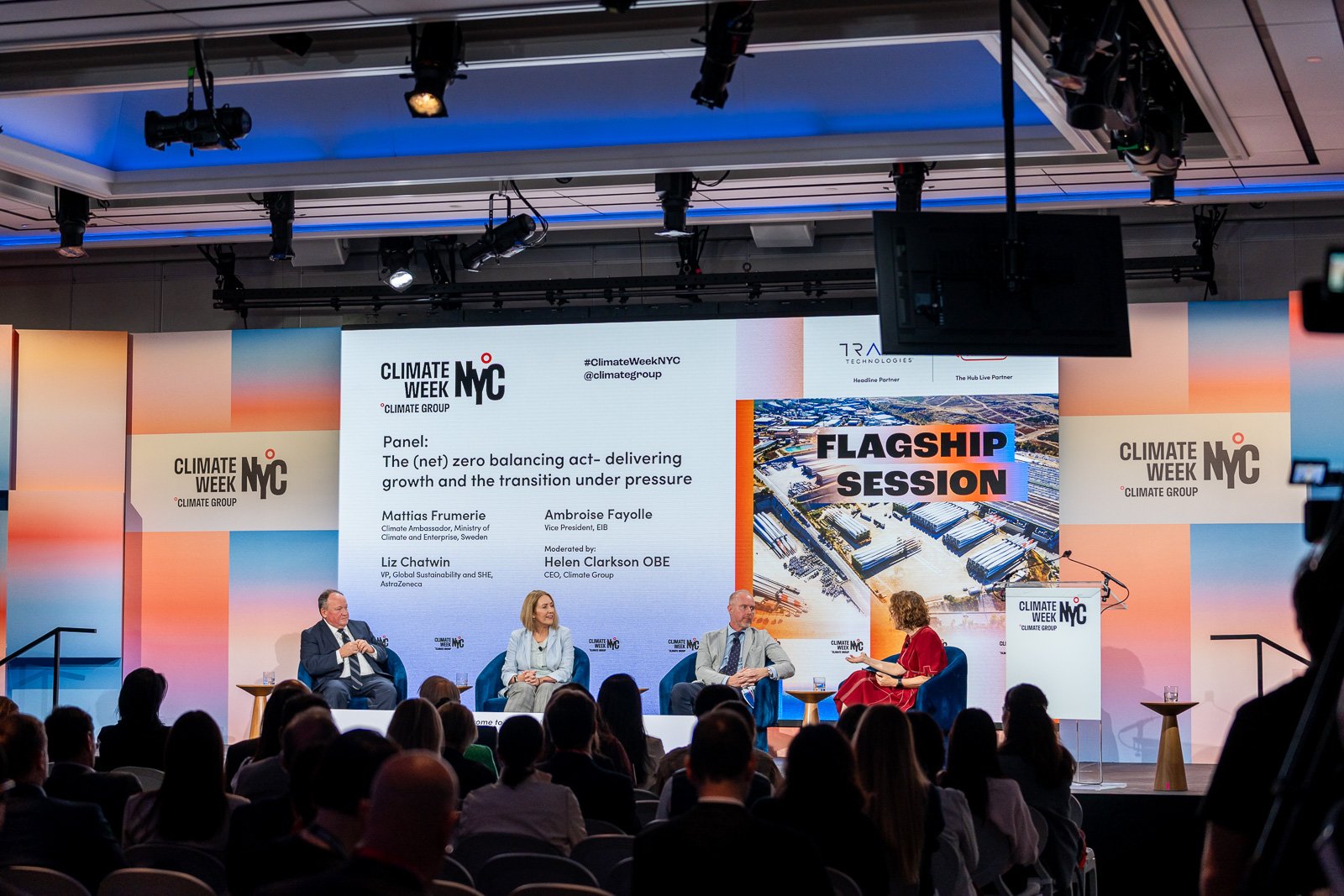
Helen Clarkson OBE, CEO, Climate Group, puts the question to the panel at The Hub Live
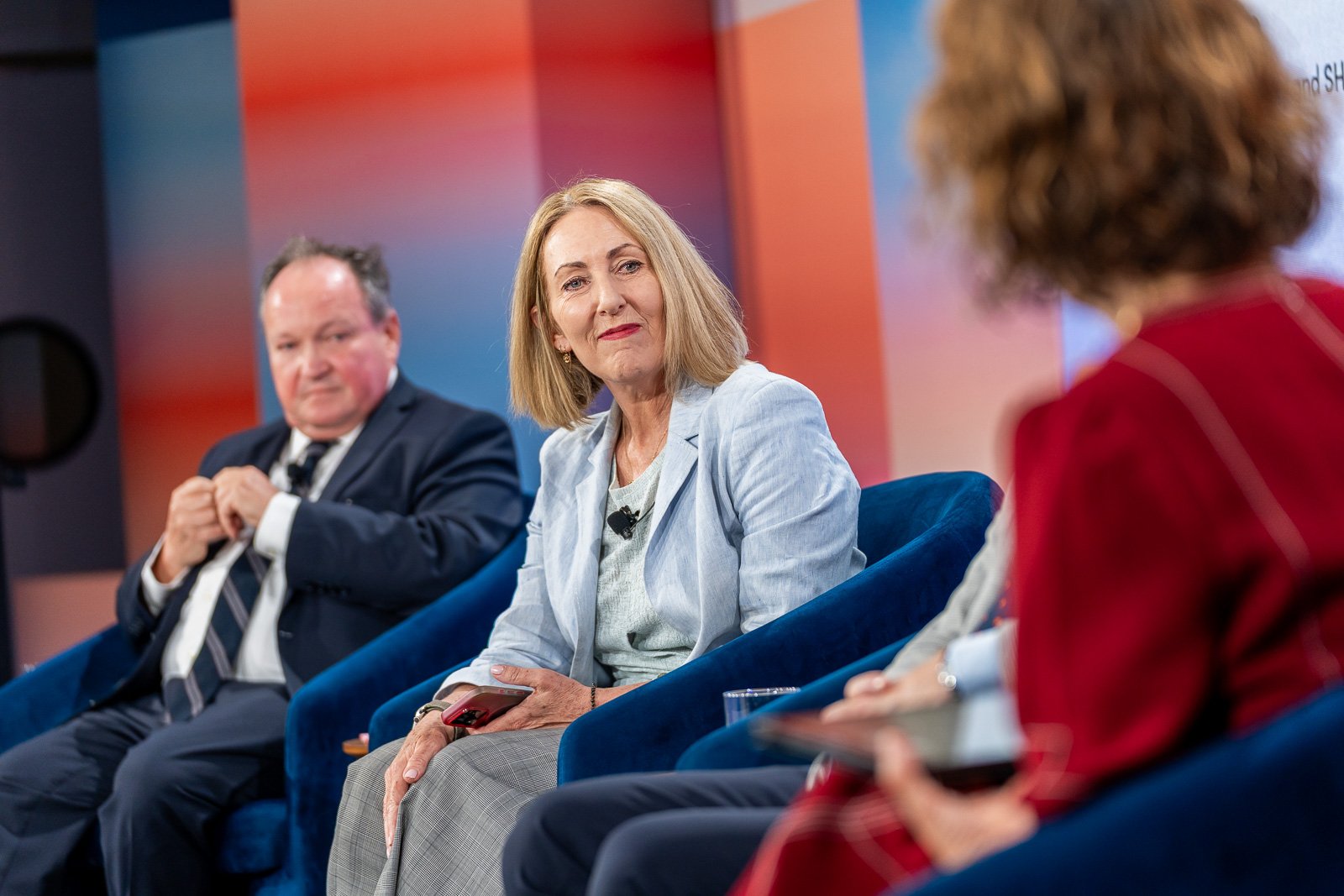 Liz Chatwin, VP Global Sustainability, AstraZeneca
Liz Chatwin, VP Global Sustainability, AstraZeneca speaks at the panel: The (net) zero balancing act: delivering growth and the transition under pressure
09.10am ET
Paschal Donohoe, Chief Knowledge Officer, World Bank, joined Helen Clarkson OBE, CEO, Climate Group, for a leadership dialogue on where capital goes next. Asked what the single biggest barrier is to getting capital into the projects that would benefit most, he said the money is not the problem.
"We believe the capital is there. The key issue is the organization, the visibility, and having a pipeline of projects in place."
He pointed to two recent visits. Outside Monrovia in Liberia, a dam that 20 years ago sat in a conflict-affected area is now home to tens of thousands of solar panels, with the aim of covering a large share of the country's energy needs through hydro and solar. Outside Accra in Ghana, he stood on the roof of the third largest rooftop solar site in the world and the largest in Africa. Both, he said, are happening because governments did the math on affordability and security.
On mobilizing private capital, he shared new numbers.
"In our last fiscal year, our private capital mobilization has now increased from around $35 billion per year to $112 billion per year."
He also made the case for starting with jobs rather than emissions.
"We have 1.2 billion young people who will be coming into our labor market in the next few years. There are jobs approximately available for 400 million of those people. We need to create jobs for another 600 to 800 million people. Meeting that job need alone offers a framework in which infrastructure and energy plays a key role."
Pressed on the line drawn between mitigation and resilience, he said the two have to be pushed back together, and that the World Bank's ambition is to be a trusted partner as countries determine their own energy mix.
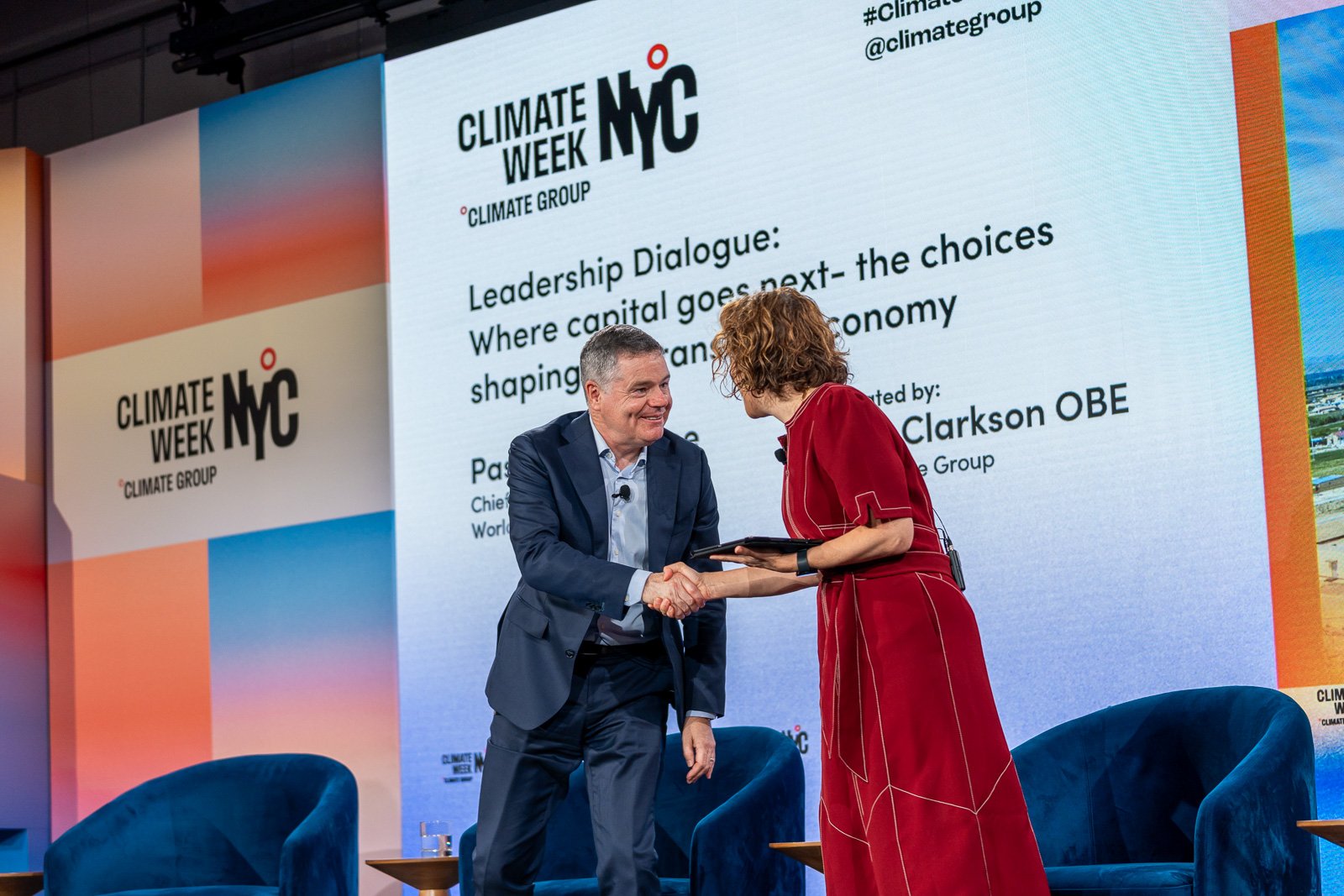
Paschal Donohoe, Chief Knowledge Officer, World Bank, in conversation with Helen Clarkson OBE, CEO, Climate Group
09.05am ET
Dr. Fatih Birol, Executive Director, International Energy Agency, gave the morning keynote on where the energy system is heading, and started with the crisis shaping it. Oil is around $100, and what matters more than crude is what people actually buy: diesel prices have doubled in seven months and are at historic highs in many countries. The pain is asymmetric, falling hardest on developing economies from Bangladesh and Sri Lanka to the Philippines and across Africa.
In the seven months since, the IEA has seen four trends shift. Solar is accelerating faster than it already was. Electric vehicles are growing strongly in places that weren't part of the story before, including Vietnam, Brazil and Australia, with more than 30% of all new car sales this year expected to be electric, against 5% five years ago. Coal use has ticked up in some countries, which helps nobody. And nuclear generation is on course for its highest level in 40 years.
The deeper change, he argued, is that governments and companies are reassessing their energy strategies altogether, and the driver is security rather than climate. He drew the parallel with the 1970s oil shocks, which gave the world both its nuclear fleet and a generation of cars that went from needing 20 liters per 100 kilometers to 10. The same thing is happening now, and he expects it to be stronger.
Around 80% of all new power plants built this year will be renewables, with a few percentage points of nuclear, which means electrification itself now cuts pollution. The IEA released its electrification report at the session, requested by the COP presidencies of Türkiye and Australia, and setting up the pledge expected from Antalya: electricity is 23% of global energy today, and the target is 35% by 2035.
"35 by 35 will be the real target."
Reaching it means doubling the pace of electrification.
Then he made the observation that stayed with the room. Asked what the scarcest commodity in energy is, oil, gas, copper, lithium or cobalt, his answer was none of them.
"The most important commodity in the energy world today is trust."
Countries used to buy on price, he said. Now a supplier at $4 can beat one at $3 if the buyer believes the $4 will arrive without geopolitics attached. Partnerships are being built and abandoned on that basis, and he called it the energy security premium.
He closed on an alignment he hasn't seen before.
"For the first time in many years, energy security objectives, economics and the clean energy transition objectives are very closely aligned."
What's good for energy security is in most cases good for the transition, and in most cases the cheapest option too. Whether governments make the most of that, he said, remains to be seen.
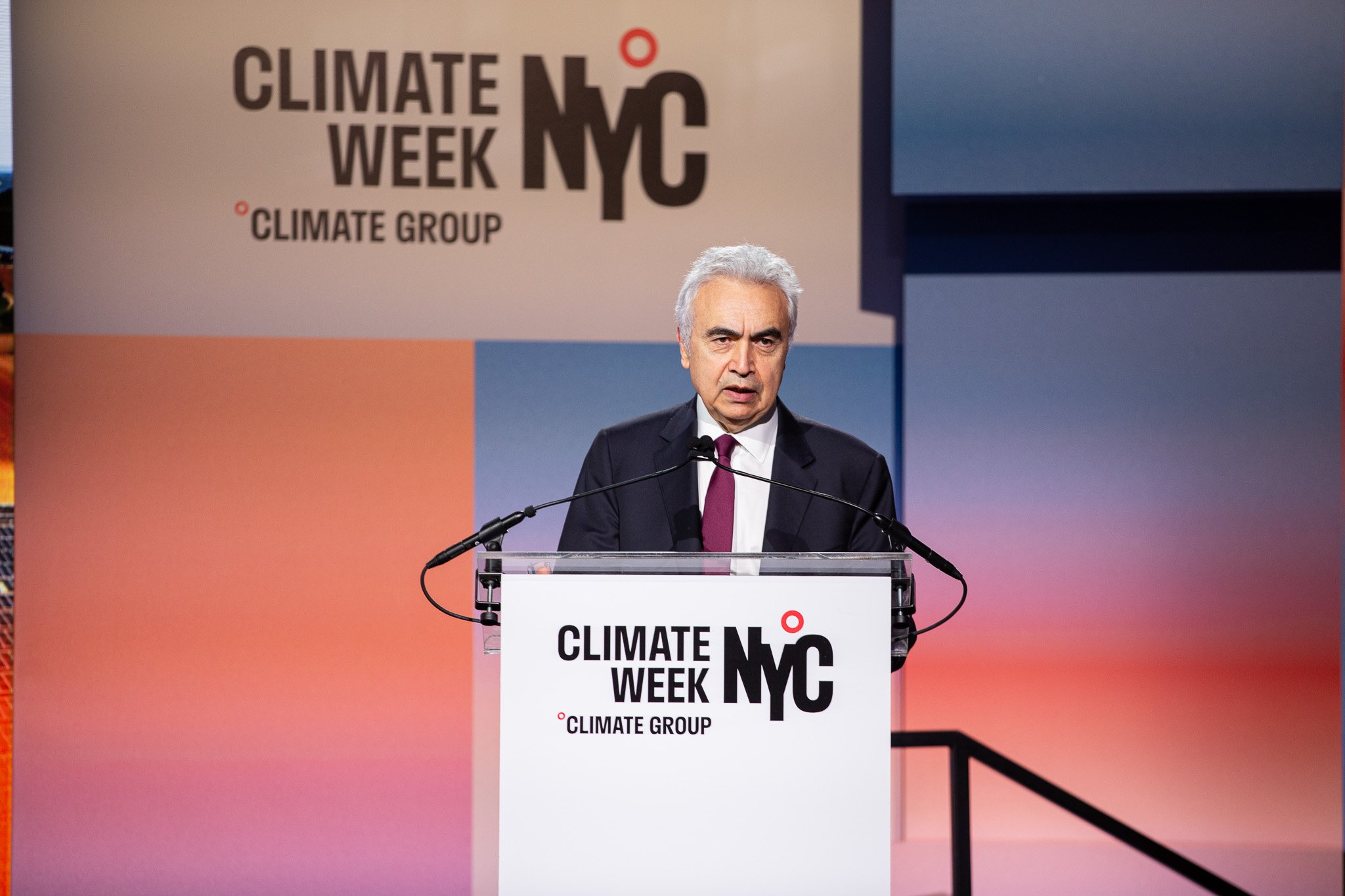
Dr. Fatih Birol, Executive Director, International Energy Agency, on stage at The Hub Live
09.00am ET
Helen Clarkson OBE, CEO, Climate Group, opened day two of The Hub Live and the second flagship session, The choice: committing to competitive pathways. She set the day against what came before it, when the focus was the scale of the challenge rather than the response to it.
"Yesterday we explored the scale and complexity of the challenges before us, how climate volatility, geopolitical uncertainty, energy security concerns and economic pressures are converging to create a world that's in flux and battling heavy carbon pollution that is slowly killing us."
Today, she said, was about the choices that will determine which technologies scale, where capital flows, and who capitalizes on the economic and social benefits of the transition.
"As we've seen, the direction of travel is not predetermined. Progress depends on those in power making the right choices."
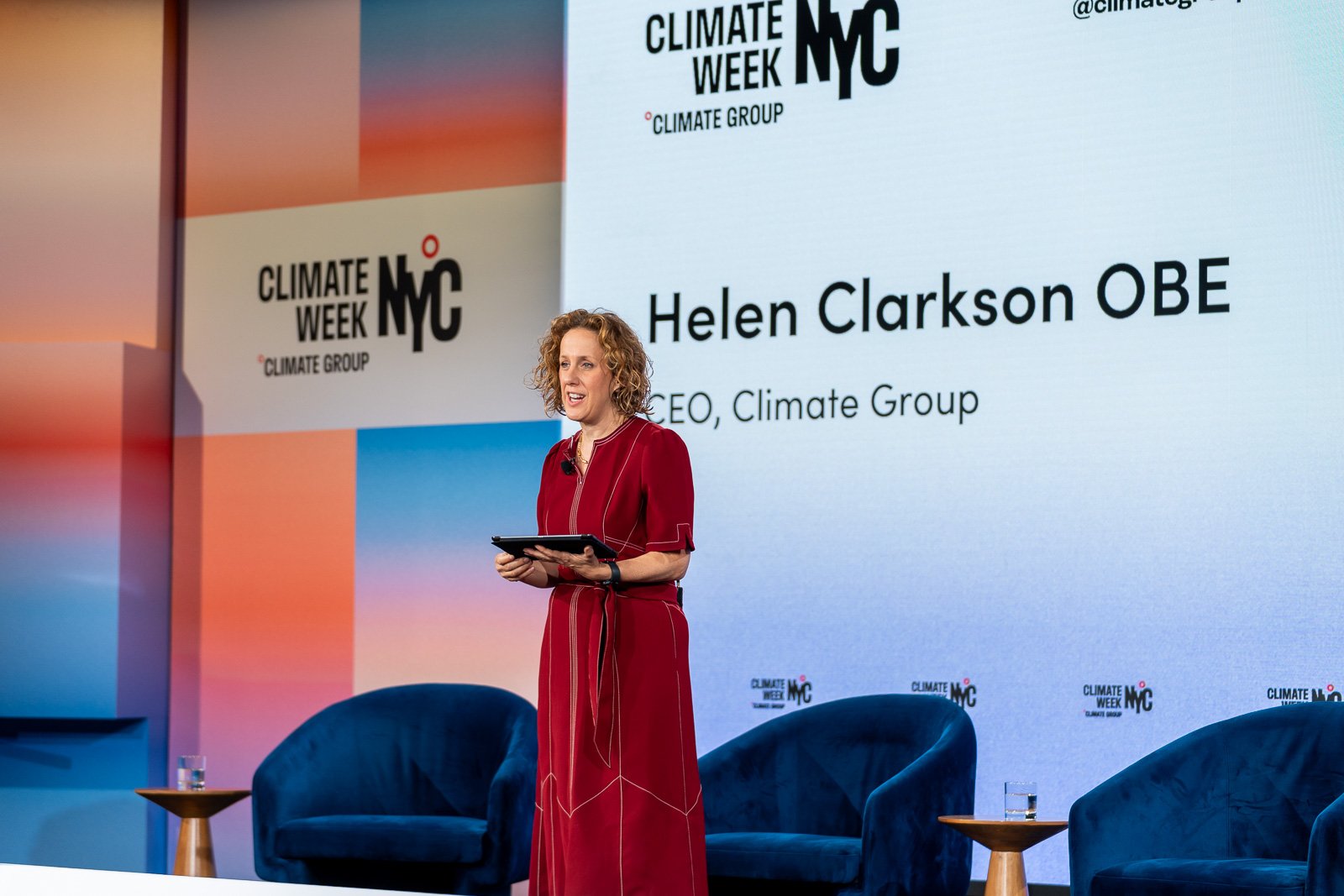 Helen Clarkson OBE, CEO, Climate Group
07.30am ET
The day begins before the main stage does, with a roundtable hosted by The Pew Charitable Trusts.

07.15am ET
Good morning from New York City. Day two of The Hub Live starts at 09.00am ET.
Helen Clarkson opens Flagship Two, The choice - committing to competitive pathways, followed by a keynote from Dr. Fatih Birol, Executive Director, International Energy Agency. The morning also brings Tuvalu's Minister for Home Affairs, Climate Change and Environment in conversation on whether the world can kick its fossil fuel addiction, and a panel asking whether it's time to put health first.
The room then breaks out into thematic sessions across Transport and Industry, Energy, Nature and Health, and Leadership and Green Growth, and the American Innovation and Abundance stream begins.
Away from The Hub Live, the Events Program continues across the city. Browse the events calendar and map to plan your day.
Follow along on LinkedIn and Instagram, and join the conversation with #ClimateWeekNYC.
We'll be bringing you the highlights here through the day.