



06.25pm ET
That's a wrap on day one, and the message from the leaders who took the stage today was consistent: most of the solutions already exist. The problem is delivering them at the speed and scale needed.
The Opening Ceremony brought prime ministers and government leaders together with business and civil society voices from around the world. UK Foreign Secretary Ed Miliband put it plainly.
"No country can tackle the climate crisis alone. We can only solve it together."
Announced today
- Nigeria launched a $300 million clean energy fund to expand access to off-grid power.
- Türkiye's COP31 delegation announced a new global initiative on how AI can support climate progress.
- Climate Group's EV100 announced a partnership with Smart Freight Centre to accelerate freight decarbonization globally, starting in Mexico and South Africa.
Helen Clarkson OBE, CEO, Climate Group, opened the week on the cost of delay, and on the cost of staying quiet.
"Silence isn't neutral, it's dangerous. Silence enables inaction, and inaction leads to more climate change. More flooding, more fires, more empty supermarket shelves, more pollution, more uninsurable homes."
Elsewhere, more than 20 decision-makers from government, business and civil society met for a High-Level Leaders Dialogue at the Global Renewables Summit, co-hosted by Fortescue, the Global Renewables Alliance and Climate Group.
-
Follow along. Keep up on LinkedIn and Instagram, and join the conversation with #ClimateWeekNYC.
-
Get it in your inbox. Subscribe to our newsletter for the headlines from New York City and what comes next.
Tomorrow, The Hub Live returns for day two: The choice - committing to competitive pathways. First session starts at 9.00am ET.
04.30pm ET
Twenty years ago the president of the United Steelworkers and the executive director of the Sierra Club signed a joint resolution creating the BlueGreen Alliance. In a Leadership and Green Growth session moderated by Valerie Volcovici, Senior Correspondent, Reuters, its Executive Director, Jason Walsh, argued that the case behind that resolution matters more now than it did then.
"We don't have to choose between jobs and a clean environment. We can and must have both."
Working people have to be at the center of climate policy, he said, because policy that ignores them doesn't work and doesn't stick. A just transition doesn't happen organically, and leaving affected workers behind is not just a policy failure but a moral one. Asked what gives him hope, he was combative.
"We've been punched in the mouth and we're still standing. We're going to punch back harder."
Brian Schatz, US Senator, State of Hawaii, called the Inflation Reduction Act the biggest climate action ever taken, and said the coalition work is what carried it over the line. On AI and data centers he was blunt: he treats it as an emergency, wants independent third-party review before frontier models are released, and framed it as a question for democracy about who is in charge of whom.
His argument to the climate movement, though, was about language. Don't lose heart because people don't say the word climate, he said. Be more linguistically flexible, and don't assume you're being ignored because people don't talk like they're at the UN General Assembly. The political opening has never been wider, in his view, and the real enemy is despair.
"Hope is not a feeling. It's a decision, a commitment to the future."
Roxanne Brown, United Steelworkers, made the same point from the shop floor: working people don't speak policy, so you have to meet them where they are. She warned that data centers could become a low point for both movements if the materials going into them aren't made in the US, and that China is building integrated supply chains around its facilities in a way American industry can't currently match.
Manish Bapna, President, Natural Resources Defense Council, said it's hard to think of an issue that has climbed the public agenda faster than opposition to data centers, and that the answer has to be well-paying jobs rather than just jobs.
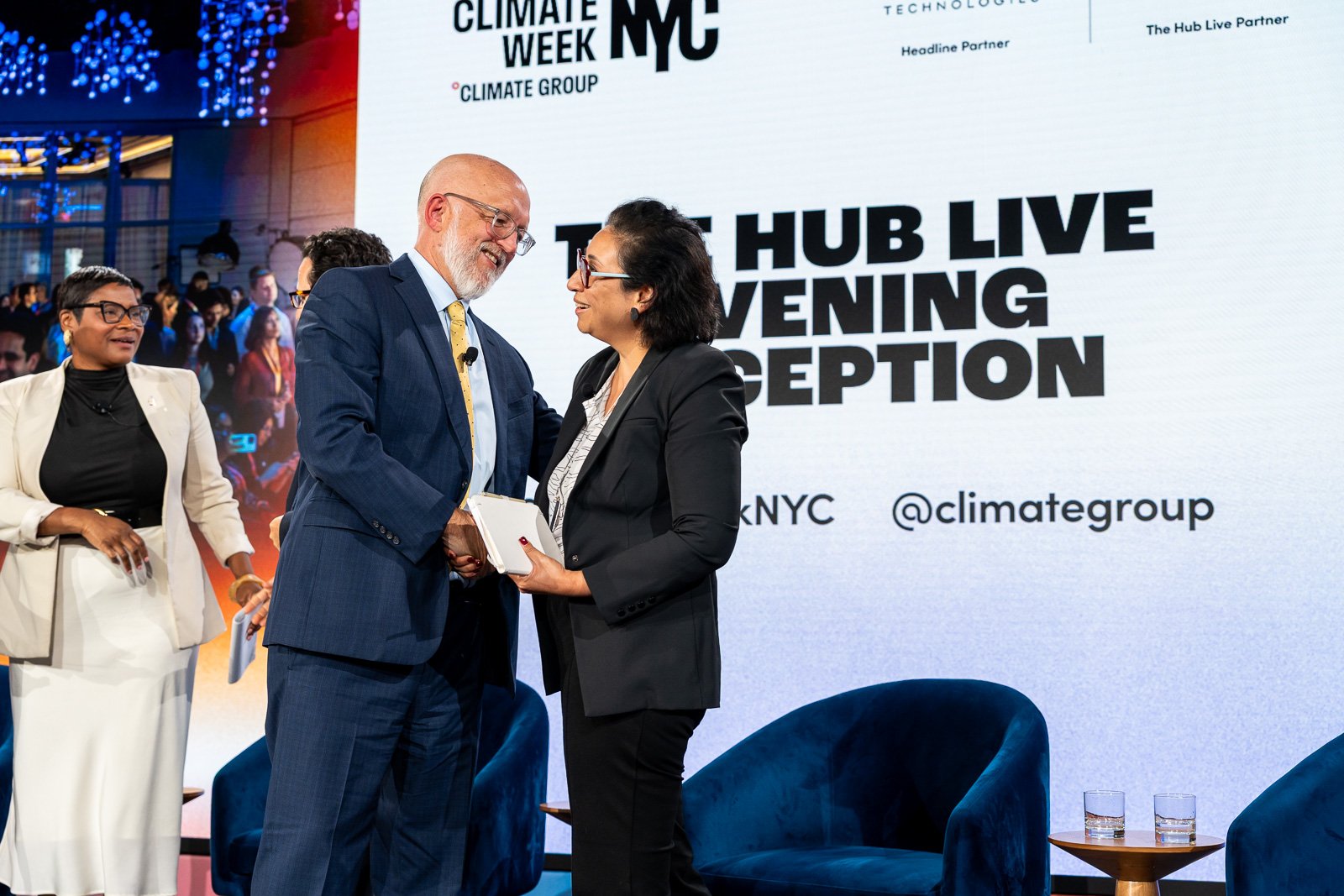 Jason Walsh, Executive Director, BlueGreen Alliance, and Valerie Volcovici, Senior Correspondent, Reuters, on stage at The Hub Live
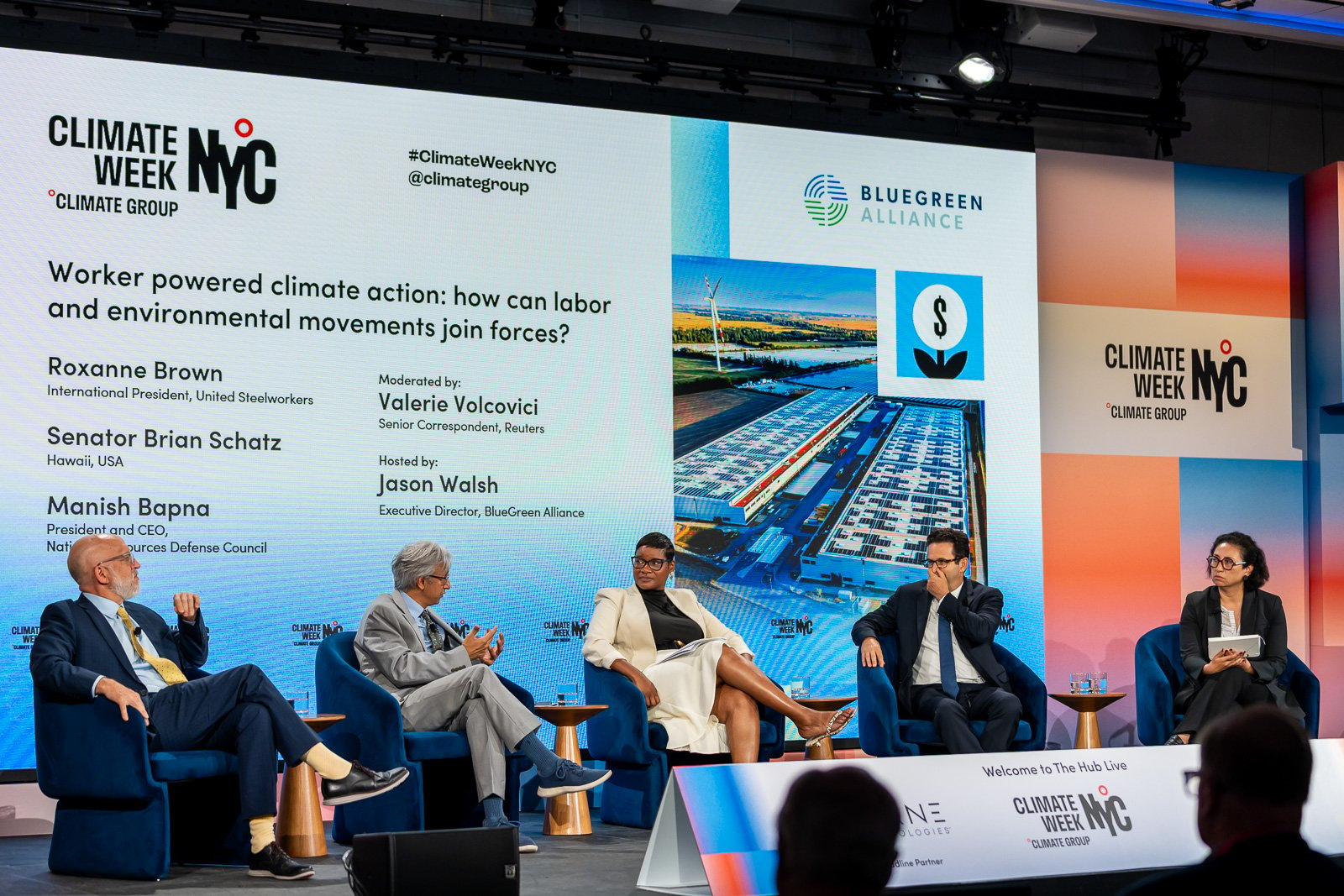 The panel on worker powered climate action, moderated by Valerie Volcovici, Senior Correspondent, Reuters
04.30pm ET
In a Nature and Health session on cutting super pollutants, convened by the Subnational Methane Action Coalition with support from the Global Methane Hub, the argument moved from awareness to delivery.
Dr. Manjeet Ahluwalia, Regional Lead for Asia, Global Methane Hub, opened with the economics. A recent assessment from the Climate and Clean Air Coalition and UNEP found that every unit invested in clean air and climate action returns around 15 in benefits.
"Implementation is really going to be the key as we lead to COP31, and of course in this decade of delivery."
What matters is not just publishing the data, she said, but turning data into action, and giving citizens something they can use to hold everyone accountable.
Yana Garcia, California Secretary for Environmental Protection, made the case for leading with co-benefits. Communities are dealing with several crises at once, so the story has to be about what they gain. Cutting methane from oil and gas is a savings story. Diverting organic waste builds composting infrastructure. Reducing methane also cuts air toxics. California publishes a public dashboard of methane sources, takes enforcement action on leaks, and has launched its own satellite network to find them. Detecting and monitoring pollution, she said, is the most important thing the state has done.
Martina Otto, Head of Secretariat, Climate and Clean Air Coalition, moderated the panel that followed, and her point was that this is where methane stops being an abstraction: finance ministers need to understand the cost of delay, and at subnational level the benefits become tangible to people quickly.
Bernadette Arakwiye, Minister of Environment, Rwanda, set out three fronts: cutting waste to avoid routine flaring and turn methane into a usable resource, tackling black carbon by keeping vehicles properly maintained, and a national cooling strategy built around efficient technology. Ambition is one thing, she said. Getting solutions to communities and to farmers is another.
"True partnership requires an implementable plan, clarity on roles, and accountability. It has to deliver results on the ground."
Paola Bauche Petersen, Secretary of Environment and Territorial Development, Jalisco, described a state that is half forest, working on sustainable livestock, training farmers through 43 field schools, and developing biodigesters. Around Guadalajara, sugar cane used to be burned as part of the production process, and the state is moving growers to green harvesting instead. Half of Jalisco's pollution comes from cars, and the benefits they are already seeing show up in health.
"National governments need to set the course. States can go in the same direction."
Richard Smith, Executive Director, PCI Institute, works with the government of Mato Grosso, a state with three biomes that produces grain and cattle for the world. Deforestation there is down 90% in twenty years while soy production has climbed, which he offered as proof that production and protection aren't opposites. Cattle traceability is the hard problem, and the goal he named is simple: an end to illegal deforestation in Brazil.
The session closed with the Government of Catalonia joining the Subnational Methane Action Coalition, signing alongside Yana Garcia. Cristina Massot, Secretary General of the Ministry of Agriculture, Livestock, Fisheries and Food, said methane accounts for around 40% of Catalonia's greenhouse gas pollution, concentrated in agriculture and waste, and that the region joins with a biogas strategy already running to 2030.
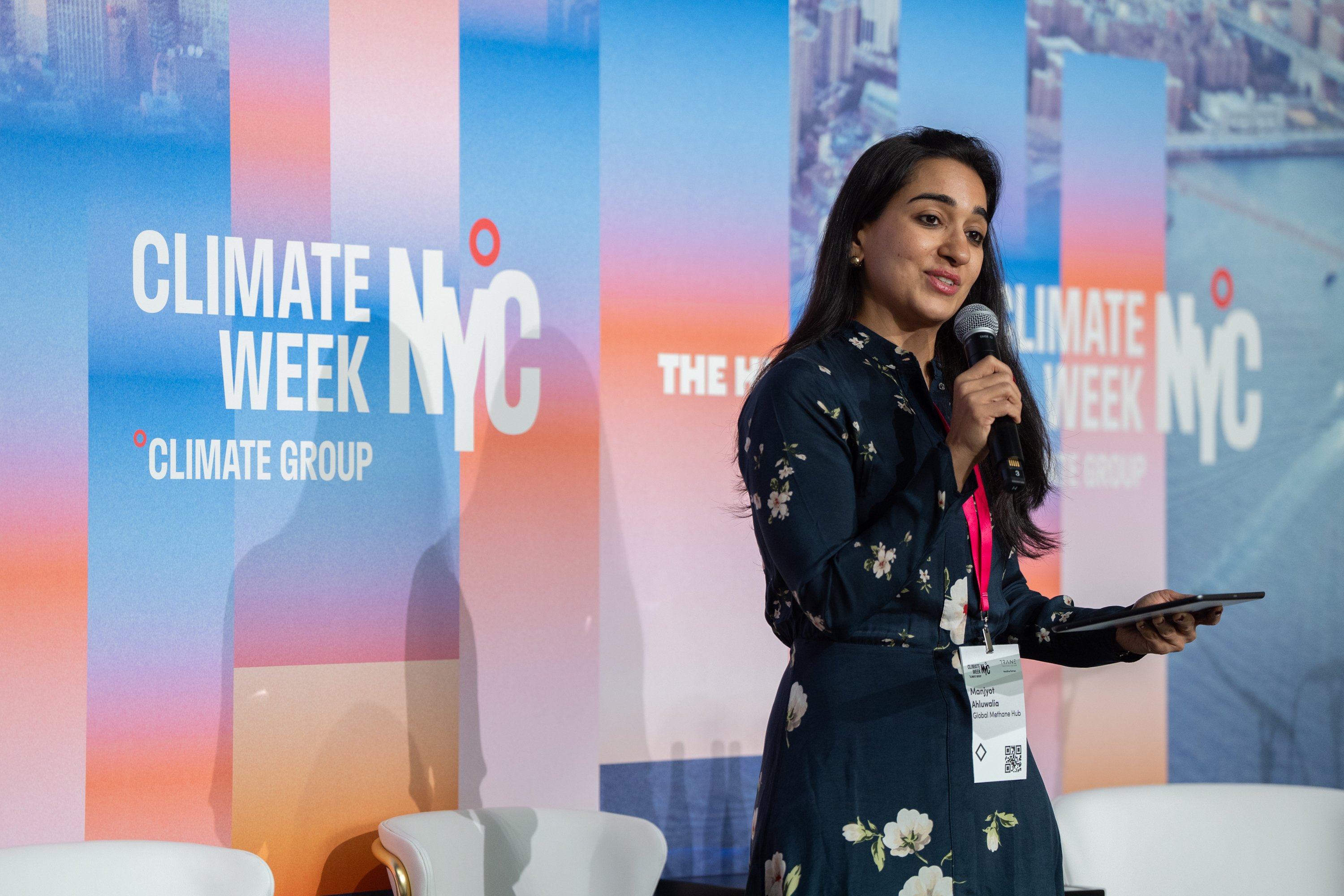 Manjyot Ahluwalia, Ph.D., Regional Lead Asia, The Global Methane Hub
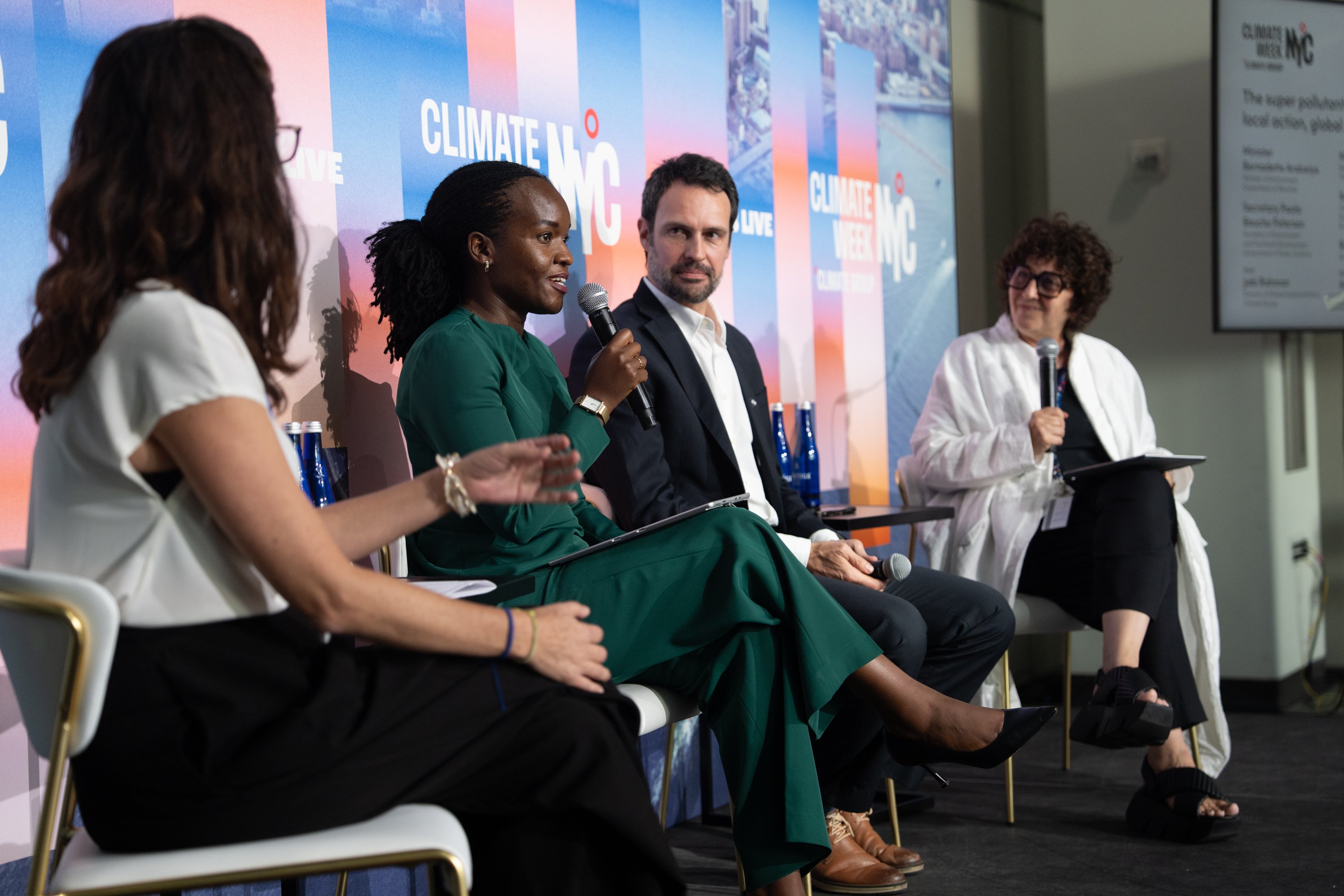 Panelists discuss cutting super pollutants during the Nature and Health session at Climate Week NYC
04.30pm ET
In an Energy session on powering AI, Heather McGeory, Vice President, Energy and Sustainability, CoreWeave, put the question to the panel: who wins when demand outpaces the grid? Adrian Varga, Senior Policy and Market Strategist, Americas, ACT Group, sharpened it. The question isn't only whether we can power AI, but whether we can do it sustainably and affordably.
Stephanie Diaz, Technology and Innovation Senior Associate, BloombergNEF, set out the scale. Data centers are on course to add 118 GW to the US grid by 2030, taking them to around 12% of average US electricity demand and roughly a fifth by 2035, with the US already accounting for about half of global data center demand. Policymakers, she argued, are chasing three goals at once, AI leadership, energy exports and affordability, and they can't have all three.
Aaron Johnson, Senior Vice President, Local Customer and Community Engagement and Chief Sustainability Officer, PG&E, pointed at capacity already sitting idle.
"The electric grid is only used 45% of the time."
Congestion is concentrated in a few hours, he said, and coordinating where data centers sit would unlock enormous flexibility. The harder problems are procurement, where there isn't enough manufacturing capacity to move anyone up the queue, and an industry that plans conservatively by design. More sensors and better software would let it plan less conservatively. Enough batteries on the system, he added, would change the picture entirely, because nothing would be time-dependent any more.
Jeffrey A. Smidt, Senior Vice President, TIC Industrial, UL Solutions, described what that density looks like up close.
"The amount of power concentrated in a small space is incredible, and so is the heat it creates."
That heat is forcing engineering innovation, he said, and UL's job is making sure the people working in those buildings are as protected as the equipment.
Pritimukta Sarangi, Group Director, Sustainability and Technology, Princeton Digital Group, made the case for matching supply to demand hour by hour. Data centers run around the clock, so the clean power has to as well. The company has set a target of running entirely on carbon-free energy, every hour of every day, by 2036, and is introducing the first hourly certificates in Indonesia.
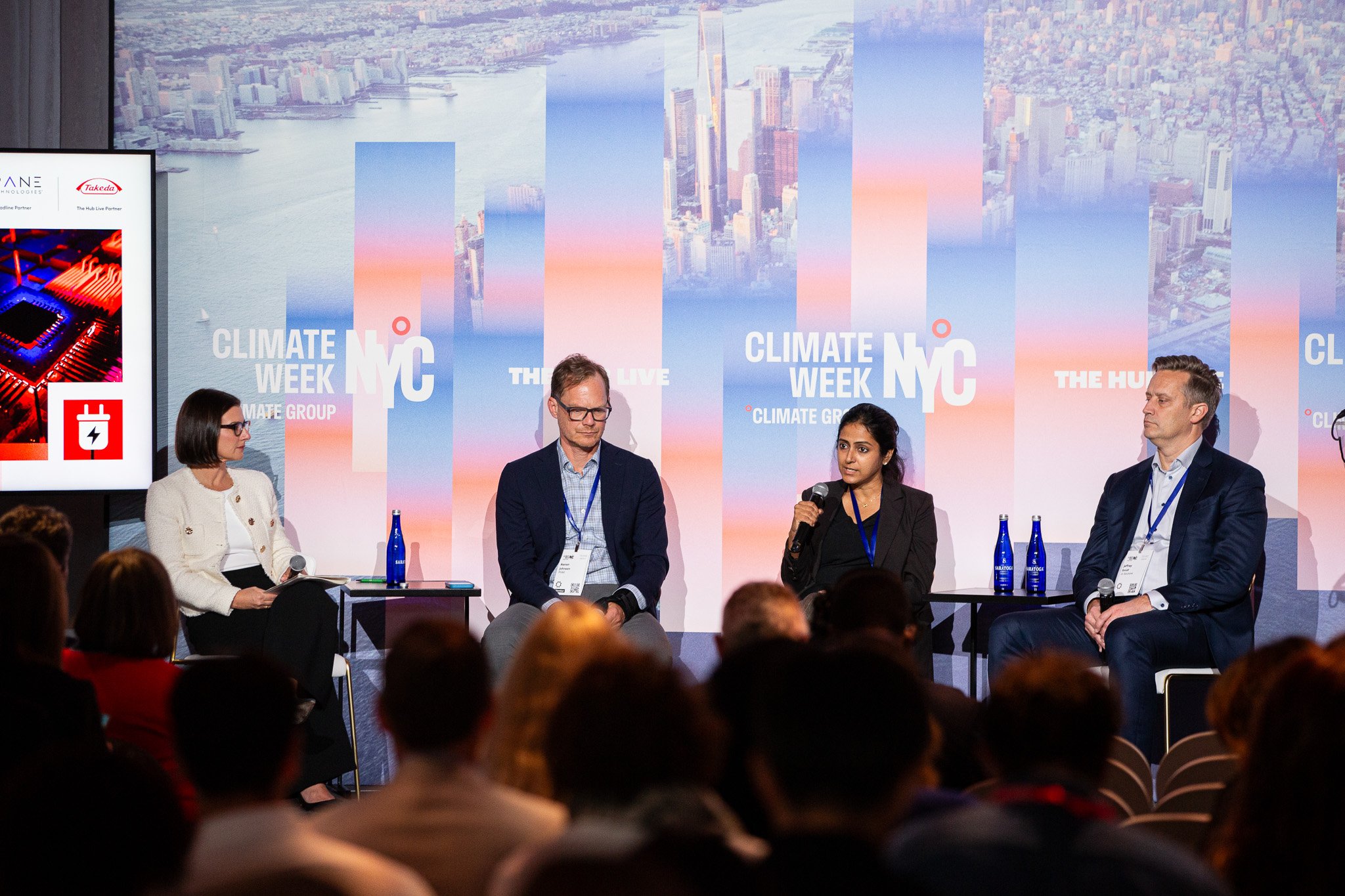 The panel on powering AI
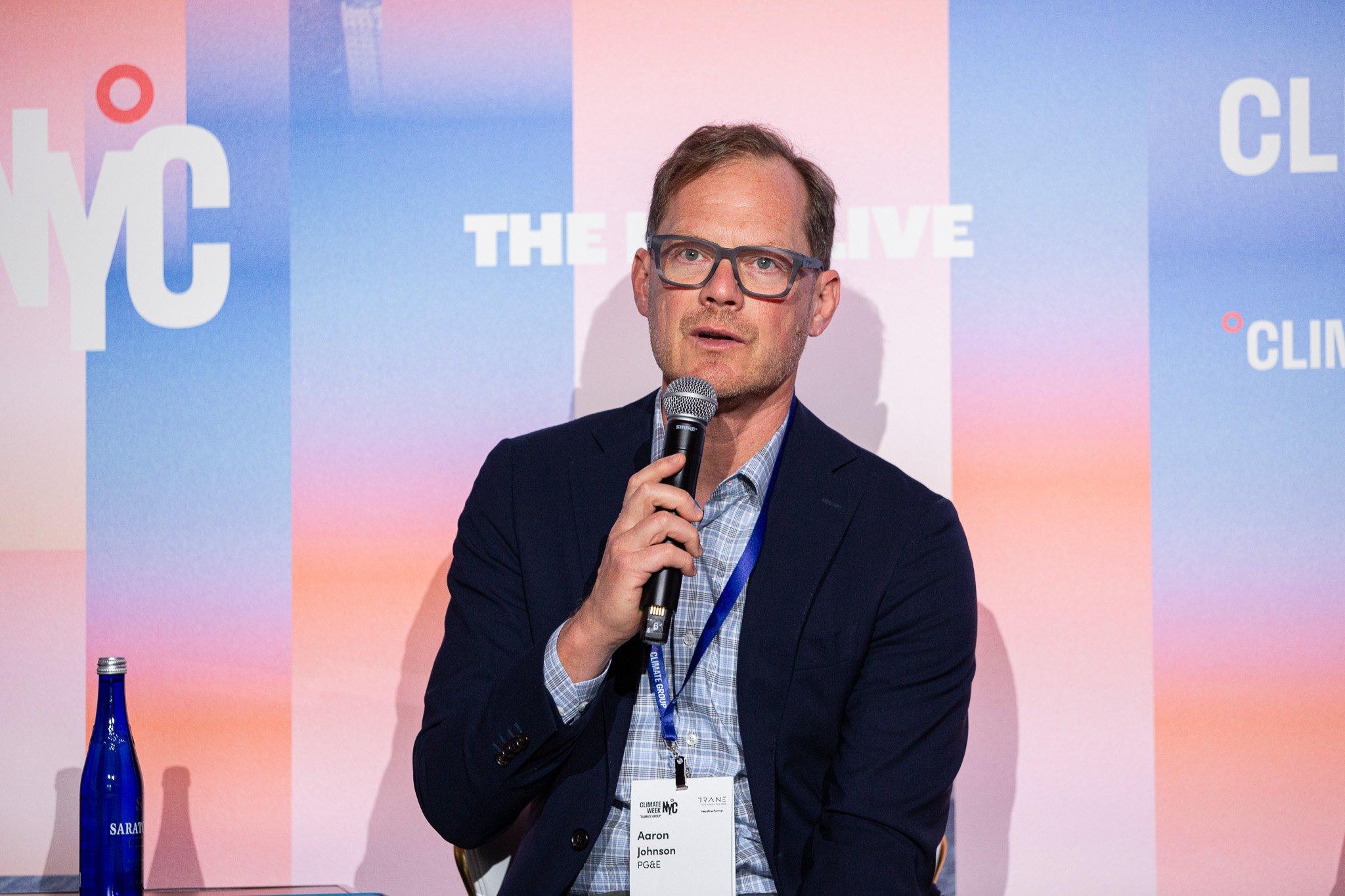 Aaron Johnson, Senior Vice President, Local Customer and Community Engagement and Chief Sustainability Officer, PG&E
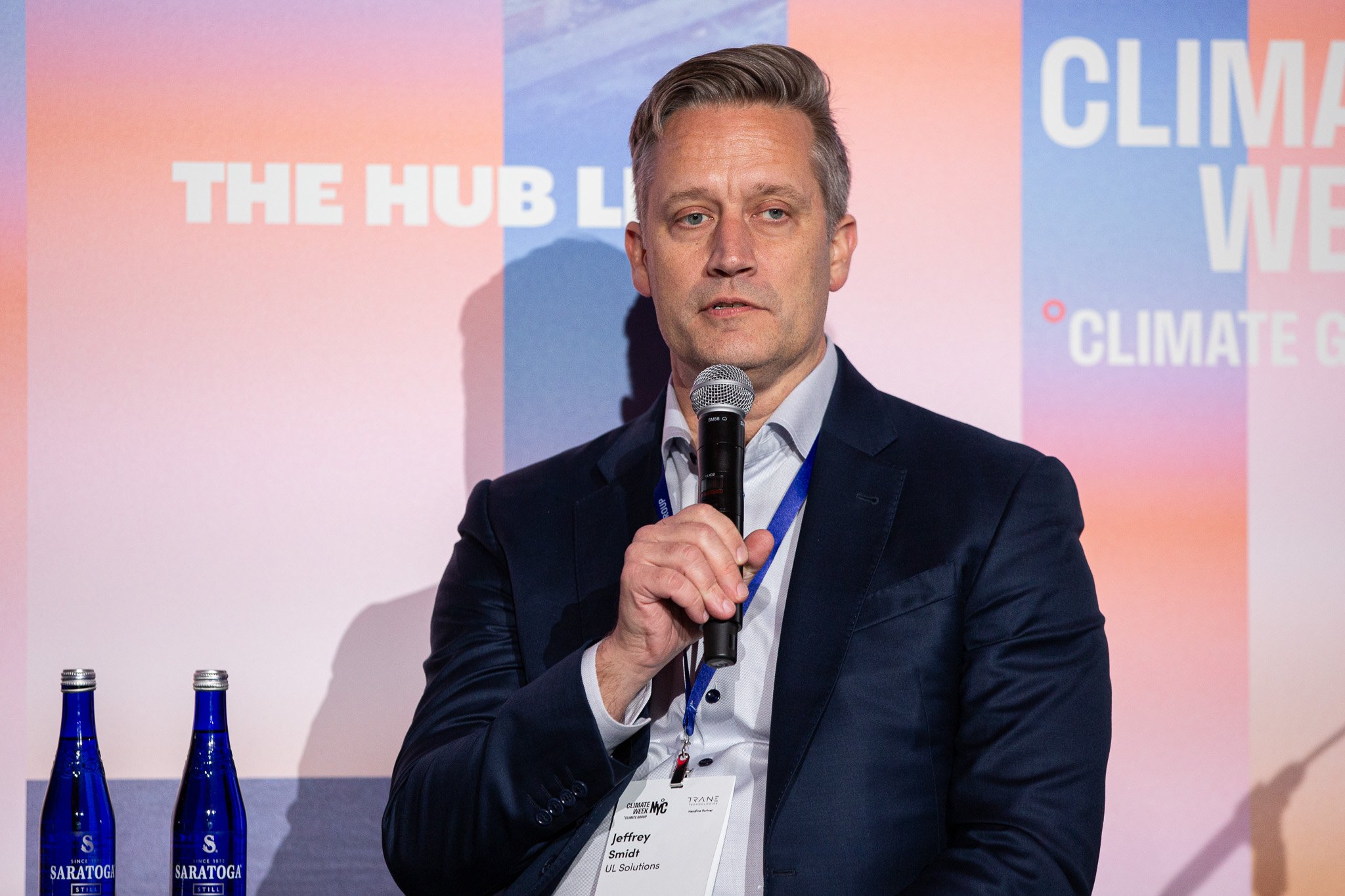 Jeffrey A. Smidt, Senior Vice President, TIC Industrial, UL Solutions
04.30pm ET
In a Transport and Industry session on unlocking grid capacity for electrified road transport, Dominic Phinn, Head of Transport Systems, Climate Group, opened with a number from an unexpected place: seven out of ten new vehicles sold in Uruguay in August were fully electric. The shift isn't confined to China and Europe, he said. It's happening everywhere.
Kevin Matthews, Head of Electrification, First Student, brought it down to the school run. His fleet is at 600 electric buses now, heading for 1,000 by the end of the year and 1,500 by the start of the school year. Cleaner air for children, drivers and the neighborhoods the buses run through was the expected benefit. The one that surprised them was quiet: students are less distracted and better behaved, drivers are happier, and drivers who aren't being distracted by students have fewer accidents.
Ray Minjares, Managing Director, International Council on Clean Transportation, who moderated, pointed to electric trucks as an answer to air pollution as much as to climate, with 14% of truck sales electric in 2025 and Germany on course to reach cost parity with diesel by 2030. He also set out the Potsdam principles, agreed at London Climate Action Week by manufacturers, fleets, NGOs and governments, on adopting electric trucks and charging infrastructure at scale.
Katherine Dixon, CEO, Regulatory Assistance Project, said those principles flip the question. What matters isn't only how much demand there is, but when the charging happens, which is why smart charging should be the default. Why, she asked, do we wait for demand to appear before building the capacity to meet it?
Christine Weydig, Industry Principal, Schneider Electric, argued the sector has moved past its early "that location or bust" phase and now needs system thinking: infrastructure-first design, designing for flexibility, and using digital tools to automate loads.
David Bonelli, Counsel, PACT, made the case for starting small and moving now, so that customers have certainty from the beginning.
"Transportation electrification projects have to be part of grid planning from the start."
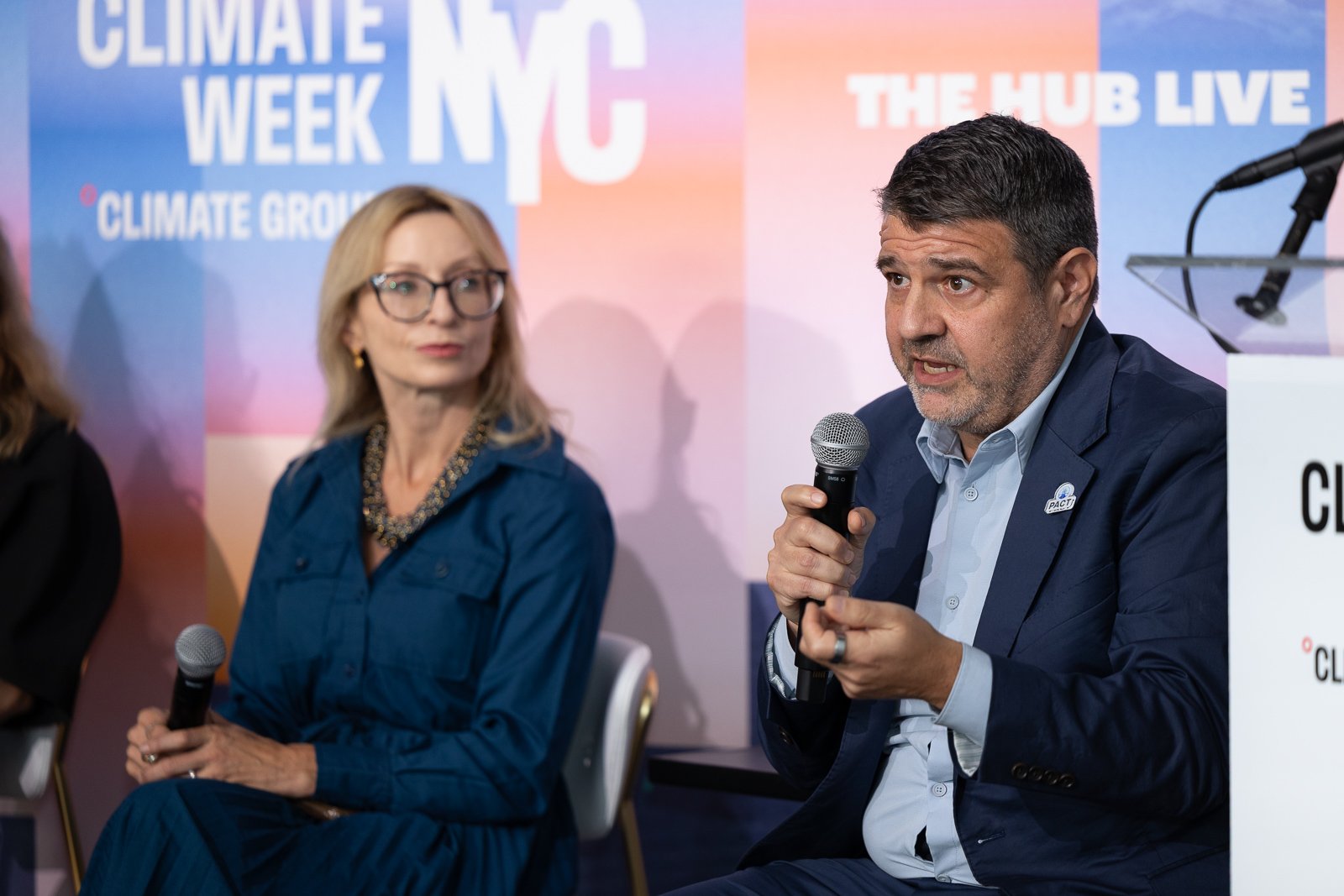 Christine Weydig, Industry Principal, Schneider Electric and David Bonelli, Counsel, PACT
04.10pm ET
Only one in six public servants believe their government is prepared for the climate impacts to come. That finding, from a new Apolitical survey, opened a Leadership and Green Growth session on governing through permacrisis, and prompted the launch of a dedicated government resilience campus to help officials close the gap.
Lt Gen. Richard Nugee CB CVO CBE, Former Chief of Defence People, Ministry of Defence, UK, made the case for what he called triple use spending: every marginal dollar going to something that is good for the country, good for national security and good for resilience all at once. Twenty years of arguing on climate grounds alone, he said, hasn't been enough to move budgets.
Asked why people feel so powerless:
"Climate change is the most insidious threat, because it's like the smoke that comes under the door."
Government can create incentives for people to act, he said, but community matters more: the bonds of trust that stop people feeling they're on their own. Democracies also struggle to turn money into action, because most ministries treat writing a paper as the end of the process rather than the beginning.
Around the table, Joanna MacGregor, Chief, UN Affairs & Strategy, argued that resilience can't be a strategy but has to become a core function of government, since climate change doesn't respect departmental organograms. Manuel Pulgar Vidal, Global Leader, WWF, said this is a time of uncertainty in which we don't need a map, we need a compass. Josh Amponsem, Strategy Director, Youth Climate Justice Fund, made the case for distributing agency, because people live in places, not in ministries or portfolios. Yamide Dagnet, Senior Vice President, International, Natural Resources Defense Council, called for a space where the private and financial sectors can work out how deals actually close. And Lolita Jackson MBE, Executive Director of Sustainable Cities, Sustainable Development Capital LLP, put the financing problem in a sentence: the money exists, but the deal flow does not.
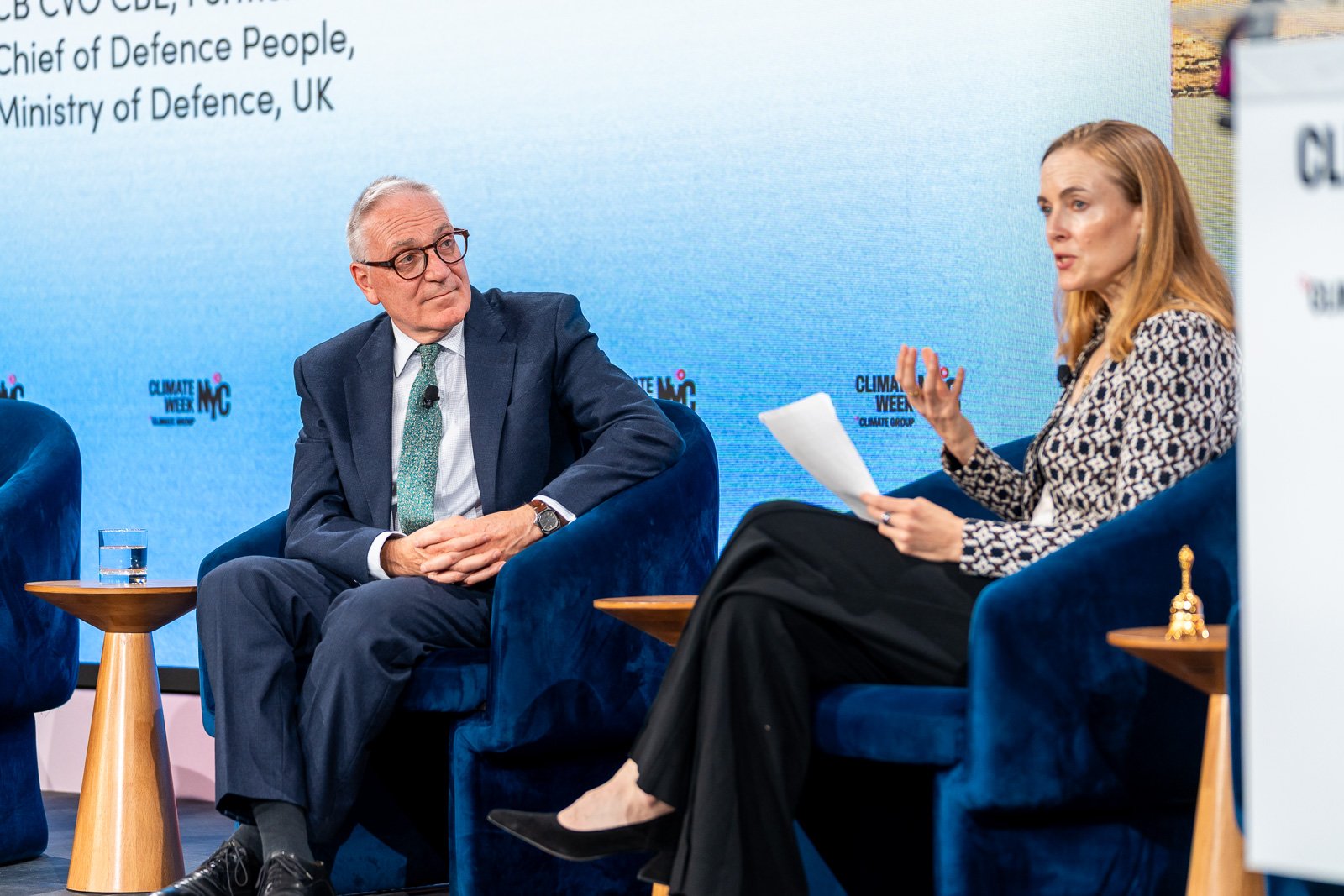
Lt Gen. Richard Nugee CB CVO CBE, Former Chief of Defence People, Ministry of Defence, UK, with Lisa Witter, Executive Chair, Better Politics Foundation
04.10pm ET
Surya to Silicon brought India's solar story to The Hub Live. Ashish Khanna, Director General, International Solar Alliance (ISA), and Karan Mangotra, Chief of Strategy and New Initiatives, International Solar Alliance (ISA), were joined by Santosh Sarangi, Secretary, and JVN Subramanyam, Joint Secretary, Ministry of New and Renewable Energy, Government of India, Dr. Sumant Sinha, Chairman and CEO, ReNew, and Sam Kimmins, Director of Energy, Climate Group.
Mangotra began by translating the title.
"Surya might be unknown to many. It is the sun."
India has expanded its non-fossil capacity around fourfold since 2014, he said, and reached key 2030 milestones five years ahead of schedule, with policy that has cut project risk and improved bankability for international investors.
Subramanyam's warning was about concentration. Manufacturing is still clustered in too few places at a moment when supply chains are fragile.
"Safety in clean energy lies in variety, and variety alone."
Khanna then turned the panel to the question underneath all of it.
"What's in it for the common person? People feel that renewables haven't improved their lives. How is this going to change the life of the common person?"
Kimmins answered from Climate Group's side. India is a beacon for what's achievable, he said, around 30% of projects there are driven by corporate demand, and the country can now deliver round-the-clock solar and storage below average power prices. That, he argued, is what weaning a system off fossil fuels actually looks like.
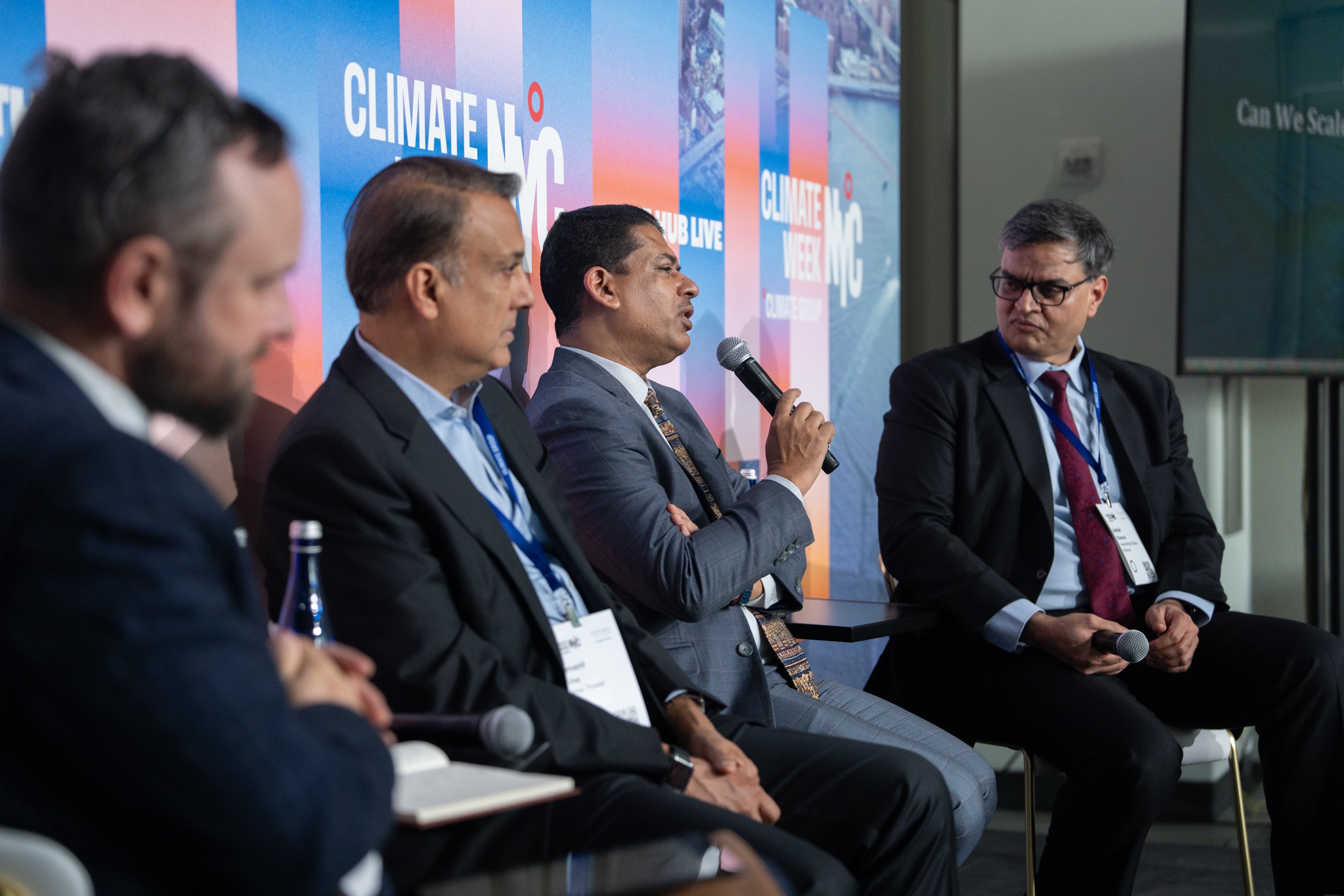 The Surya to Silicon panel at The Hub Live with Ashish Khanna, Director General, International Solar Alliance (ISA) as the moderator
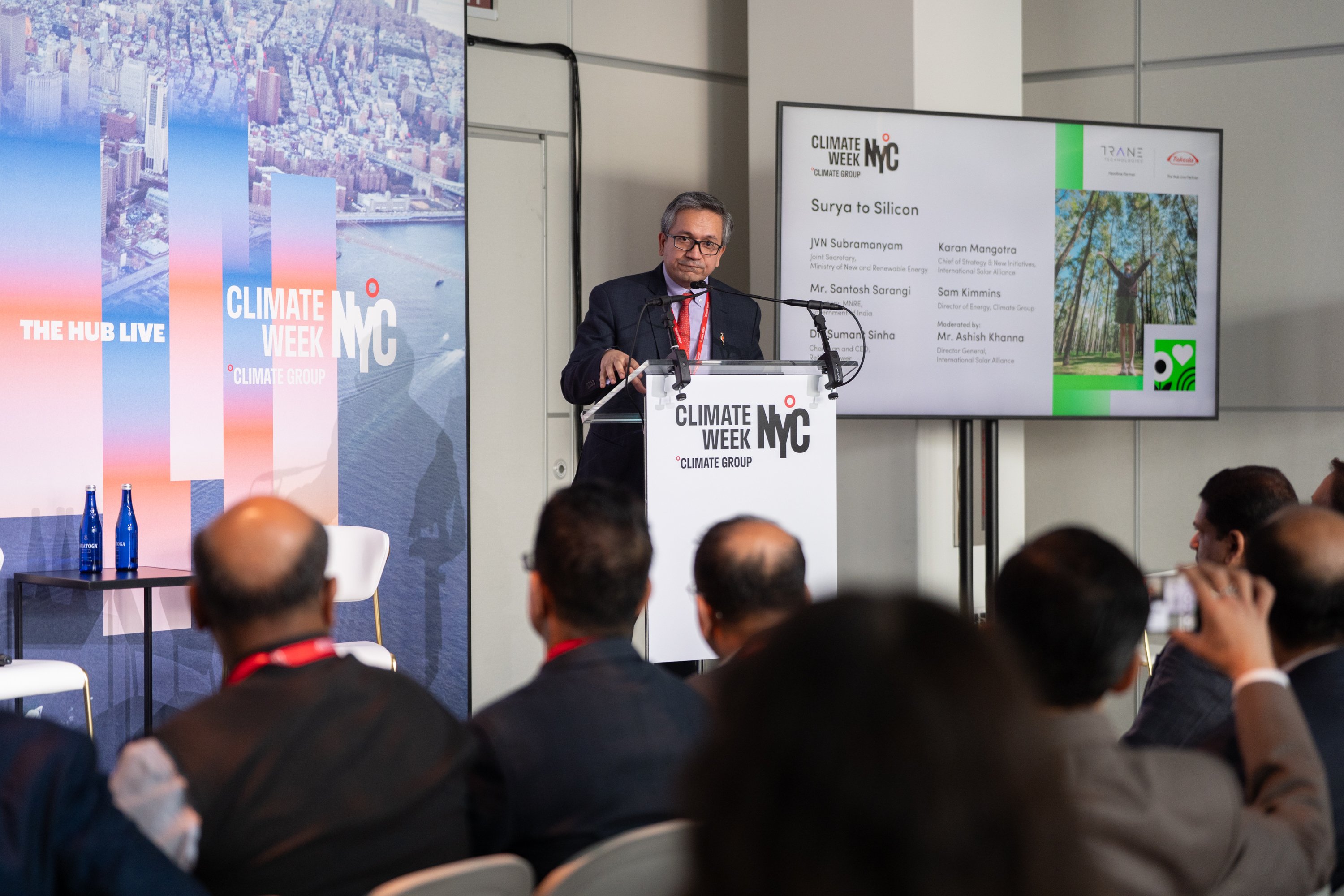 Karan Mangotra, Chief of Strategy and New Initiatives, International Solar Alliance (ISA)
04.00pm ET
In an Energy session on collaborative action to accelerate energy efficiency, Nicola Cullen, Head of Energy Innovation, Climate Group, brought together Lena Hansen, Chief Program Officer, RMI, Bishal Thapa, Chief of Strategy and Impact, CLASP, Anke Hampel, SVP Sustainability, ABB, Christie Ulman, President, Sequoia Climate Foundation, and Helen Walter-Terrinoni, Director of Global Policy and Advocacy, Trane Technologies.
Hansen set up the problem: efficiency suffers from never being tackled systemically, and the language itself needs to change, from using less to getting more out of what we already have.
Ulman put a challenge to the room.
"In every conversation about the newest technology, please raise energy efficiency as a solution, and see what that does for all of us."
Walter-Terrinoni argued that policy has to start with what we actually want the grid to do, and that the answer isn't only new spending.
"There are a lot of technologies out there already. It's not all going to be new investments."
Hampel brought a worked example from ABB: an audit of 650 motors at a major steel client, then upgrades that cut both energy costs and emissions. Policymakers should treat efficiency as seriously as transmission, she said, and minimum standards need raising. Thapa's point was that the technology is already here and no single organization acting alone shifts anything.
"We shouldn't be talking about energy efficiency in five years. It'll just be in the baseline."
Christie Ulman, President, Sequoia Climate Foundation
The Energy session on energy efficiency at The Hub Live
Christie Ulman, President, Sequoia Climate Foundation
03.30pm ET
In a Transport and Industry session on building networks for mobility at scale, Frank Reig, CEO, Voltera, joined Doreen Harris, President and CEO, New York State Energy Research and Development Authority (NYSERDA), and Randall Winston, Deputy Mayor, City of Los Angeles, in a conversation moderated by Vandana Gombar, Senior Editor, BloombergNEF.
Reig's argument was that self-driving vehicles have already arrived, just unevenly: the future is here, you simply have to be in the right city to see it. He expects fleets to control them for a long while yet, because that's where the economics point, and said staying ahead of regulators with open communication is what makes the difference.
The bigger idea was about what these vehicles actually are.
"These aren't autonomous vehicles. These are batteries on wheels that can plug in and push power into the grid."
Harris picked up the same thread from the grid side. Autonomous fleets are an opportunity for fast charging, she said, and flexible load is one of the most effective ways to cut grid investment and manage peaks. She pointed to $16 million from the NY Green Bank, and made the case that the slower federal pace has at least given New York time to build the infrastructure out.
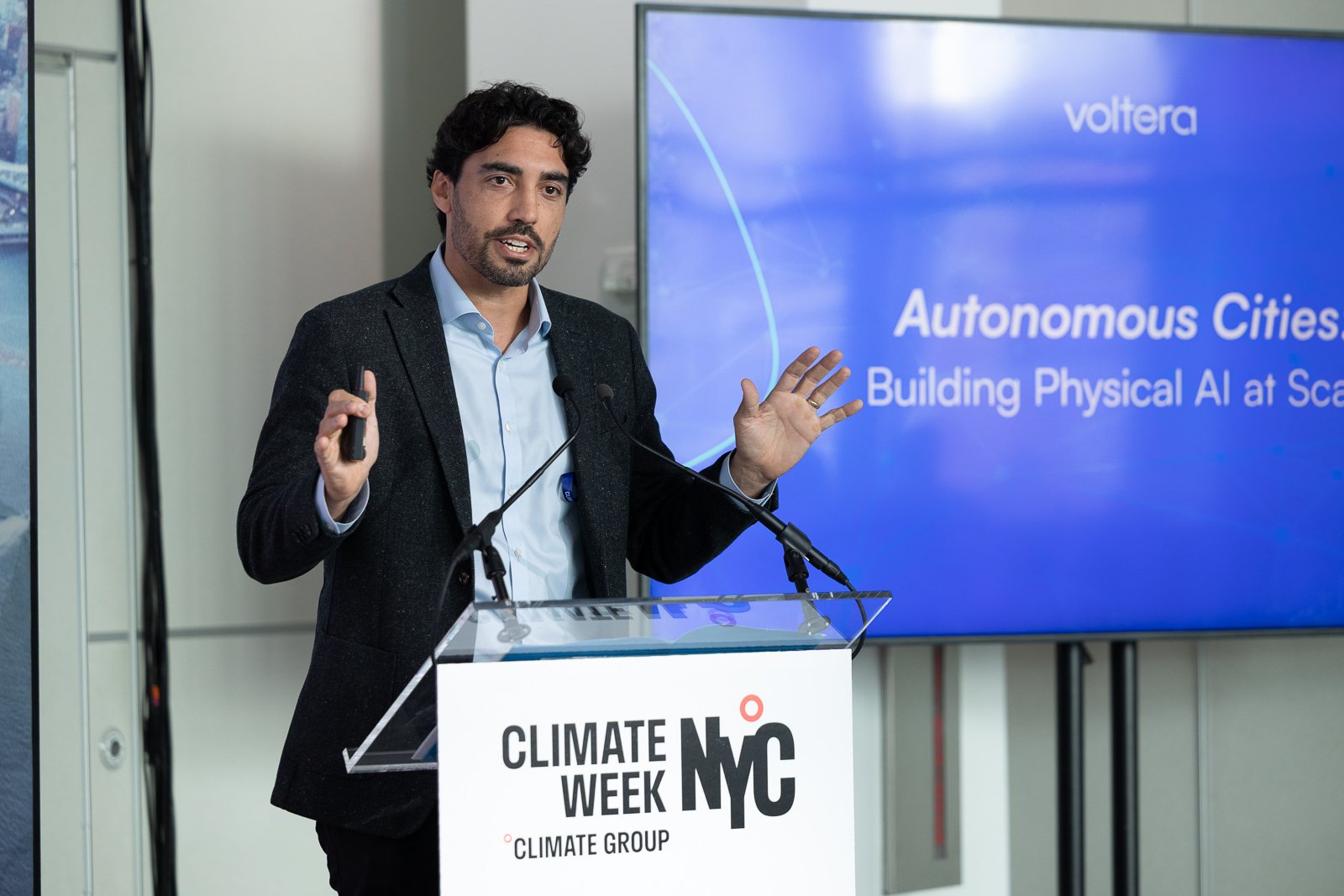
Frank Reig, CEO, Voltera
Frank Reig, CEO, Voltera speaks at the Transport and Industry session on building networks for mobility at scale
2.50pm ET
Eriel Deranger, Founder and Executive Director, Indigenous Climate Action, and Mithika Mwenda, Pan African Climate Justice Alliance, joined Helen Clarkson OBE, CEO, Climate Group, for the final session of Flagship One, on how climate connects to community.
Deranger's argument was about who holds the pen. Plans made without communities can't meet their needs, she said, and Indigenous peoples are already protecting more than 80% of the world's biodiversity while most climate finance goes to technology instead. Asked about scaling solutions quickly, she pushed back on the framing itself: doing something for a community takes authority away from it.
"Our communities don't need to be saved. We have so many of the solutions. They just need investment."
Mwenda made the case for working across every boundary at once. Climate change is an environmental issue, he said, and also a water issue, a transport issue, an infrastructure issue, and a people issue. Nobody can work in isolation, rich or poor, leader or community member, and trust has to be built before any of it holds.
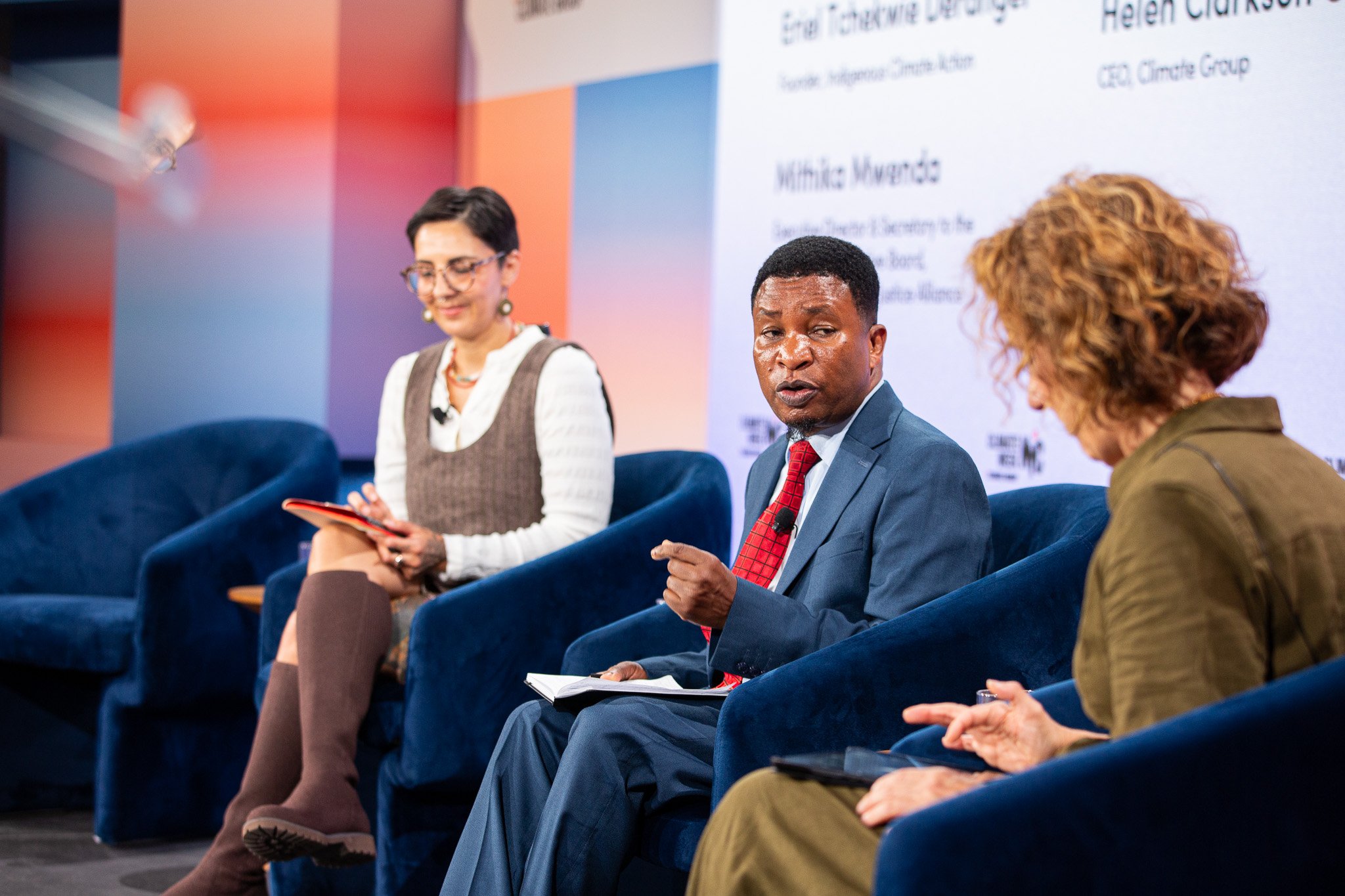
Eriel Deranger, Founder and Executive Director, Indigenous Climate Action, and Mithika Mwenda, Pan African Climate Justice Alliance, in conversation with Helen Clarkson OBE, CEO, Climate Group
2.20pm ET
Dr. Sally Uren OBE, Executive Director and Chief Acceleration Officer, Forum for the Future, Scott Tew, Global Head of Sustainability Strategy, Trane Technologies, and Dr. Satchit Balsari, Associate Professor, Harvard T.H. Chan School of Public Health, joined Ginger Zee, Chief Meteorologist and Chief Climate Correspondent, ABC News, to ask whether business can keep up with the heat.
Uren argued that heat has only just reached the boardroom, and that it got there through productivity, workers, and supply chains that fracture when it gets hot enough. The instinct is to treat it as a cost. She made the case for treating it as a value opportunity instead: companies depend on a healthy workforce, and nobody solves this alone, so it takes government, business and communities working together.
Balsari brought it back to who is already paying. The cost of adapting has largely been borne by the poor, he said, and workers who go home to badly ventilated housing come back the next morning in no state to work. He urged the room to think past mortality figures.
Tew's argument was that the response is still built for one bad day rather than a changed climate. More air conditioning isn't the answer on its own. What's needed is a heat resilience plan that deals with energy demand, worker productivity and safety together. Companies talk easily about safety culture, he said, and heat resilience is heading the same way.
"We're still using band-aids. This is no longer acute."
Scott Tew, Global Head of Sustainability Strategy, Trane Technologies, speaking on the panel
The panel on whether business can keep up with the heat, moderated by Ginger Zee, ABC News
Scott Tew, Global Head of Sustainability Strategy, Trane Technologies
02.10pm ET
Prof. Kaveh Madani, Director of the United Nations University Institute for Water, Environment and Health, joined Sherry Madera, CEO, CDP, to make the case that the world has entered an era of water bankruptcy.
The word choice matters, he argued, because calling it a crisis implies something that passes.
"If we call it simply a crisis, we're not doing it justice."
Bankruptcy isn't about how rich or poor a country is, he said. It's about how it manages its assets, and water can become so polluted it's unusable long before it runs short. No sector is safe, and the least diversified economies take the hardest hit. Around 70% of the world's water is in the hands of farmers, which puts them at the center of any answer.
Madera put CDP's figures alongside it: $400 billion at risk from water scarcity, against $1 trillion of opportunity. Madani's response was to move water toward the uses with the best return, finance the diversification of economies, and build supply chains resilient enough to share the risk rather than pass it down to the people least able to carry it.
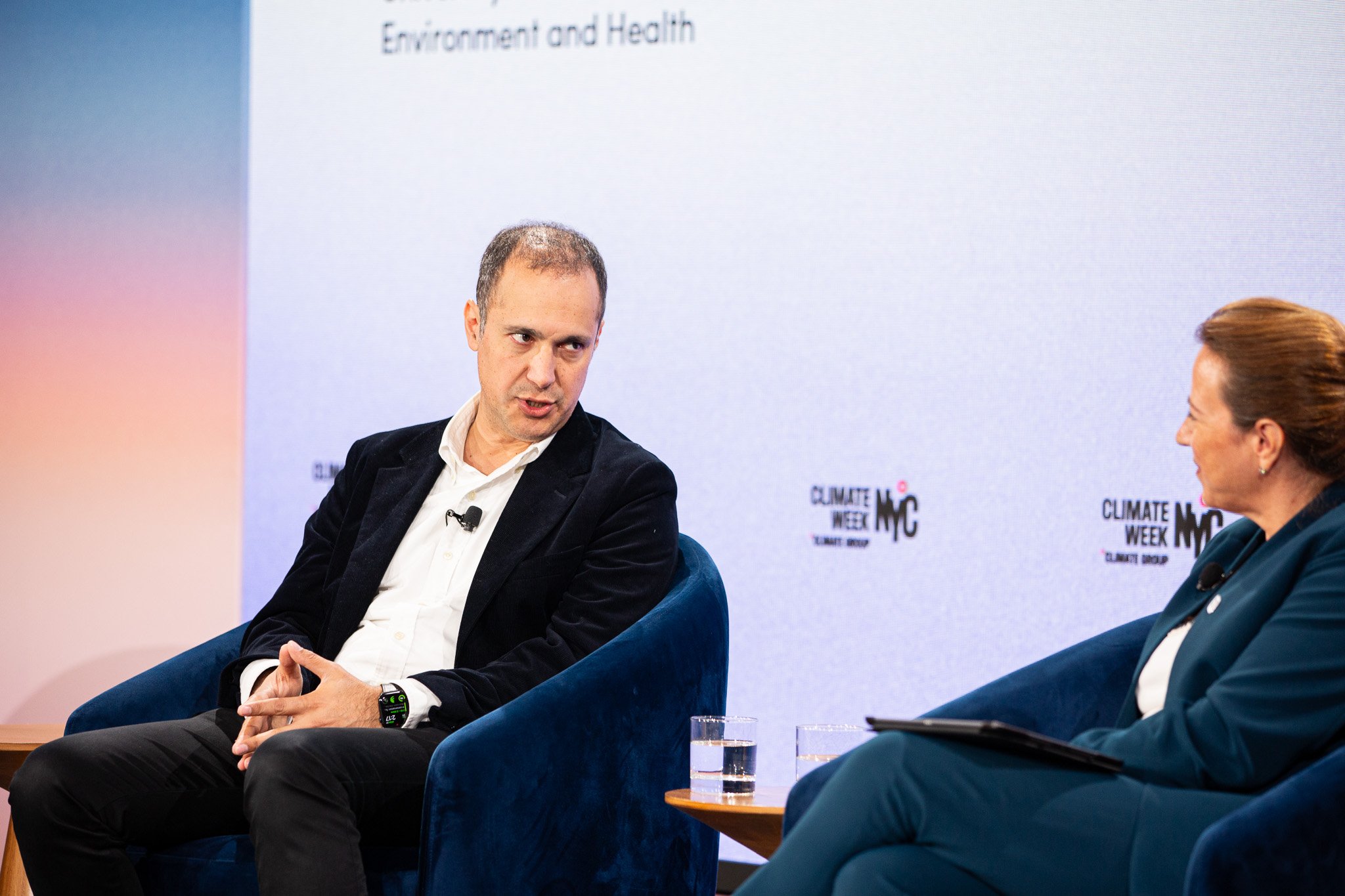
Prof. Kaveh Madani, Director of the United Nations University Institute for Water, Environment and Health, in conversation with Sherry Madera, CEO, CDP
01.40pm ET
"We are in an energy crisis right now," said Ed Crooks, Vice Chair Americas, Wood Mackenzie, opening a panel on how to keep the lights on in an uncertain world with Damilola Ogunbiyi, CEO and Special Representative of the UN Secretary-General for Sustainable Energy for All, David Calabrese, Executive Vice President, Daikin US Corporation, and Kayte O'Neill, COO, National Energy System Operator.
Ogunbiyi was blunt about the scale of it, and about the gap between countries. The transition looks entirely different where getting power to people at all is still the first problem, she said, and the old financing models won't stretch to cover it. The first thing you do in a crisis, she argued, is use less: efficiency could cut consumption by a quarter to a third, alongside a faster rollout of renewables.
Calabrese made the case from the equipment side. Daikin has spent years working on efficiency in heating and cooling, and technology like inverters is ready to go. What's missing is policy that speeds up adoption, and enough trained people to install it.
"Besides the money, it's getting the workers who are familiar and well trained."
David Calabrese, Executive Vice President, Daikin U.S. Corporation, and Kayte O'Neill, COO, National Energy System Operator, speaking on the panel
Damilola Ogunbiyi, CEO and Special Representative of the UN Secretary-General for Sustainable Energy for All, in conversation with Ed Crooks, Vice Chair Americas, Wood Mackenzie
David Calabrese, Executive Vice President, Daikin U.S. Corporation
01.30pm ET
The Hub Live opens with a welcome from Ginger Zee, Chief Meteorologist and Chief Climate Correspondent, ABC News.
"Climate change is part of every story. In this story, it's a threat multiplier."
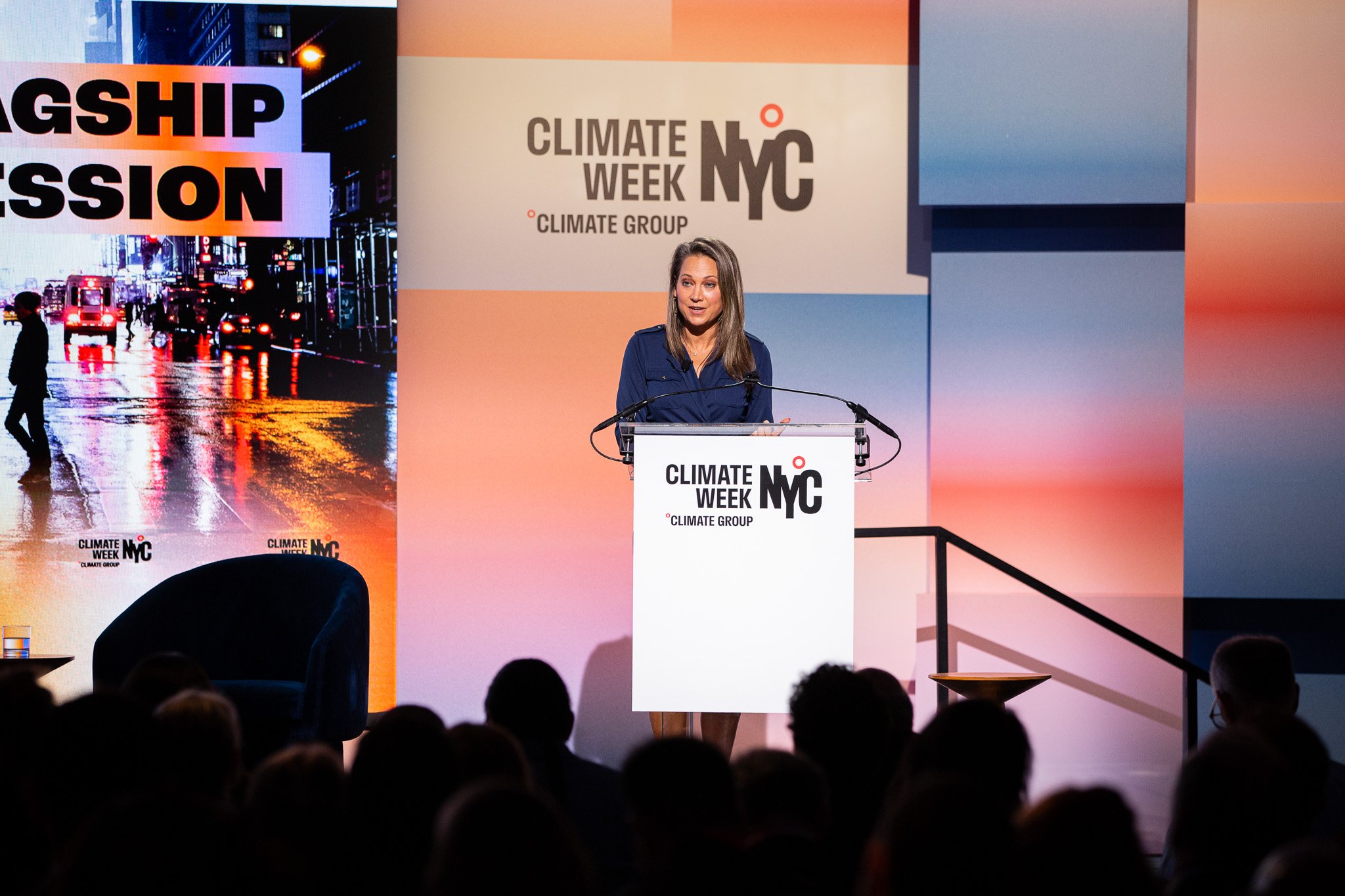
Ginger Zee, Chief Meteorologist and Chief Climate Correspondent, ABC News opens The Hub Live
01.00pm ET
COP31 at Climate Week NYC
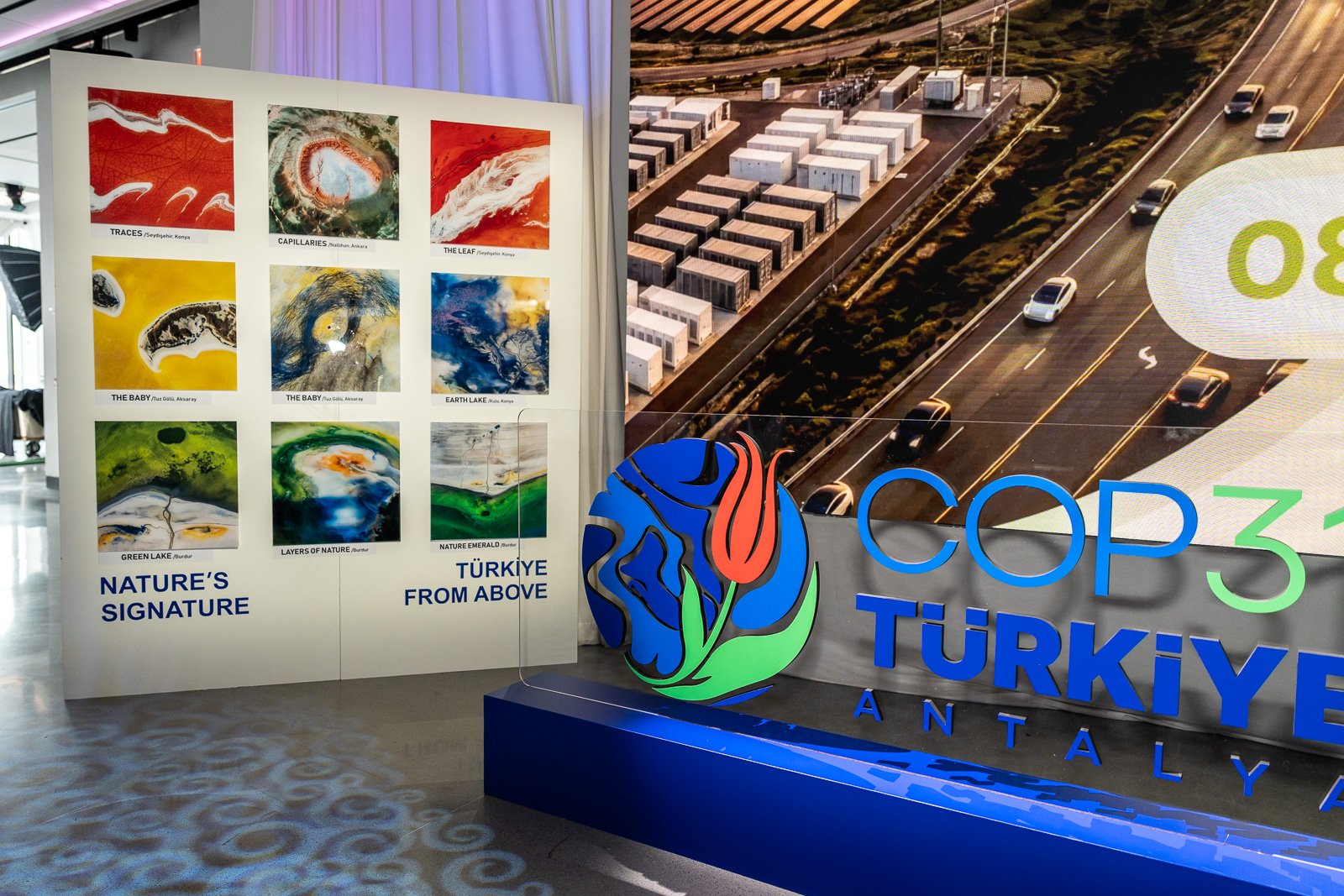
Climate Week NYC doesn't stop in New York. The conversations starting here run on to COP31 in Türkiye, and this year there's a space at The venue dedicated to what comes next.
Head to the networking area and you'll find a large LED screen anchoring the installation, photography across four more screens, illuminated 3D lettering, and work by the Turkish painter and tapestry weaver İlhami Atalay hanging through the space.
Alongside it, Garip Ay is painting live. Ay works in ebru, the traditional Turkish art of marbling, where pigment is floated on water and then lifted onto paper. He's best known internationally for recreating Van Gogh's Starry Night this way, and the process is as much the work as the finished piece.
A preview of Türkiye, host of COP31 in November.

12.35pm ET
Helen Clarkson OBE, CEO, Climate Group, closed the Opening Ceremony.
Across the morning, from heads of government to the companies building and financing the transition, the same argument kept surfacing: the economics have already turned, and what's left to settle is political will and how fast anyone moves. Or, as Iceland's Prime Minister put it in the closing keynote, start before you must.
The Hub Live begins this afternoon. We'll be back with the highlights.
12.25pm ET
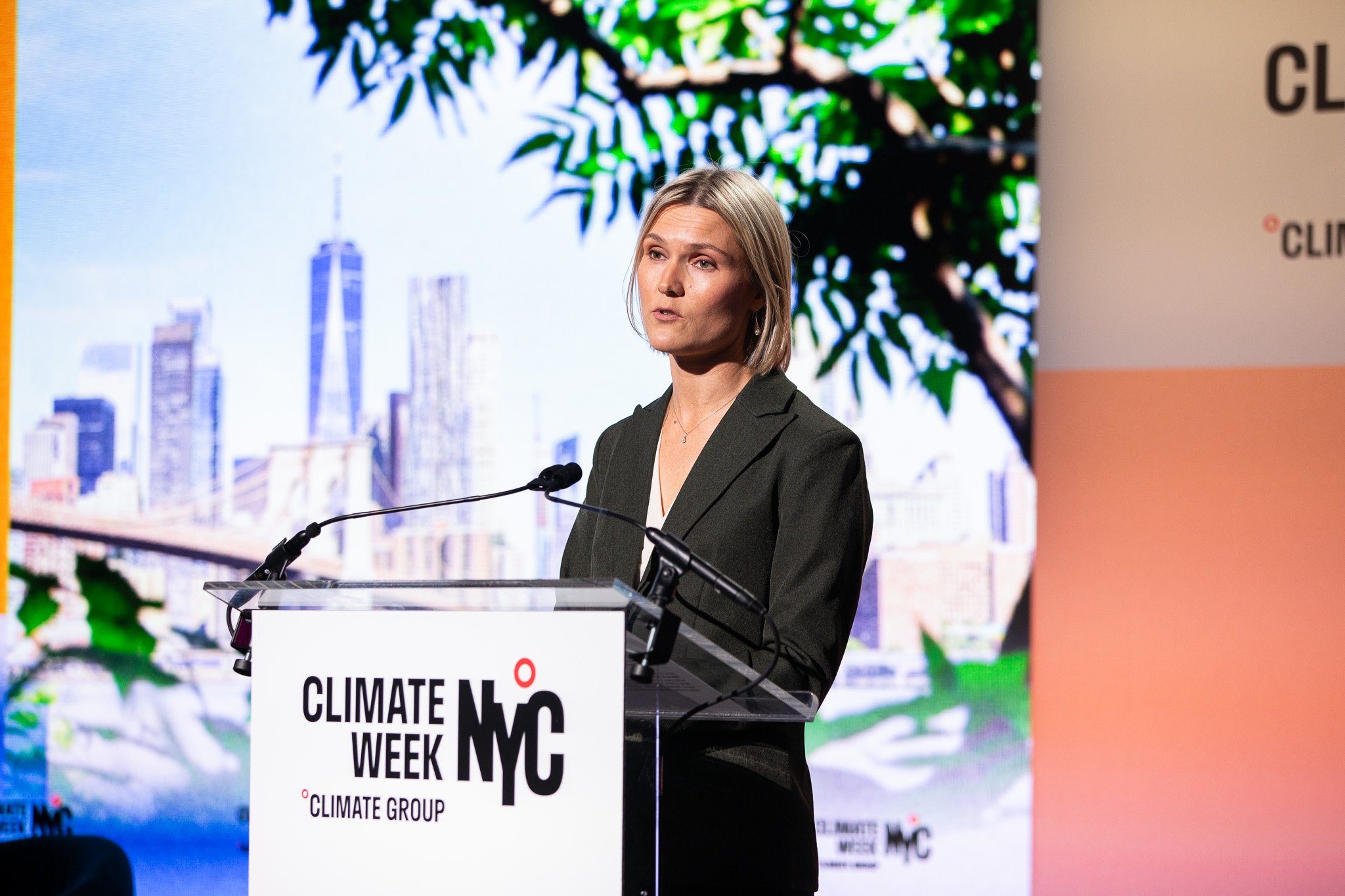
H.E. Kristrún Frostadóttir, Prime Minister, Iceland, closed the Opening Ceremony with the story of how her country got off imported fuel.
Icelanders had bathed in geothermal water for centuries, she said, but as late as the 1960s using it for power was one experiment in one town, and most homes were burning fuel shipped in from elsewhere. When the oil crisis came, Reykjavik didn't wait it out. It built the system, and the country switched within a single decade. That took money, better drilling and water transport, and a cross-party consensus that outlasted several governments.
"Resilience wasn't built during the crisis. It was built in the years after, so the next shock wouldn't hurt us as much."
Today virtually every Icelandic home is heated with renewable energy, more than 90% of it geothermal, on a fully renewable grid and with almost no fossil fuel imports. The work isn't finished either: a new push aims to bring geothermal heating to regions where the geology is harder.
Her argument to the room was that this transition will be won by whoever builds the capacity years ahead of needing it.
"Start before you must."
H.E. Kristrún Frostadóttir, Prime Minister, Iceland gives the closing keynote
11.55am ET
How do we prepare for an abundant future? Ambassador Benoît Faraco, Special Climate Envoy for France, took the question alongside Bill McKibben, Founder, Third Act, Karen Pflug, Chief Sustainability Officer, IKEA, and Mindy Lubber, CEO and President, Ceres, in a panel moderated by Helen Clarkson OBE, CEO, Climate Group.
Faraco made the economic case in the plainest terms available: driving 100 km in France costs around €5 on electricity against around €25 on diesel. France made its choice a decade ago, he said, and now exports clean power to its neighbors. Selling clean energy, in his words, is very good business.
McKibben argued the world will run on sun and wind within a few decades either way, and that the only question is whether leaders get there before the damage is done. Pflug said the shift lands when it stops being a sustainability topic and gets written into the business plan. Lubber pointed to data centers as the question that decides whether the grid gets cleaner or dirtier, and to the need for policy that holds still long enough for investors to act on it.
"We need international cooperation, but it is also a competition."
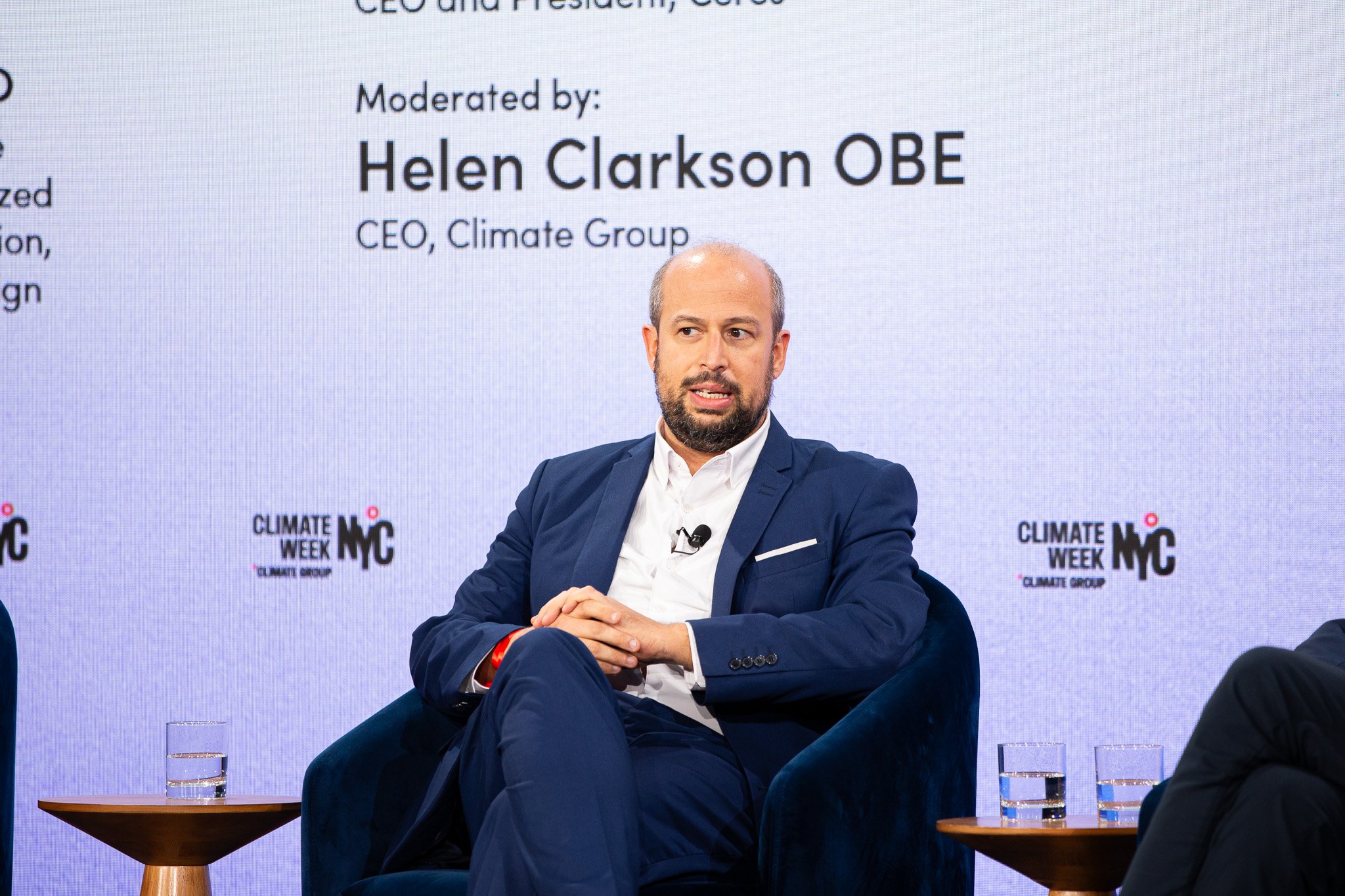
Ambassador Benoît Faraco, Special Climate Envoy for France takes part in a panel
11.35am ET
Dr. Eva Riesenhuber, Global Head of Sustainability, Siemens, and Dr. Evelyn Wang, Vice President for Energy and Climate, MIT, joined Angela Barranco, Executive Director, North America, Climate Group, to ask whether there's good news on the horizon where AI and climate meet.
Riesenhuber argued that AI is already doing useful work inside buildings, automating shading and cooling, and that the bigger prize is turning buildings into nodes on the grid, moving power in both directions. Most were never designed to be that smart, she said, and software can make them so without replacing them. On data centers, she pointed to waste heat being piped into district heating systems to warm nearby homes.
"We believe that future data centers can be carbon and water neutral."
Wang cautioned against conflating AI with the infrastructure behind it. AI is a tool, she said, and a powerful one for discovery: screening hundreds of catalyst chemistries without burning through critical minerals, or using machine learning to engineer the enzyme behind photosynthesis to work harder. The footprint of data centers, in energy, water and materials, is a separate problem, and one with real consequences for the communities living next to them.
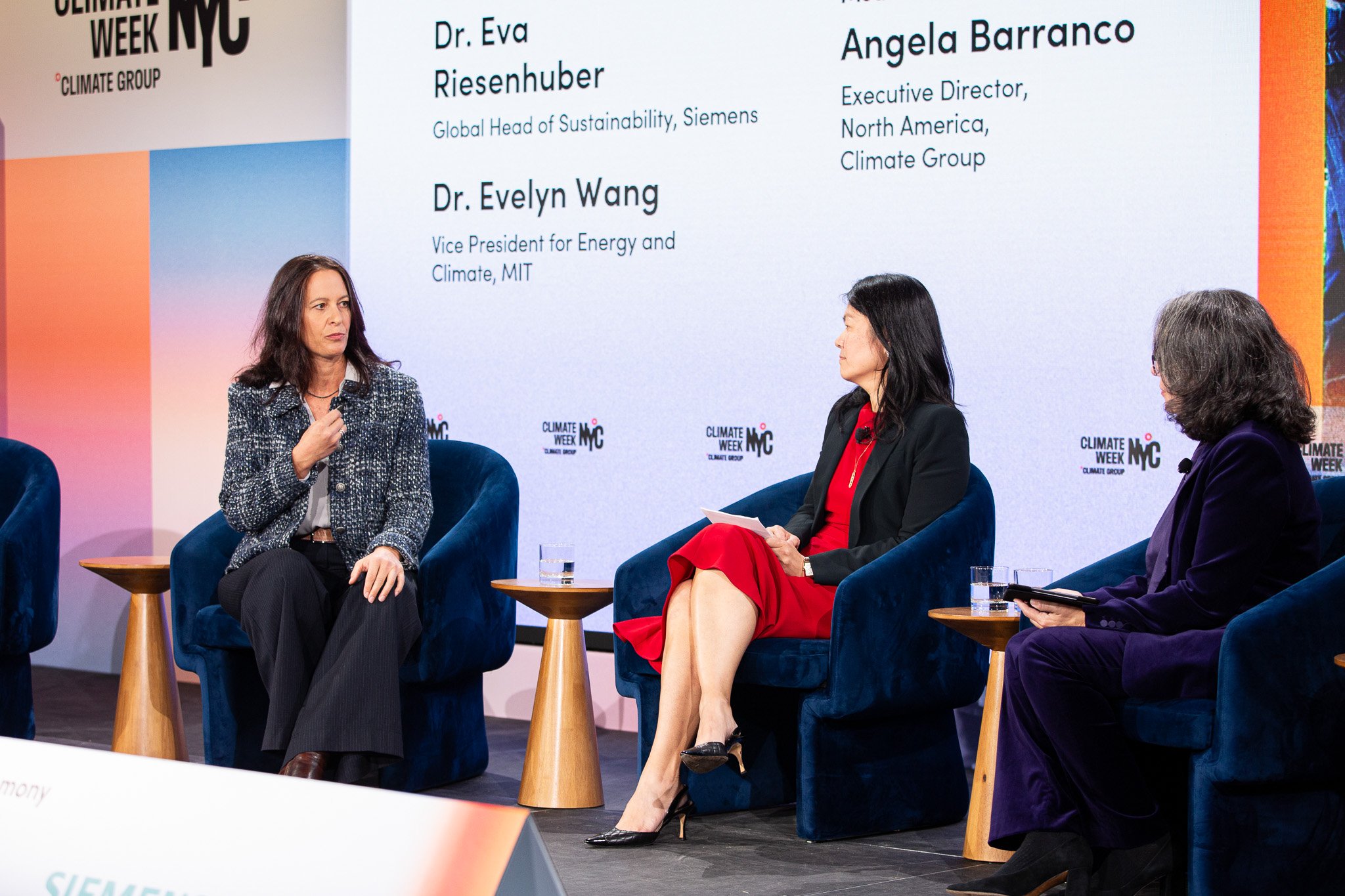
Dr. Eva Riesenhuber, Global Head of Sustainability, Siemens and Climate, MIT, and Angela Barranco, Executive Director, North America, Climate Group, on stage speaking on the panel
Dr. Eva Riesenhuber, Global Head of Sustainability, Siemens
11.25am ET
Mauro J Atalla, Senior Vice President and Chief Technology and Sustainability Officer, Trane Technologies, spoke with Emma Cox, Trustee, Climate Group, about moving from pledges to performance.
Most of the conversation about energy is about supply, he argued, and not nearly enough of it is about demand. Buildings account for a large share of both emissions and energy use, and a significant portion of the energy delivered to them is simply wasted: paid for, and never used. The controls and the data to fix that already exist.
What's missing, he said, is everything around the technology: stable policy, standards that measure the benefits, and pricing signals from cities and governments. Projects delivering strong results are already out there. They are just not the norm.
"This is not a technological barrier. The technology is already there."
Mauro J Atalla, Senior Vice President and Chief Technology and Sustainability Officer, Trane Technologies in conversation with Emma Cox, Trustee, Climate Group on stage
Mauro J Atalla, Senior Vice President and Chief Technology and Sustainability Officer, Trane Technologies
11.15am ET
Lt Gen. Richard Nugee CB CVO CBE, Former Chief of Defence People, Ministry of Defence, UK, joined Erin Sikorsky, Director, Center for Climate and Security, to ask whether climate offense is the new defense.
He started with the practical. Armed forces have to operate in the environment they find themselves in, and that environment is changing: sea temperatures in the Gulf are now high enough that the water no longer cools a ship's engines. He was just as interested in the opportunities, from hybrid vehicles that run quieter, vibrate less and travel further, to recycling carbon fiber from helicopter parts into drones, cutting dependence on imported materials.
He spent much of the conversation on disinformation, which he said rises sharply after extreme weather events, with hostile states pushing the idea that climate change is a hoax. With a significant share of the public now getting their news only from social media, trust becomes a defense question in itself: if NATO ever asks people to stand up, they need to know who to believe.
"In the Cold War we spent huge sums on a threat that never materialized. Climate change is not a threat that might happen. We know it will."
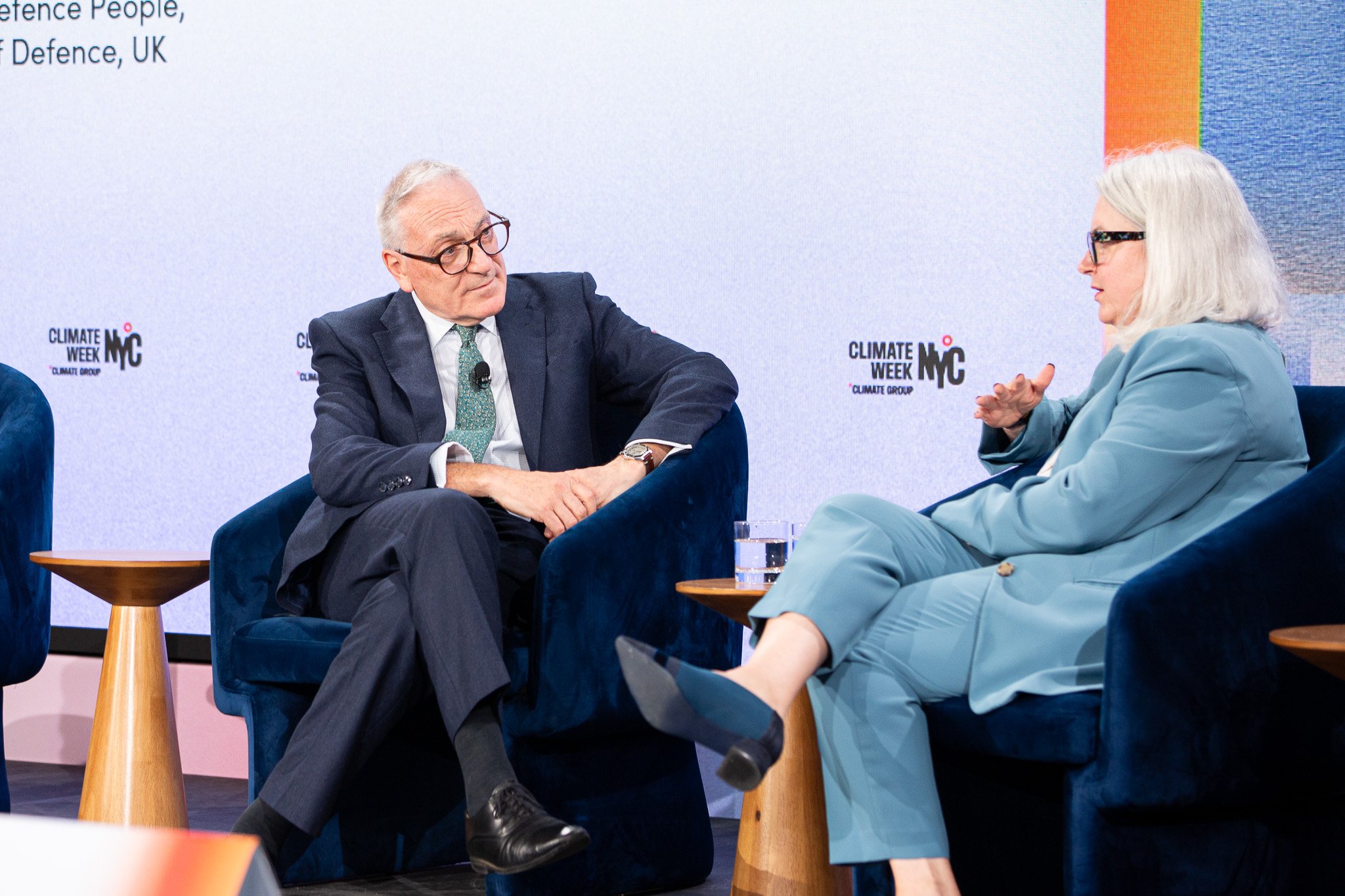
Lt Gen. Richard Nugee CB CVO CBE, Former Chief of Defence People, Ministry of Defence, UK, in conversation with Erin Sikorsky, Director, Center for Climate and Security
11.05am ET
Part two of the Opening Ceremony opens with a keynote from H.E. Emine Erdoğan, First Lady, Republic of Türkiye, on waste, consumption and the zero waste movement.
She put a question to the room: is this crisis only about fossil fuels, or is it also about the scale of our industries and an appetite for consumption that treats every object as something destined to become waste? Most of the plastic ever produced has already become waste, she noted, and the burden of that falls on those least responsible for it: vulnerable communities and future generations.
Türkiye's zero waste initiative has spread to schools, hospitals, public institutions and homes, and the country's recycling rate has risen from 13% to over 37%. The bigger shift, she argued, is that people have moved from helpless observers to actors. The UN adopted a zero waste resolution in 2022, and COP31 in Türkiye will treat zero waste as a tool for climate action.
"The true value of this will be determined not by what we say here, but by what we do afterward."
H.E. Emine Erdoğan, First Lady, Republic of Türkiye
11.00am ET
After a short break, Carl Nasman, Anchor and Senior Broadcast Journalist, BBC News, opens part two of the Opening Ceremony: Real Momentum, Material Change. Where the first half looked at the harder choices leaders are facing, this one turns to the momentum already building, and to the scale and speed still needed to match it.
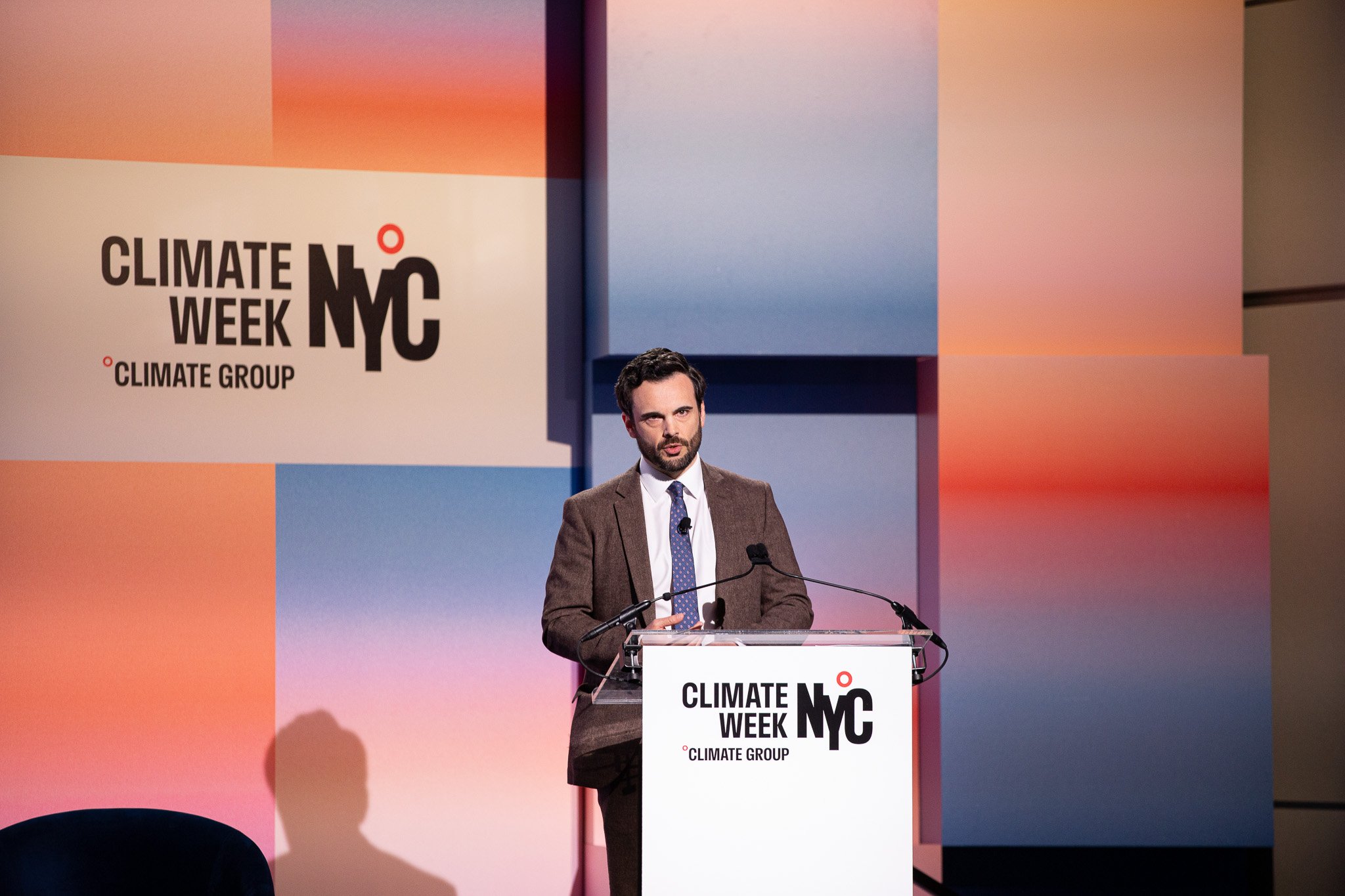
Carl Nasman, Anchor and Senior Broadcast Journalist, BBC News
10.14am ET
The first part of the Opening Ceremony closes with a panel on the resilience advantage, and who wins in a disrupted world. Ezgi Barcenas, Chief Corporate Responsibility Officer, L'Oréal Groupe, and Cimarron Nix, Chief Sustainability Officer, Nike, Inc., join Jesper Brodin, The B Team and The Earthshot Prize, and Sarah Chandler, VP, Environment and Supply Chain Innovation, Apple, in a conversation moderated by Helen Clarkson OBE, CEO, Climate Group.
Ezgi Barcenas on what resilience means beyond the supply chain:
"When we talk about resilience, most people think about supply chain resilience. For us it's that, but it's also understanding what resilience means for consumers around the world."
She pointed to growing concerns about water scarcity and air pollution, and what a water-stressed world means for products that depend on water, from shampoo to face care. That thinking has to happen before the disruption does, she said, and it takes deep trust and collaboration.
Cimarron Nix on holding course through a decade of disruption:
"There was significant volatility. We could have paused, but it felt really important to stay the course."
Nike joined RE100 a decade ago with a goal of 100% renewable electricity, and has now reached it, with wind turbines in Belgium among the projects behind it. That was good for the company's environmental targets, she said, and good for business, and the work is now extending into the value chain.
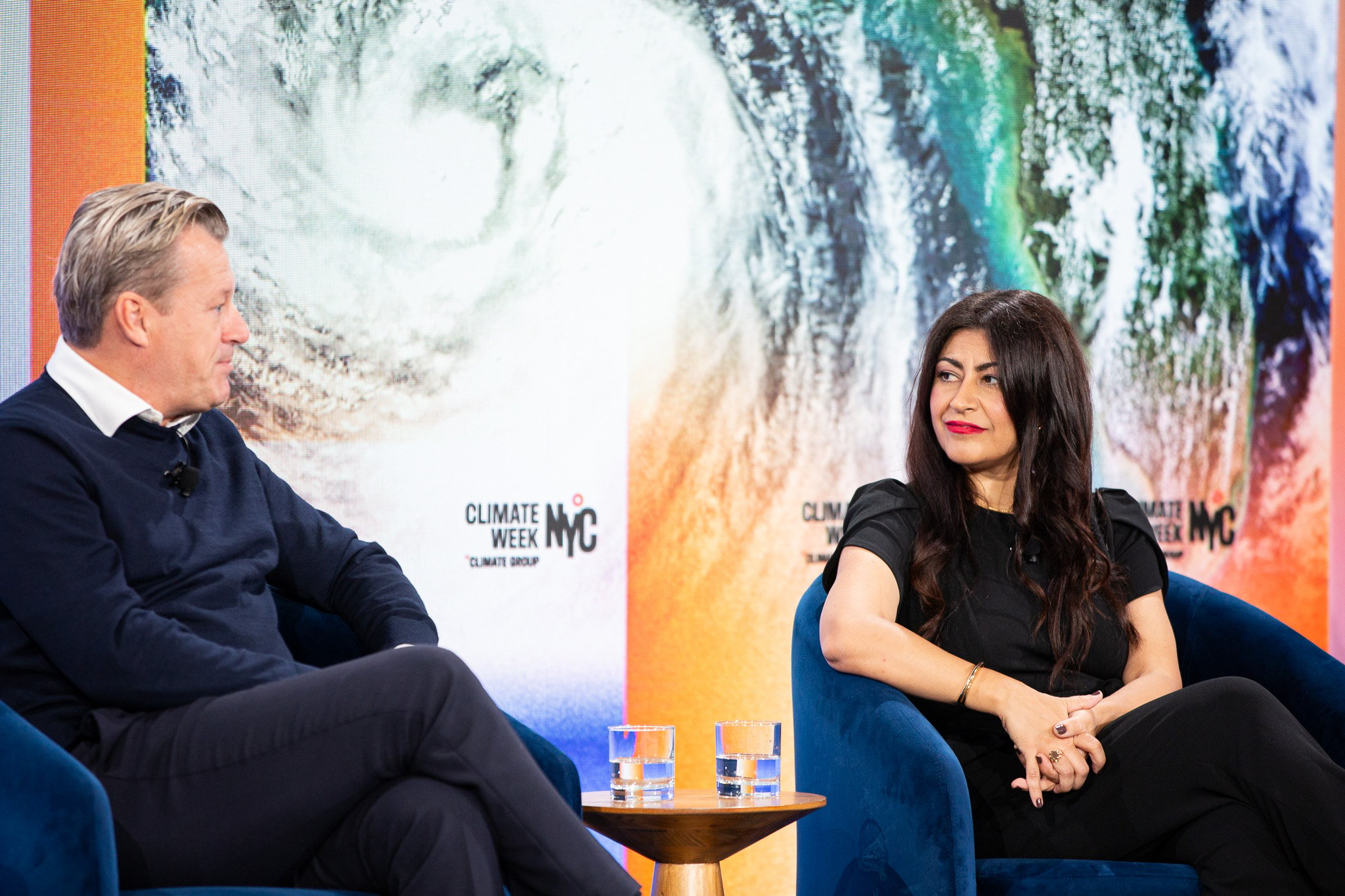
Jesper Brodin, Chair, The B Team and The Earthshot Prize and Ezgi Barcenas, Chief Corporate Responsibility Officer, L'Oréal Groupe speaking on the panel
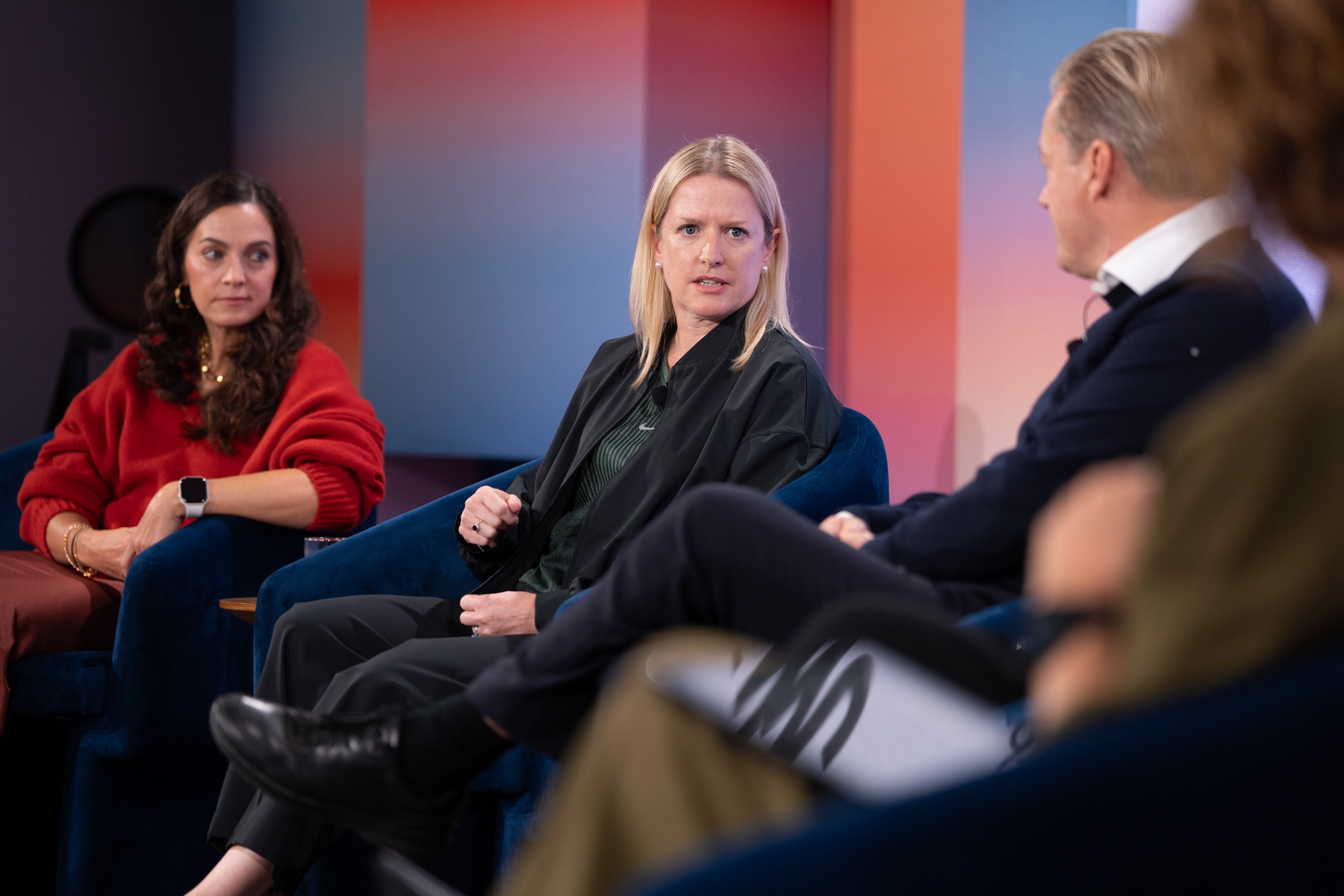
Sarah Chandler, Apple and Cimarron Nix, Nike, Inc., on the resilience panel
Cimarron Nix, Chief Sustainability Officer, Nike, Inc.
Ezgi Barcenas, Chief Corporate Responsibility Officer, L'Oréal Groupe
10.04am ET
Eileen Higgins, Mayor, City of Miami, and Matthew Harris, Founding Partner, Global Infrastructure Partners and Senior Managing Director, BlackRock, joined Justin Worland, Senior Correspondent, TIME, to ask where capital will still flow in a risky market.
Harris argued that designing with nature has stopped being an added cost and become a condition of financing. Infrastructure is a long-life asset with predictable cash flows, he said, and projects that ignore flooding and heat will struggle to attract capital or insurance. In his view there is no shortage of private money, only a shortage of the public-private partnerships needed to put it to work, including in the hardest sectors to clean up, like steel, cement and aluminum.
Higgins made the case from the city's side: public investment sets the standard, and private money follows.
"Any design approved 10 years ago is out of date."
A risky market - where will capital still flow? panel at the Opening Ceremony
09.49am ET
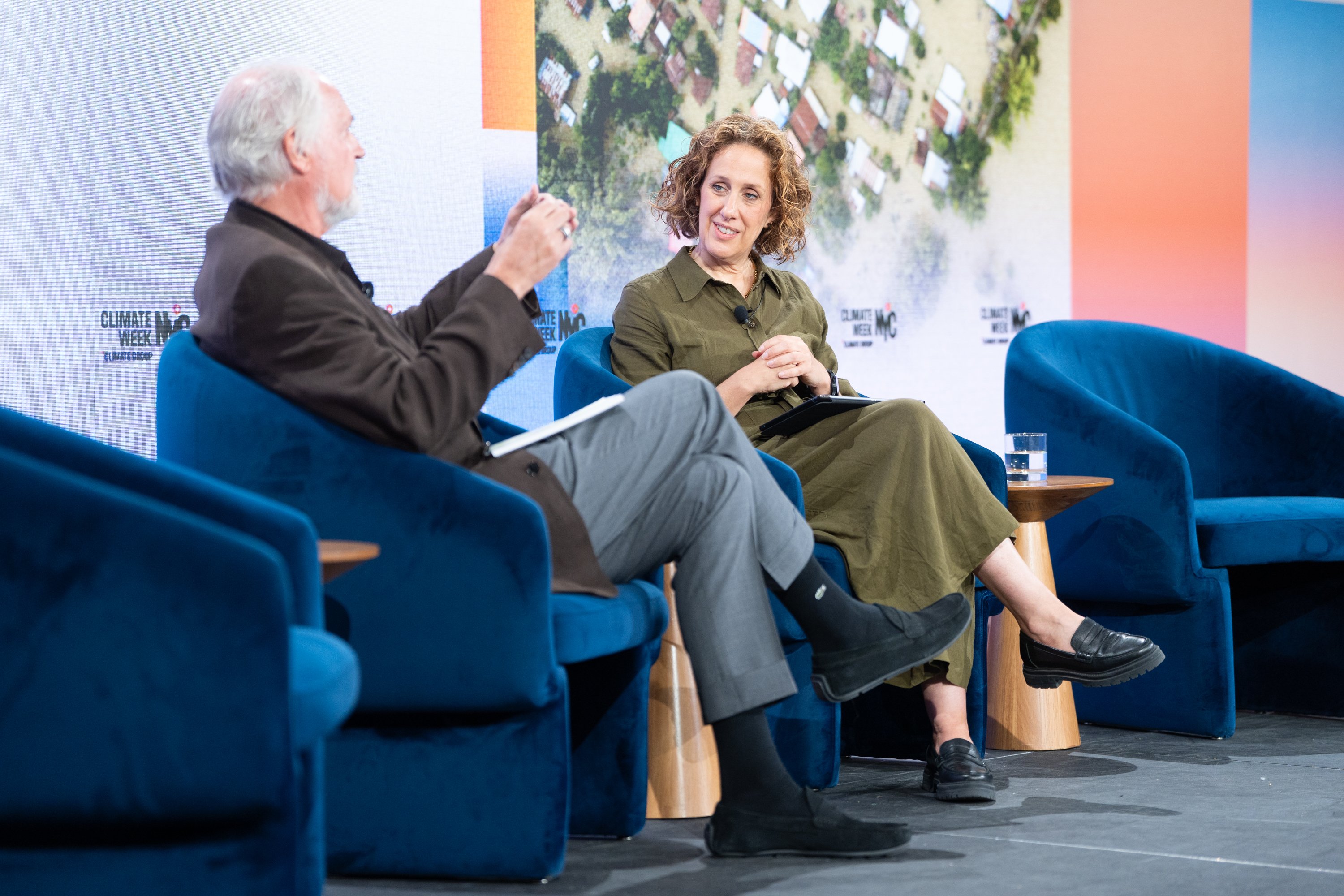
Paul Polman, Business Leader, Investor and Philanthropist, joined Helen Clarkson OBE, CEO, Climate Group, for a conversation on why waiting is not a strategy.
He described a business world turned upside down from the one he ran Unilever in, when geopolitics and supply chains were relatively stable. The cost of doing nothing is climbing, he said, and most companies depend on natural systems already under strain. Leaders trained in stable conditions are still thinking in straight lines.
He pointed to China, where the money going into clean technology is following returns rather than values, and set out three choices facing every company: deny it, play a short-term game, or invest for the short and long term at once. He was blunt about the first two.
"The ones staying behind are increasingly moving toward the graveyards of dinosaurs."
Paul Polman in conversation with Helen Clarkson OBE, CEO, Climate Group
09.35am ET
Nadia Calviño, President, European Investment Bank Group, spoke on turning ambition into investment, and on Europe holding its course.
More than half of the bank's finance now goes to the transition, she said, and the EIB plans to double its investment in adaptation as droughts and floods hit harder and more often. She pointed to a new partnership on green bonds aimed at moving money to where it's needed most, and to closer work with Canada agreed yesterday.
For Europe, she argued, breaking its dependence on imported oil and gas is now a security question as much as a climate one, given the war in Ukraine and escalation in the Middle East. The technologies, she said, are already here.
"For Europe, this is not only the right thing to do. It is also the smart thing to do."
Nadia Calviño, President, European Investment Bank Group
09.30am ET
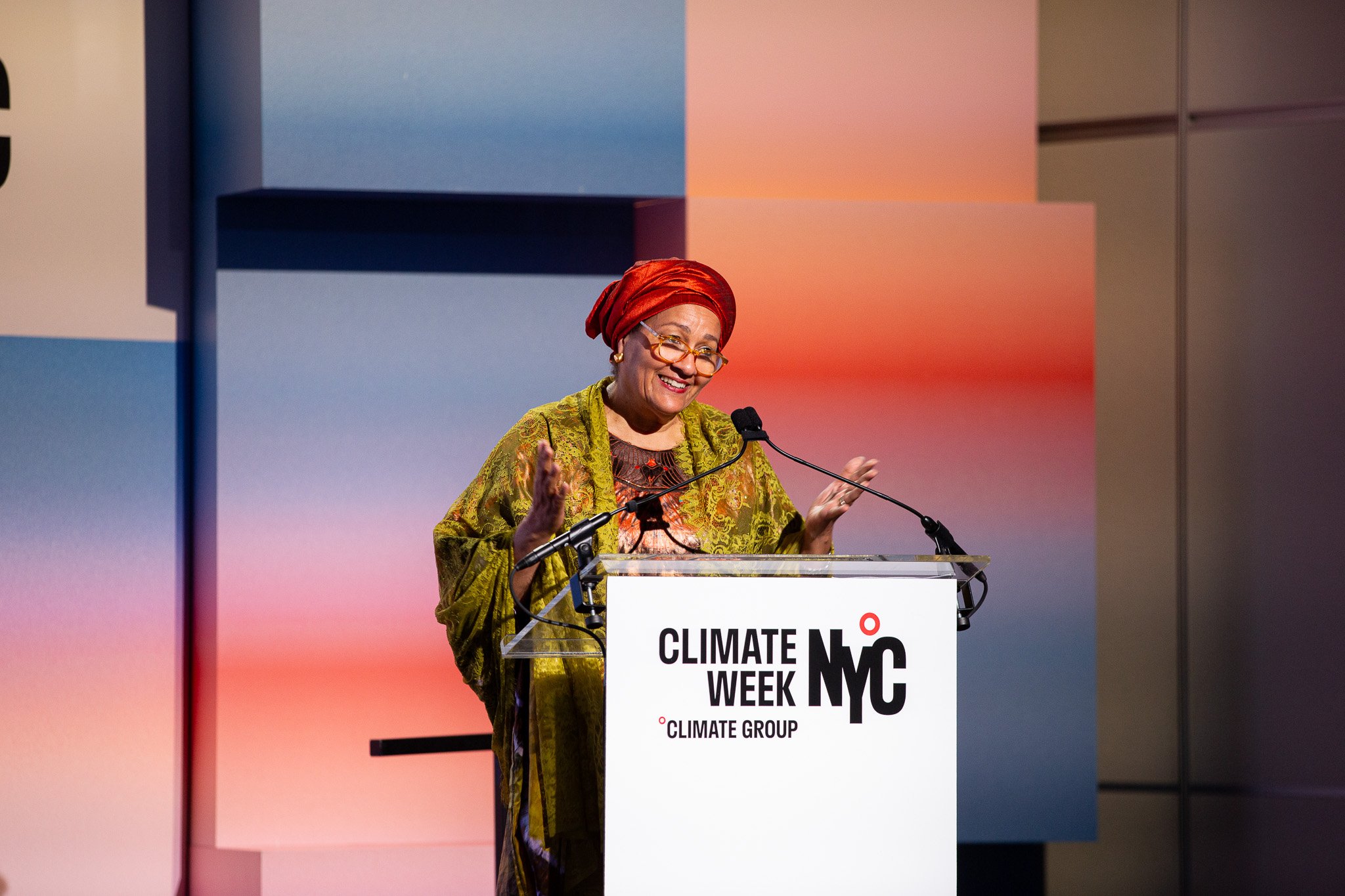
H.E. Amina Mohammed, Deputy Secretary-General, United Nations, takes to the stage with a speech on what we cannot afford to lose sight of.
She was direct about where the world stands, and equally direct that the response is already underway. The task, she said, is to keep multilateralism alive, to stop treating climate as a siloed issue, and to make sure the voices least heard are the ones in the room. She pointed to Palau, where biodiversity loss and rising seas raise a question few want to ask: what happens to a country when nothing is done?
She also argued that the shift has to be just for countries not yet in a position to make it, and closed by linking climate to peace.
"We are breaching 1.5 degrees. But we are clawing back."
H.E. Amina Mohammed, Deputy Secretary-General, United Nations speaks at the Opening Ceremony
09.20am ET
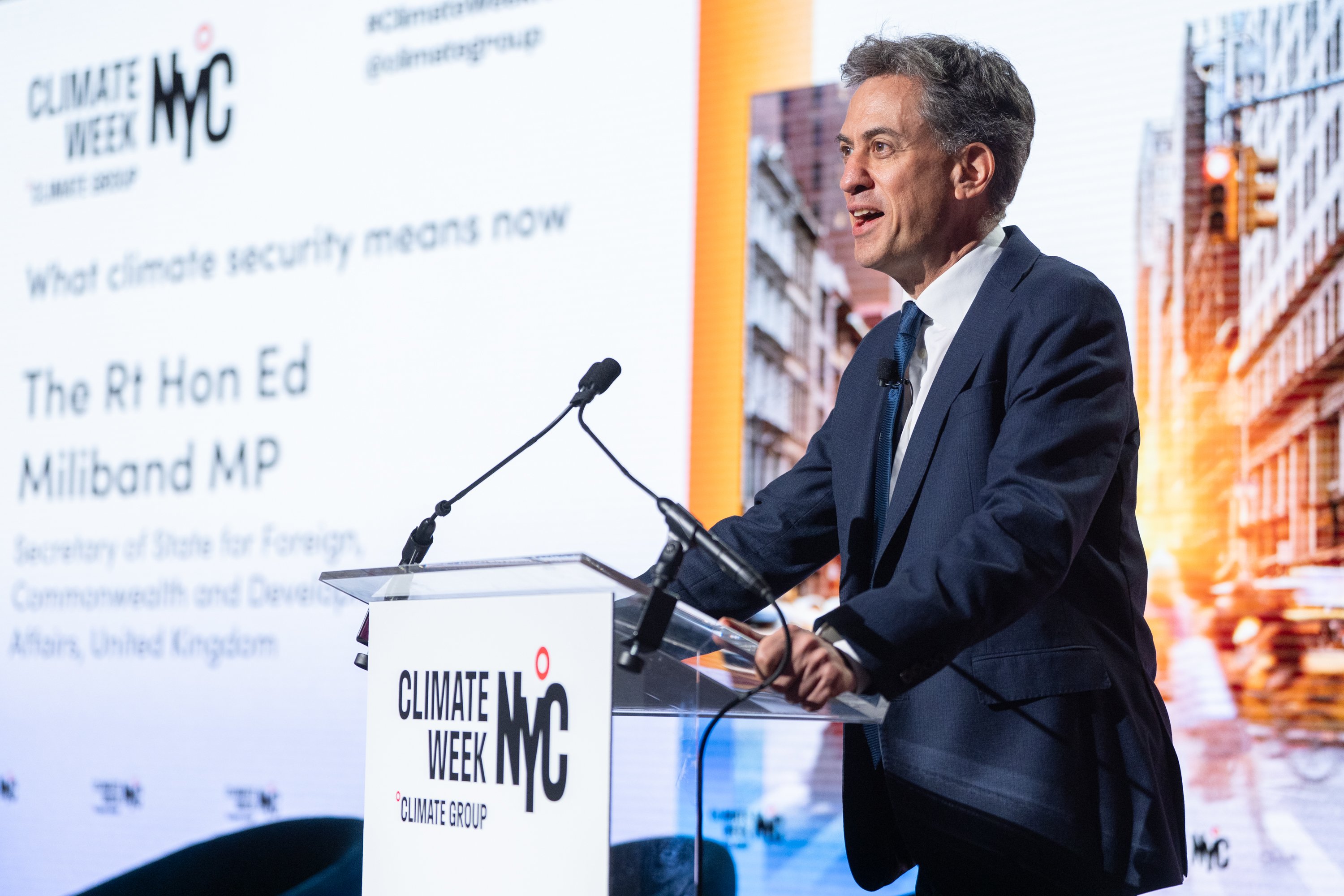
The Rt Hon Ed Miliband MP, Secretary of State for Foreign, Commonwealth and Development Affairs, UK, opened on an optimistic note: $2.3 trillion went into clean energy globally last year. The security case, he argued, has now caught up with the economic one, with Russia's invasion of Ukraine and this year's Iran conflict making the cost of depending on imported oil and gas plain.
He pointed to more than 150 million hectares burned worldwide, record heat, the floods in Nepal, and forecasts of the strongest El Niño on record, and said the job now is to act before the crisis hits rather than pick up the pieces afterward. The UK has committed £400 million to a tropical forests fund and is working toward a clean power system by 2030.
"This has to be an issue for foreign ministers as well as climate ministers, for the security ministers and the generals, not just the green campaigners."
The Rt Hon Ed Miliband MP
09.10am ET
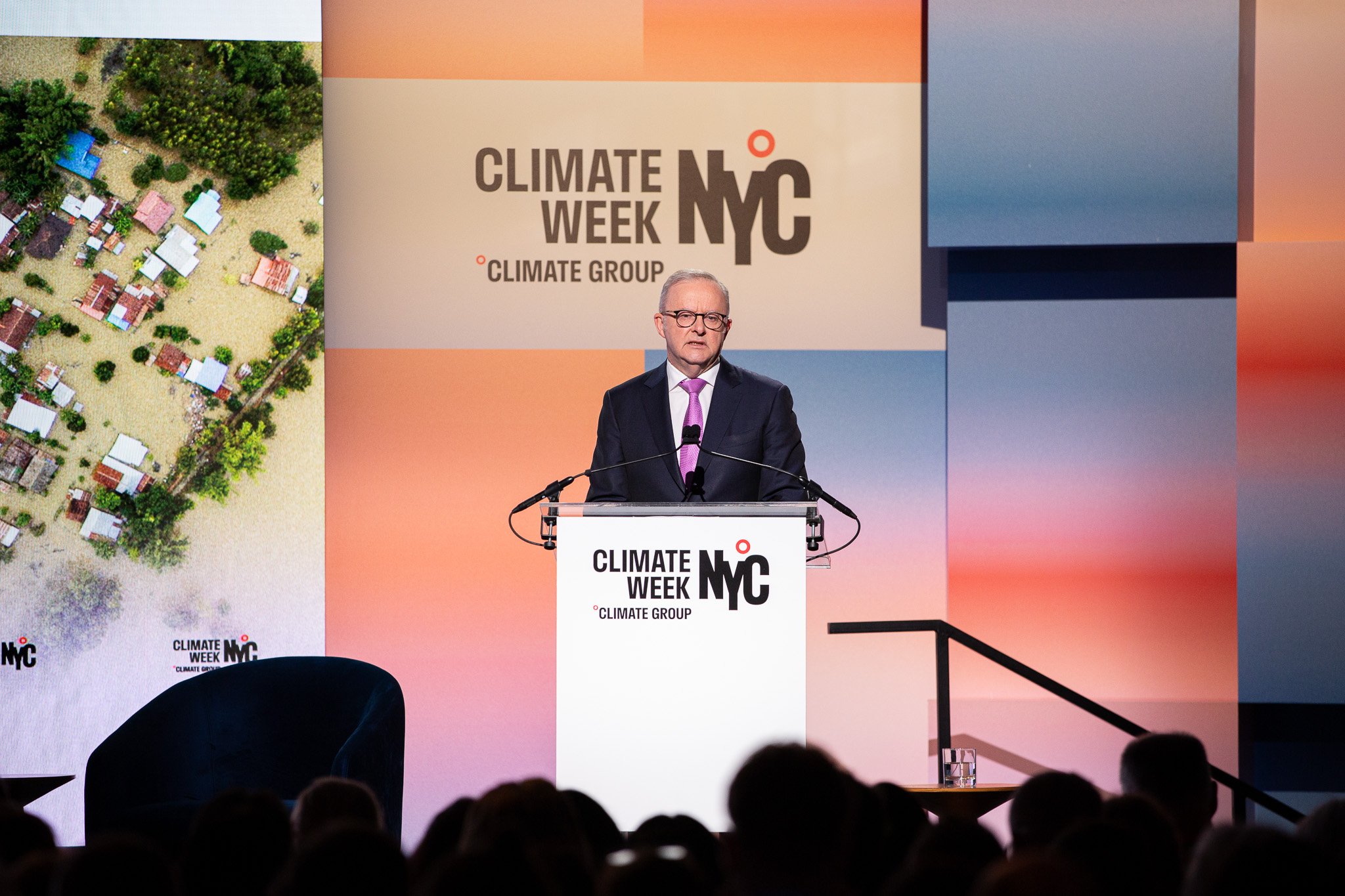
The Hon Anthony Albanese MP, Prime Minister of Australia, gave the opening keynote, drawing on a summer of record heat and fire at home and on the Australian crews sent to fight fires in Canada, the United States and France.
Renewables now make up a third of Australia's electricity grid, he said, reaching half last summer, and the country is installing 10,000 home batteries a week. Australia's 2035 target is a 62% cut in emissions on 2005 levels.
He also set out Australia's support for climate resilience across the Pacific, including new funding for infrastructure in the region.
"The next fire, the next flood, is not a matter of if, but when."
The Hon Anthony Albanese MP, Prime Minister of Australia gives the opening keynote
09.00am ET
Carl Nasman, Anchor and Senior Broadcast Journalist, BBC News, opened the Opening Ceremony and handed over to Helen Clarkson OBE, CEO, Climate Group, to welcome Climate Week NYC 2026 to New York City.
Helen Clarkson OBE, CEO, Climate Group began with the human cost of inaction, then turned to the economics now driving the transition. Solar is the cheapest power available, she said, and record after record is falling, with India setting new highs and China producing and exporting electric cars at scale.
She argued that the case is no longer economic but political.
"We must turn this economic argument into political courage."
Helen Clarkson OBE, CEO, Climate Group kicks off the Opening Ceremony
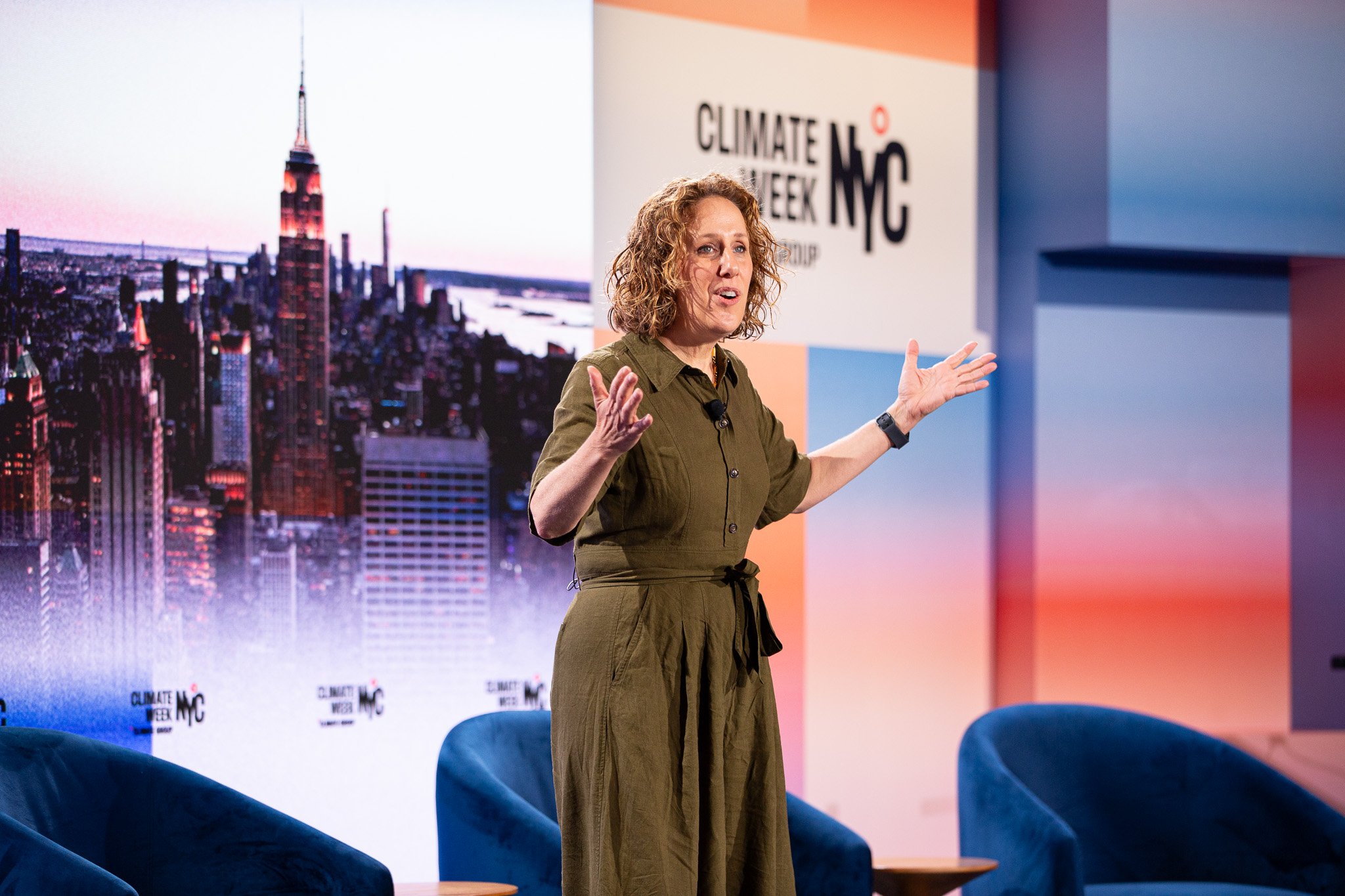
07.30am ET
Good morning from New York City. Welcome to the first day of sessions at Climate Week NYC.
The Opening Ceremony runs this morning in two parts:
- Part One: Higher Stakes, Harder Choices, from 9.00am ET
- Part Two: Real Momentum, Material Change, from 11.00am ET
The Hon Anthony Albanese MP, Prime Minister of Australia, gives the opening keynote, and the morning closes with H.E. Kristrún Frostadóttir, Prime Minister, Iceland, on why resilience is built before the crisis.
The Hub Live follows this afternoon, 01.30pm ET.
Planning your day? Browse the events calendar and map.
We'll be bringing you the highlights here through the day.